

Culture
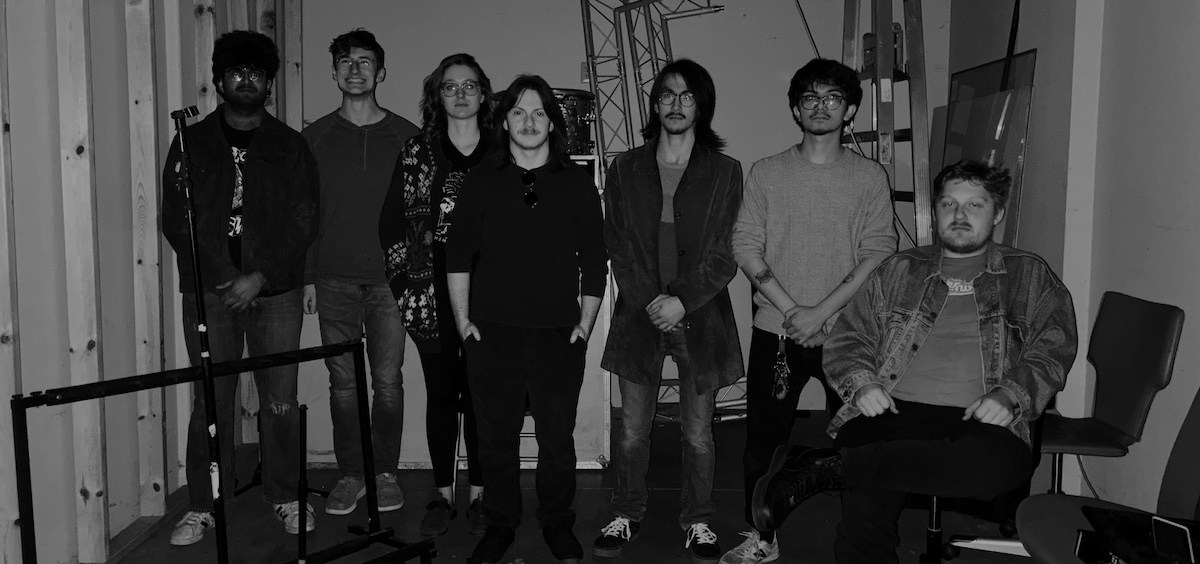
On ‘Laugh’ Nodes build an ecosystem of sound and feeling
By: Emily Votaw
Posted on:
COLUMBUS, Ohio (WOUB) – Laugh, the sprawling new release from the Columbus-based experimental collective Nodes, unfolds not as a set of songs but as a breathing, evolving ecosystem of sound.
On this particular Nodes project, Arman Lopeman and Nick Allen take the lead, guiding a wide circle of collaborators — a small orchestra of marimba, flute, cello, trumpet, clarinet, and violin that somehow merges into something profoundly cohesive.
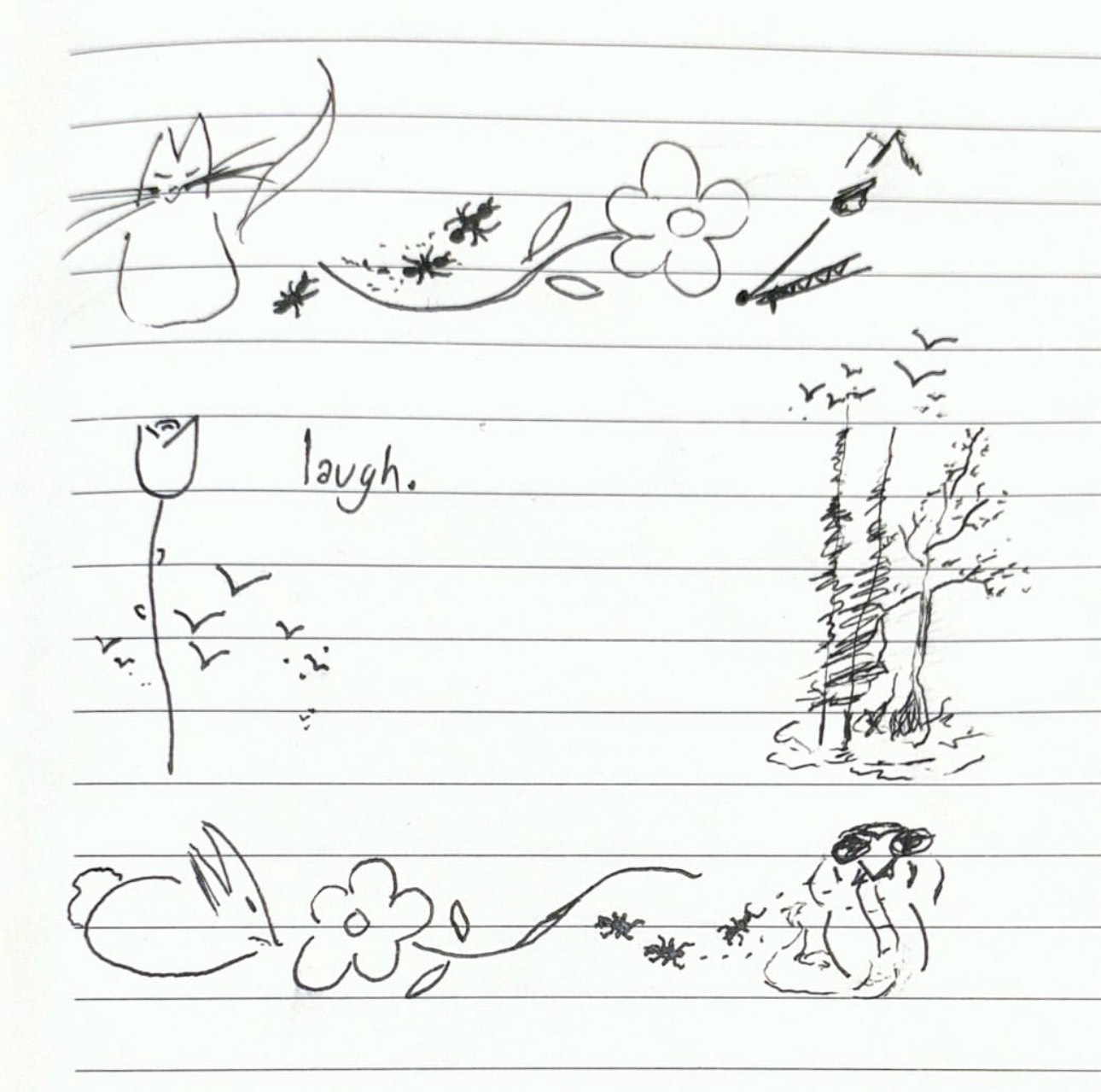
Laugh moves like shifting weather: warm fronts of melody collide with cold fronts of distortion, and moments of clarity give way to low-pressure swells of noise and atmosphere. Logic Pro — the band’s chosen digital workstation — isn’t merely a recording tool here. It’s an agent of brilliant hallucination, warping and refracting each sonic fragment into vivid bursts of revelation.
The journey begins with Comma, where fragile acoustic guitar lines drift into focus before rupturing into thunderous distortion. It’s about destruction as much as it is about invitation — a suspended doorway that opens into the album’s interior world.
Next comes Thompson, which begins in a hush. Acoustic guitar thrums gently against the chromatic shimmer of marimba while voices stack and overlap until they blur into a single, swelling choir — a murmur that builds into a shout.
Candle and Clown tilts the record toward playful chaos. Here, Nodes fully embrace the spirit of musique concrète, weaving together a sound collage that evokes the incidental score to a life lived just offstage — the music of a world you can sense but never quite see.
From that chaos emerges Daydream, a hymn from underwater. Tremulous guitars and violin ripple against one another like fireflies hanging in suspended space time. The song rises into the delicious introduction of bass, a reminder that Nodes is not just a studio project but a living, breathing band — one that fills rooms and untangles cables one loop at a time just like anyone else. At times, it recalls Sparklehorse at its most celestial — those moments when the late, great Mark Linkous made sadness shimmer with an undercurrent of unrepentant rhythm.
Soon we come upon Laugh, a 22-minute epic that serves as the album’s gravitational center. The piece moves with symphonic scope: marimbas, banjos, trumpets, flutes, and guitars orbit one another in hypnotic motion without tipping into indulgence. Its structure feels dreamlike, each room opening seamlessly into the next. There are echoes of Cocteau Twins and even Songs: Ohia at their most meditative. Still, mostly there’s Nodes, distilling an entire emotional odyssey into something we can hear a minute at a time.
The final two tracks — the literal comma, “,” and the closing Arrive — bring the listener back into interplanetary orbit. “,” opens with the sound of summer’s cauldron: insects, the purring and sighing of heavy humid air.
Arrive begins as a sonic whirl before swelling into a massive, trembling crescendo. It feels less like an ending and more like a storm forming in reverse, an unimaginable immensity resolving into light.
Lopeman and Allen describe Laugh as the product of a period of personal disintegration and renewal — “written to soundtrack our continuing experiences of spiraling downward, diagnosis, and attempting to pick up the pieces.” They cite filmmakers Andrei Tarkovsky, David Lynch, and Charlie Kaufman as key influences — artists who treat time, memory, and sound as emotional rather than literal. Like Tarkovsky, Laugh. feels meditative and elemental; like Kaufman, it folds inward in quiet recursion; like Lynch, it weaponizes texture and punctuates its darkness with flashes of childlike awe.
Crucially, Laugh also frees itself from what another brilliant filmmaker, Werner Herzog, once called “the accountant’s truth,” abandoning linearity and convention to pursue something far more real — that elusive, incandescent “ecstatic truth.”