

Culture
Blues musician Brandon Santini reflects on genre, musical tradition, and the power of live performance ahead of River City Blues Festival
By: Emily Votaw
Posted on:
MARIETTA, Ohio (WOUB) – Blues harmonica player Brandon Santini has spent more than two decades establishing himself as one of the genre’s most dynamic contemporary performers.
Raised in North Carolina and later shaped by the blues traditions of Memphis’ Beale Street, Santini developed a style defined by explosive harmonica playing, a commanding voice, and a deep grounding in blues history.
Over the course of his career, he has earned multiple Blues Music Award nominations, shared stages with artists including Buddy Guy and Gary Clark Jr., and had his music placed in major television series, including Paramount+’s record-breaking series Tulsa King, featuring Sylvester Stallone.
Santini is set to perform at the 33rd River City Blues Festival, presented by the Blues, Jazz and Folk Music Society of the Mid-Ohio Valley, later this month, with his set scheduled for the afternoon of Saturday, March 21.
Ahead of the show, Santini spoke with WOUB’s Emily Votaw about the blues as a living tradition, the role of festivals in sustaining roots music, and how songs from his most recent full-length release, Which Way Do We Go?, continue to evolve on stage.
Find a transcript of their conversation, edited for length and clarity, below.
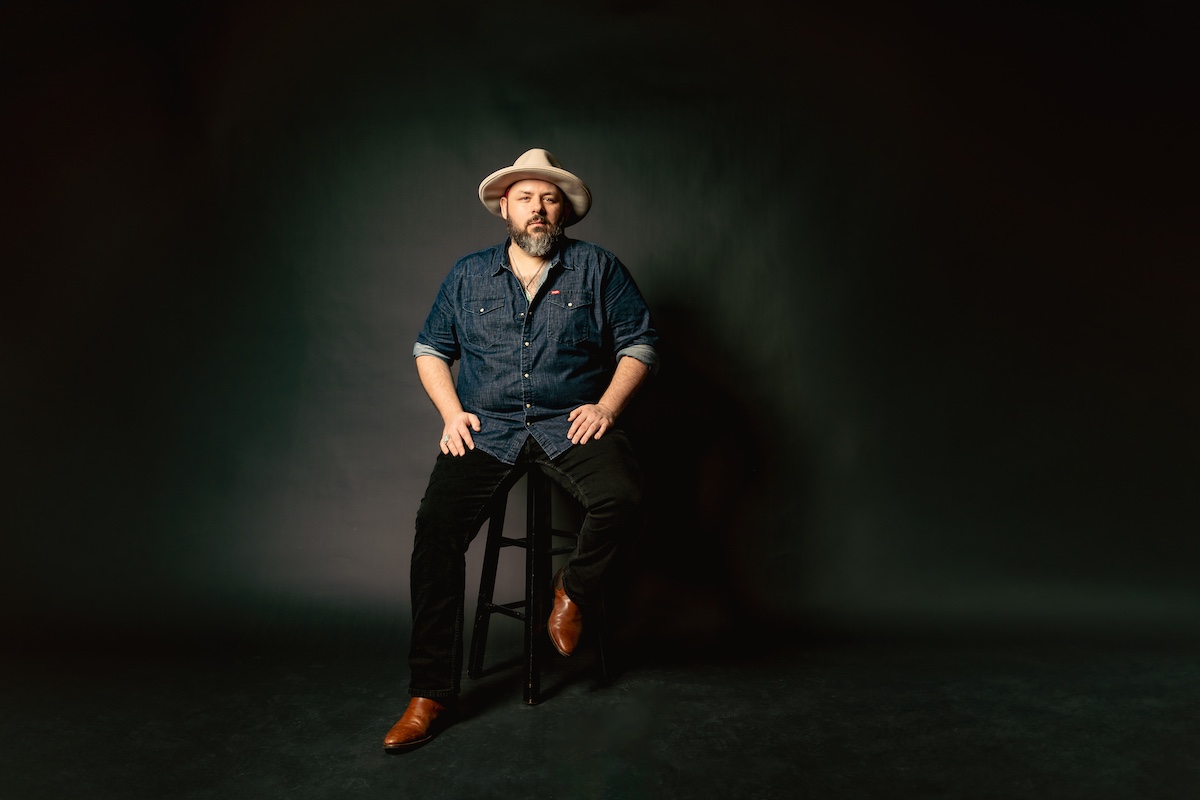
EMILY VOTAW: I’m curious: you’re a commercially successful contemporary blues musician. How do you see the blues as a distinct musical genre?
BRANDON SANTINI: Yeah, I mean, it’s certainly an American art form that was born from oppressed people. I very much feel like I’m here on this planet to carry the torch and continue the beautiful music that was given to us and made before us. I think it’s a very important genre within the history of music in general because so many things spun off from the blues, with rock ‘n’ roll being one of the main ones. Historically, I think the blues directly impacted how the world listens to music overall.
It’s a very niche genre now, and the beauty of it is we get to play these intimate spaces—you know, we’re not playing arenas—and we have access to fans at our shows, and fans have access to us. So we’ve built this really great community, and I think that’s what I like the most about it.
But, you know, so many people think blues is just that old, scratchy-record, foot-tapping kind of thing. Well, yeah, there’s that, but there’s also a lot of pain and a lot of joy in it as well. I think it’s just the best representation of the human condition.
That connects nicely with my next question. Since we’re talking about the River City Blues Festival, which is organized by the Blues, Jazz, and Folk Music Society of the Mid-Ohio Valley, what role do festivals like this play in keeping blues music alive and accessible for new generations?
SANTINI: Well, there are so many generations of music listeners who enjoy blues music and jazz music. Those are both very American roots musics. And people from all generations can feel that, especially live at blues and jazz festivals. It’s an experience. It’s a chance to experience the feeling and, again, the joy of the blues.
When we play live, we like to take people on a journey – we talk about the blues and its history, why we love it, and how we got into it. So I think it’s very, very important for these festivals to continue.
And I know we’re certainly grateful that so many societies and organizations are continuing to put on festivals, because it gives us a stage to perform on. And it invites community. People can really feel roots music in person. I think that’s the best way to experience it.
When you’re performing, is there anything in particular that tells you when a crowd is really connecting with you and the band?
SANTINI: Certainly. My main goal is to get people dancing. And I use the audience as a barometer as to whether we’re connecting or not. What I love about so many blues acts, including myself, is that we involve the audience. I truly believe that the audience is the number one star of the show, and we are there for them.
Thinking about the upcoming show at the River City Blues Festival, is there anything—emotionally or spiritually—you hope people take away from your performance?
SANTINI: Well, we’re going to take you on a journey, especially with material from Which Way Do We Go? – the last record I put out, which is nominated for Blues Music Awards this year. We’re playing a lot of that material, which is very much pandemic-era writing and post-pandemic-era writing for me – so a lot of it addresses things in this world, and in this country specifically, that are creating so many divides. The music I wrote for that record doesn’t try to divide us further—it tries to unite us. I know, speaking on my end, that it’s our goal to try to get people together. It doesn’t matter what political party you are in or what faith you may be.
We try to unite people and let them love one another, and leave all that hate we have in this country right now outside. It’s our goal that our shows are a safe space for everybody to let their hair down, have fun, enjoy the day, and enjoy the show. We always hope people walk away feeling better than they did before they heard us play. If that is happening, then I feel like we’ve done what we’re there to do.
Your most recent album, Which Way Do We Go?, has been out for almost a year now. What has it been like integrating those songs into your live shows?
SANTINI: Well, that’s a great question. Most of the songs that are on the record—I’d say at least three-quarters of them—were not being played live before the album was recorded. And that may be, generously speaking, about the percentage. These songs, as I said, are ones that I wrote during the pandemic. So there was a lot of me writing demos and recording the demos here at home myself.
And it was very scary because this is a different body of work than what I’ve done in the past. This is very serious—societal issues, talking about them, and addressing them. And I had no idea how it would land. It wasn’t the standard 12-bar blues that I would have been known for in the past, mostly.
But having said that, it’s really been a treat to be able to let these songs grow even more as we’ve taken them out and played them during live shows. Some of them have changed a little bit—nuances here and there—but the songs are still very much like they are on the recording. I think it’s good when songs take a little step in their evolution and change a bit based on what the crowd may be giving us.
I’ve been really pleased with the way the songs have landed live. The reaction has been great. Especially the title track, Which Way Do We Go?—that’s always one that’s really emotional to perform, and people really seem to get that message. That song and Mile After Mile might be my two favorite songs to perform off the new record.
You’re known for being deeply rooted in the blues tradition while still pushing the music forward. Creatively, how do you balance honoring the genre’s history while also making it your own and contemporary?
SANTINI: Yeah, another great question. The traditionalist within me is always going to be there—always has, always will be. Having that one foot in that Mississippi Delta style is very evident.
However, I think it’s good that the blues can continuously evolve, and I think we just keep getting more people involved in the genre. The more we spread the word about it, the more new musicians we will get, and that means the genre will grow to include more personal perspectives and approaches to making the music itself. That’s what I love about trying to foster the younger generations of musicians interested in American roots music.
I’m 44 now, so I’m not that young generation anymore—I’m not the kid anymore. And so it’s nice to know that we have a lot of great blues musicians—male, female, Black, white, American, international—it doesn’t matter. We’ve got such a wonderful group of torchbearers in that new generation, and they inspire me.
So I know, personally, that I love what these people are doing. I think that opens my eyes to the freshness of what they’re doing, and somehow that gets into my music a bit. I’m just very proud of our blues community for fostering the younger generations to keep this thing going.