

Culture
Now Playing: ‘Teenage Sex and Death at Camp Miasma’ is a peculiar film about slasher films, carnage, and queer desire
By: Gordon Briggs
Posted on:
Horror fans have always had a complicated relationship with slasher movies.
Some critics dismiss them as sadistic, silly dead-teenager movies. While critics dismissed many upon initial release, the subgenre has produced some memorable satires, as well as a wide body of academic discourse around gender and sexuality.
The new film Teenage Sex and Death and Camp Miasma takes our collective knowledge of slasher films and teen movies and filters it through a particularly queer lens. The result is both a unique, unapologetically gay horror film and one of the strangest romance films of 2026.
The only way I can describe the film is like Friday the 13th meets Sunset Boulevard.
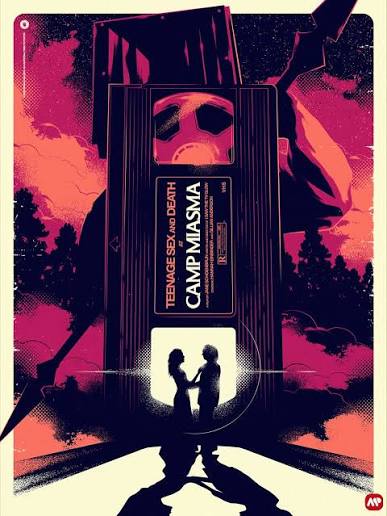
As far as visuals go, the world of this film is dreamlike and deliberately artificial. Once Kris enters Billy’s world, the movie becomes much more theatrical and surreal. I dig the snowy landscapes and forests, enhanced with hand-painted glass matte backgrounds that help the movie look like a storybook rather than realistic nature.
Like a blood-soaked version of Greta Gerwig’s Barbie, director Jane Schoenbrun embraces artifice. The result resembles a living painting, reinforcing the idea that Kris is entering somebody else’s dream. Teenage Sex and Death is a movie about movies that knows it’s a movie itself.
What distinguishes this work is the strange romance between Anderson and Eindring. The relationship highlights a clash in how the two women view horror and desire. While Kris initially over-intellectualizes the franchise’s politics, viewing physical intimacy through a detached, academic lens while harboring intense internal anxiety and hang-ups, Billy views horror and sex as matters of “flesh and fluids,” pushing Kris to stop living in her head and actually get into her body.
Both women find their desires linked to the terror of the slasher genre. This relationship creates a fascinating triangular dynamic, in which one character grows attracted to another by watching movies of her younger self. Schoenbrun has literally given us a movie about a horror film fan having a love affair with movies.
When the killer awakens and starts to go on a violent rampage both in real life and in the fictional film, the movie could easily degenerate into blood and gore. What is interesting is how the film’s horror conventions are filtered through a particular queer framework. Specifically, the distance Kris feels from her own body echoes the distance she feels as a viewer watching her favorite horror movies.
As the body count begins to rise, Kris slowly gets closer and closer to a final sexual release. That choice to reclaim the sexuality of the slasher film away from its punitive Old Testament origins into a vehicle for gay sexual liberation is probably the movie’s most innovative element. Through Billy’s radical acceptance, Kris finally breaks through her emotional walls, allowing both women to find a liberating, euphoric sense of intimacy amid the film’s chaotic, blood-soaked narrative.
That choice to blur slasher film death with queer sexuality may alienate some viewers, but for adventurous horror fans and consumers of peculiar cinema, this is definitely one to seek out. ★ ★ ★ 1/2