

Culture
William Matheny expands his sound on ‘Material Witness’
By: Emily Votaw
Posted on:
Guitars tumble roughshod over each other. Anthemic choruses swell and break as the twang and snarl of roots rock turn fierce. Then, with that same impossible ease, electric piano and strings pull us clean out of the agreed-upon time-space continuum and conjure something as mystical as it is accessible.
That range is what William Matheny works across on Material Witness, his third solo album, and the widest he’s explored yet.
Impressive as that is, what really makes these songs “stick” is how you might hum one for days before its weight settles on you. Material Witness plays like a good time when a good time is all you need, yet hold it closer, and you’re looking into a mirror, the kind you can only stand to look at from certain angles.
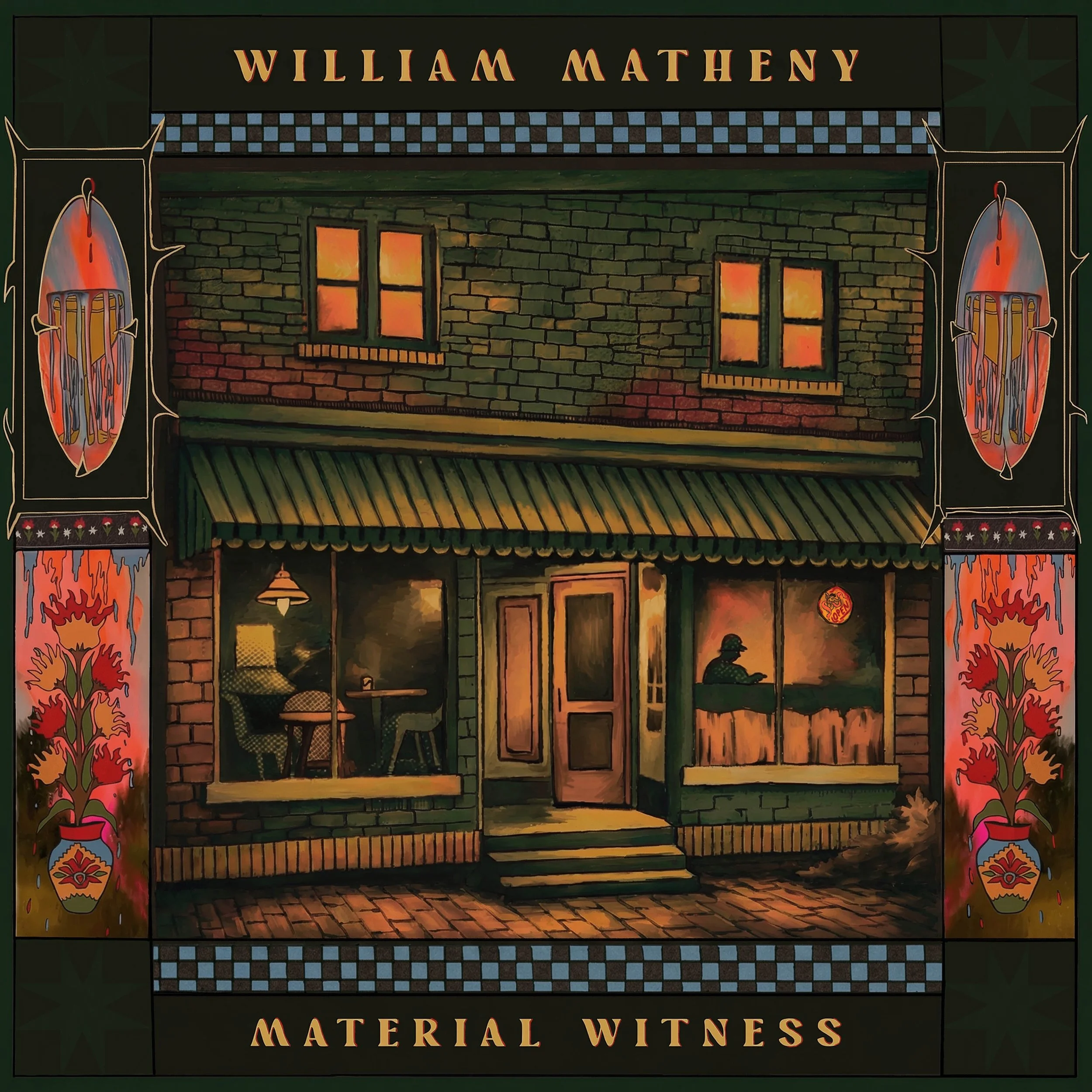
The rowdiest tracks are electrifying enough to soundtrack a Friday night at the end of the most oppressive workweek, yet they hold up just as well under scrutiny on the drive home alone. They are stories about mortality and memory and loneliness and regret, and above all about the particular human talent for realizing how far you’ve wrecked your life only once the wreck is too far gone to fix.
Matheny has been at this most of his life. Many will recognize the Morgantown, WV-based musician as the multi-instrumentalist and keyboard player in the mighty Southeast Engine, the Ohio group whose smart and spooky take on alt-folk would, in a right and just world, have defined the sound of the aughts more than Mumford and Sons. His solo career as we know it now began to take shape with Strange Constellations in 2017, and that path continued with That Grand, Old Feeling on Tyler Childers’ Hickman Holler in 2023.
For Material Witness, Matheny launched his own Diamond Teeth label and, for the first time, took his longtime band out of the Mountain State and down to Nashville, cutting the record with Grammy-winning producer Justin Francis, whose credits include Orville Peck, Rodney Crowell and Margo Price. That move brought together guitarist Bud Carroll and Adam Meisterhans, bassist Tucker Riggleman, keyboardist Jeremy John Batten and drummer Clint Sutton, who lock into the kind of lived-in chemistry that only years of playing together can produce, and Francis captures it without polishing away the scruff.
You hear it right away. Opener “Babylon Man” barrels ahead on muscular guitars with the raw warmth of early Wilco, then builds to a chorus that borrows the bones of Hedy West’s “500 Miles,” the old folk-revival standard, and twists them to heartrending effect. Where West’s traveler counted the miles between himself and home, Matheny keeps the cadence but turns the tally into a slow slide toward nothing: “Lord, I’m one. Lord, I’m two. Lord, I’m nothing without you.”
“Where Do the People in My Dreams Go?” slows the burn to a cavernous smolder, an amiable electric piano drifting into frame before a string quartet eases in, broadening the song without disturbing its strange intimacy. Matheny cites enigmatic folk singer Connie Converse as an influence here, and something of her existential unease hangs over the whole thing. Even the question in the title sounds disarmingly innocent, yet crouching beneath it immediately is a harder one: Where do the people we love go when they die? The song ends, and we leave without answers, but not without a tinge of recognition on the way out.
On “Everyone Leaves Everyone,” Matheny sings about waking up grateful with just enough weariness to make it sound dubious. The guitars surge up out of a tightly controlled rhythm and break loose into a solo that sounds like pure joy, right up until it decides, on its own terms, to end.
“Mercy Journeys” brings things back to a midtempo lope, and once it’s revealed that its subject is a welcome badly overstayed, the title begins to sound less like a blessing for safe travels than a good old-fashioned “G’wan own now an git!” Matheny has a real gift for this kind of heart-curdling humiliation, the dreadful instant when the story you’ve been telling yourself comes apart.
That is at least sort of what happens in “Take It From a Liar,” though it’s more complicated than a liar getting caught in the act. In fact, it’s worse than that. The sting isn’t that the narrator has lied. It’s that he’s reached the point where lying can no longer save him from what he knows. Against a jangling buoyancy reminiscent of Rainy Day Music-era The Jayhawks at their warmest, he works through the sorry truth that there’s no satisfying villain left to blame when the main thing you’ve been unfaithful to is your own heart.
Material Witness ends not with a verdict but with something closer to a benediction. “Every Pilgrim Has a Mecca” carries us out through a landscape already going to seed, complete with overgrown campaign signs and trash in the gutter. It would be easy to point your finger at time as the guilty party here, just as you could for every song on this record, but Matheny refuses to call it a thief, singing “it’s just back to retrieve what we borrow on our very first day/and what’s living but a debt to repay?” He sounds, if anything, like a man who’s made his peace with the terms.
The people who populate these songs don’t get to keep much. Not youth, not love, not certainty, not even the stories they’ve told themselves about who they were.
For a record preoccupied by all the ways people leave one another, it makes sense that Matheny ends by reckoning with the one departure nobody escapes. Material Witness doesn’t promise anything gets to stay, but it insists, more often than you’d expect from a record this haunted, on a good time anyway.