

Culture
Rhiannon Giddens chats Your Roots Are Showing, collaboration, “perfect” PBS show season in Ireland
By: Ian Saint
Posted on:
KILLARNEY, Ireland (WOUB) — Saturday at 9 p.m., WOUB-TV airs an episode of My Music with Rhiannon Giddens with acclaimed Irish musician and Steve Martin Banjo Prize winner Enda Scahill. WOUB’s Ian Saint interviewed Giddens about it in Ireland itself.
Giddens headlined Ireland’s music conference Your Roots Are Showing at Gleneagle Hotel last year. Next year’s conference will be staged at Belfast’s Europa Hotel from February 24-28. Giddens plays Pittsburgh’s Byham Theater (101 6th St.) February, 2027.
A transcript of Ian Saint’s interview with Rhiannon Giddens, whose new album Hope Is The Things With Feathers was released last week, follows. Their conversation has been edited for length and clarity.
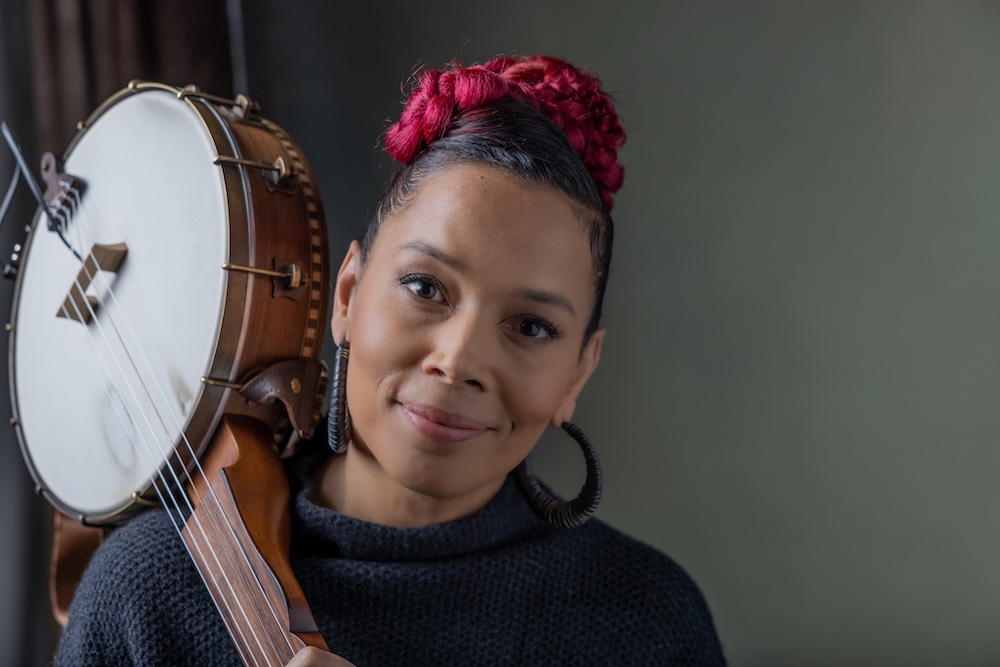
Rhiannon Giddens: I sang two spiritual gospel songs from North Carolina. I feel like the ultimate North Carolina ambassador, just because I don’t know how to do anything else — I’m always thinking about what it means to be somewhere else. I did “I Know I’ve Been Changed,” which felt a little naked and foreign; I usually do it with my sister, or as a call-and-response where everybody sings. And a Joe Thompson song, “Lights in the Valley.” He’d always say, “You’ve got to let ‘em know you go to church every once in a while.” I felt really good that I got everybody singing.
Ian Saint: Your Roots Are Showing’s Folk In Fusion kickoff concert was incredible — including your performance with Peter Rowan and Liam Ó Maonlaí. My understanding is that you guys hadn’t really rehearsed; it just came together organically?
Rhiannon Giddens: Yeah, we just figured out which version we were doing, because that’s a song everybody’s done. We kind of centered it on my version on the banjo, which is real minimal and modally. But we actually didn’t know how we were ending it — we’d never talked about ending it. I realized that as we were halfway through; and I was like, “Well, we’ll just see where it goes.” It was really beautiful. We were just open, listening to each other really intently.
Ian Saint: Had you previously collaborated with them?
Rhiannon Giddens: No. I’ve been next to Liam in the same program, but we hadn’t worked together. Peter, I’d never met.
Ian Saint: Wait, Your Roots Are Showing’s kickoff concert was your first time meeting Peter?
Rhiannon Giddens: Yeah. Sometimes it doesn’t matter — if you’re speaking the same spiritual language, and have the same approach on stage, that’s all you need. It was a magic moment.
Ian Saint: I’m struck by how much you three each are vastly different in many ways, certainly geographically and generationally — Peter is Silent Generation from New England, Liam is Baby Boomer from Ireland, you are Gen X from the American South — yet it sounded so naturally harmonious, despite never having worked together.
Rhiannon Giddens: It really does show that those things are just numbers and labels — and it’s really how you’re thinking about the music. Peter and I obviously share a lot of musical origins, so we share a harmonic language in that way. But ultimately, the three of us were really there to be in the music in that moment. I could be with somebody who knows all the North Carolina tunes and it would be a disaster, just because they approach things completely differently. Music isn’t a universal language — there are all these different flavors and accents of music. You can’t assume that just because you and I play instruments, we’ll automatically be able to play together without at least a conversation. But I think it is an easier way into these (musical) conversations than a lot of (other types of conversations), because there are some universal things that music shares — and if you just listen louder than you sing, then you’re fine, you can play with anybody. I feel like the three of us were really good listeners, and that’s why it worked.
Ian Saint: I also loved the American roots and Irish collaboration. You’re deeply rooted in North Carolina, and have lived in Ireland for several years. What are your favorite aspects of Irish music and culture?
Rhiannon Giddens: It’s interesting, because I don’t interact with Irish music that much. I live in Ireland because I’m a mom here — cooking and trotting my kids to all their activities, then doing my work. I don’t go to sessions. So that’s why I love this kind of event (YRAS), because it pulls you out — you get opportunity to work with other people, and listen, and play together.
Irish music and old-time (American) music as they are now — how they’re played, how jams are run — are very different, so I’d never feel comfortable sitting down and joining an Irish session. But I know there’s lots of similarities in how the music is looked at — and the kind of protective aspects people have, and also the same kind of gatekeeping issues. Ultimately, we’re all playing tunes; so as long as there’s some sort of organization about who’s playing what, it’s going to work out. And I always love that (coming together of international communities at Your Roots Are Showing) because it does show “Yeah, we’re just all playing tunes.”
Ian Saint: What’s it been like to host your own PBS program, whether it’s fulfillment or challenges? Any highlights or revelatory moments?
Rhiannon Giddens: Really cool. I love highlighting other people. I’m like, how Hollywood says, “a character actor in a leading man’s body” — I’m like Paul Rudd. I’ve always like I’ve got a great voice and “the package” — or whatever you want to call that, cynically, for a solo career — but I grew up singing harmony. My favorite thing is singing harmony to somebody else; and I feel like that in life. My favorite thing is going, “Isn’t he awesome? Isn’t she amazing?” I’m more interested in that than stepping forward and going, “Listen to me.” So this PBS show is the perfect thing to highlight and showcase the people I love, who I feel are doing the things I think are really valuable beyond celebrity.
Season three is in Ireland, and it was the perfect session from beginning to end. All the musicians were incredible, our collaborations worked out really well, the settings were fantastic, the weather was amazing. It was magical. (Fellow Your Roots Are Showing performer) Enda Scahill is in it, and all these wonderful, traditional musicians doing beautiful things in Ireland today.
Working with (producers) Will and Deni McIntyre, they’ve been doing this incredibly for so long. David Holt was gracious enough to allow me to take over (from his PBS show David Holt’s State of Music), and he’s been really supportive. Really good people, and the folks they work with are really awesome. And It’s nice to do something where everybody is on point, but also really nice people. You can have your cake and eat it too.