

Communiqué
It’s the story of an unlikely movement, the struggle to convert old railways to public trails. FROM RAILS TO TRAILS – Oct. 18 at 9 pm
< < Back toFROM RAILS TO TRAILS
October, 18 at 9:00 pm
Today, the United States is home to more than 26,000 miles of rail-trails—multi-use public paths built on former railroad corridors. How this amazing network came about is a story of massive economic changes, breathtaking imagination, endless dedication, and tough political battles. A 60-year struggle—and transformative triumph—of one of America’s most unlikely grassroots movements.
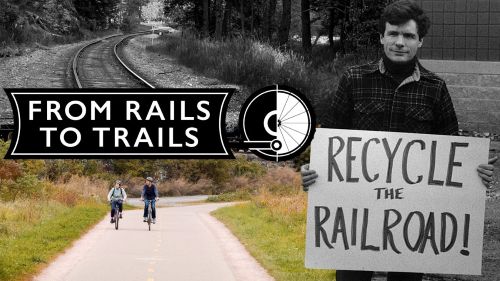 It’s the story of one of the most unlikely social movements in American history: the struggle to convert thousands of miles of private, abandoned railways into public trails for cycling and walking. This conflict-filled tale of politics, economics, citizen activism, and legal wrangling begins in the 19th century, when cut-throat railroad barons constructed thousands of miles of track from coast to coast.
It then flashes forward to the post-war 1950s, when the automobile and truck started to supplant the train and railways began falling by the wayside. Next came efforts by early visionary “rail hikers” to save the old corridors, but they learned the task was much harder than expected.
The story comes to a head as activists, lawyers and legislators join the fray, forcing court rulings and legislation that ultimately leads to a flourishing rails-to-trails movement. The documentary touches on a range of high-profile contemporary issues and interests: resource and energy conservation, public health and fitness, environmental protection, urban transportation planning, rural economic development, the tension between public and private rights, and the role of citizen action in government decision-making.
Get ready to explore how community activists, visionary leaders, and passionate citizens aimed to turn defunct railways into vibrant spaces for walking, biking, and recreation. From small-town showdowns to U.S. Supreme Court cases, the documentary unveils the legal, political, and cultural forces that shaped the rails-to-trails movement.