

News

Hundreds of families in southeast Ohio are without access to early childhood program during the federal shutdown
By: Amanda Pirani
Posted on:
COSHOCTON COUNTY, Ohio (WOUB/Report for America) — Amber Manbeck has been involved with Coshocton County Head Start for over a decade.
She first came to the early childhood program as a parent and later became a family advocate. Now, she manages the Head Start’s family and community engagement.
“I love this program. The mission, the values, the things that they do for families,” she said. “This is not just a preschool.”
Manbeck said the program provides critical services like daily meals, health screenings and early childhood education.
But in just a week’s time, it may have to close its doors.
Coshocton County Head Start was set to have its grant renewed at the start of the month. As a result of the ongoing federal shutdown, now the longest in U.S. history, that funding has not been approved or dispersed.
The organization is set to close on Nov. 14 — leaving nearly 100 families without reliable childcare and 60 employees like ManBeck without a job.
Without funding, other Head Start programs in 18 states have already ceased operations. In Ohio, over 3,600 children are at risk of losing services, according to the National Head Start Association.
Three early childhood programs in southeast Ohio hit by the federal shutdown
Head Start programs operate on staggered grant cycles, so only those with Nov. 1 and Oct. 1 renewal dates have been affected by the federal shutdown. Additional programs could be at risk if it extends beyond this month.
In southeast Ohio, the shutdown disrupted two other county programs: Scioto and Highland County Head Starts have already closed down and began furloughing employees.

“Our case is a little different, only because of some of the partnerships and local resources we have,” said D.R. Gossett, CEO of the Ironton-Lawrence County Community Action Organization.
Gossett said the organization will depend on the expected grant funding to reimburse it after the shutdown comes to an end.
Coshocton County Head Start Director Susan Craddock said her organization was initially prepared to close its doors at the end of October, but an anonymous donation allowed them to continue serving families for two more weeks.
Craddock said they have tried to find other sources of funding, but the program’s cost, nearly $50,000 a week, isn’t easy to make up.
In much of the region, Head Start programs are administered by community action agencies, which also provide a variety of services to support low-income families like job training or rent assistance.
Sarah Sloan, director of Scioto County’s Head Start program, said most agencies cannot shift funding to Head Start without affecting other resources.
“To leverage those funds to keep our program opening jeopardizes everything else we do,” she said.
When the shutdown comes to an end, it could still take weeks for programs to receive their payments and resume operations.
Employees are furloughed until the shutdown concludes
Directors say many employees of Head Start, like Manbeck, are also parents whose children have or currently participate in the program.
“We do have a lot of parents that work here … so they’re kind of getting a double whammy by losing their job temporarily,” Craddock said. “And no SNAP, no daycare.”
Manbeck said that while she’s prepared to face the approaching challenges, there’s still a lot of uncertainty ahead. She can’t help but consider what she’ll do if the shutdown continues into December.
“Am I going to be able to pay my bills that month with the unemployment?” she asked. “Do I have to get another job?”
Craddock and Sloan said childcare isn’t easy to find in the area. Headstart allows many of the parents they serve to work, or attend educational programs.
Many parents will rely on family or alter their work schedule to get through the closure. But for those without support networks, both finding and paying for childcare poses a challenge.
“Child care is very, very expensive, even with getting help through Job and Family Services,” Craddock said. “Head Start is a free program.”
The shutdown is harmful for early childhood development
In Scioto County, Sloan said about 400 families and 100 employees have been affected by the closure. When families don’t have access to Head Start, they aren’t getting the same resources, like daily meals and parent services.
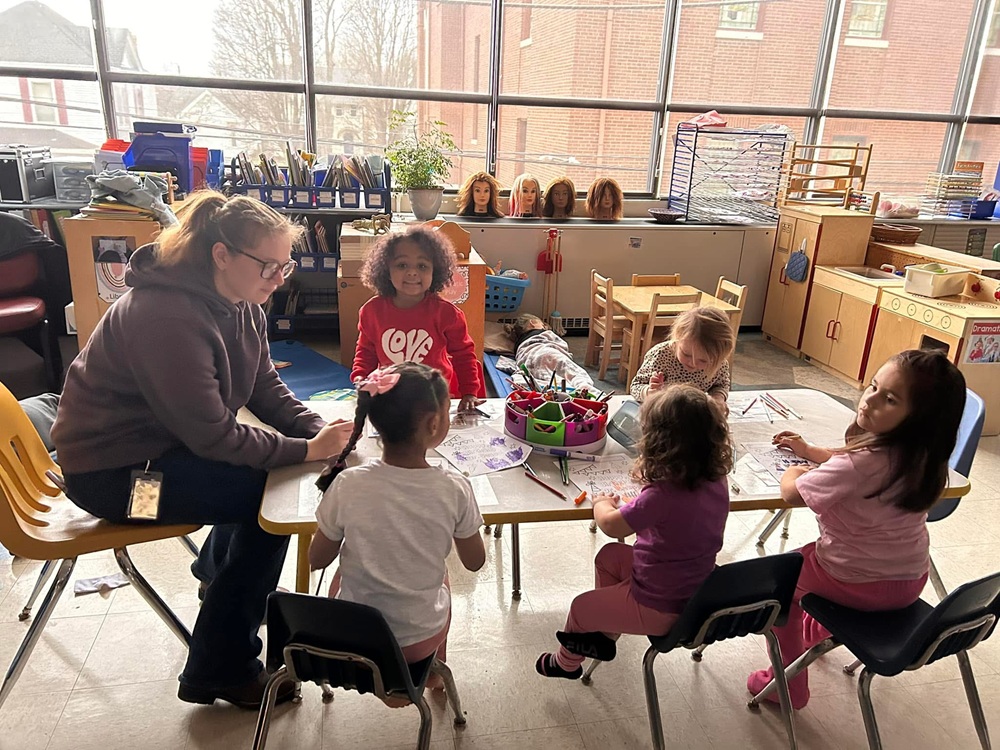
“The fear is that the longer we’re out, the more children are going to lose,” Sloan said. “This is critical brain development time with three-, four- and five-year-olds.”
The break is also emotionally challenging for young children. Sloan recalled one student who participates in home-based Head Start.
“He was very argumentative with his mother that Ms. Gina was coming,” she said. “He was so disappointed he wasn’t going to see his home visitor today.”
Educators in Coshocton plan to provide parents with backpacks containing activities and learning materials, but Manbeck knows it won’t make up for in-person time with educators and friends.
She said the disruption is especially hard on children in foster care or facing homelessness.
“To change routine is very hard for them,” she said. “Being ripped away from that environment where they just felt safe is not an easy feeling.”
For low-income families on SNAP, disruption hits harder
For many families that participate in Head Start, program closures will be yet another loss after a disruption to SNAP benefits last week. Head Start directors say many of their families rely on both programs for resources.
Kim Swart, early childhood education coordinator for Athens-Meigs Educational Service Center, said the program’s focus through the shutdown has been finding ways to support families as the shutdown continues.
“Our biggest worry for our families is SNAP benefits,” Swart wrote in an email. “Meigs County has way fewer services to provide food assistance than Athens … creating the need for further driving distances and times between being able to receive other food assistance.”
The Trump administration announced last week partial payments would be administered, though it was not clear when families would receive them. A federal judge has since ordered the administration to fully fund SNAP payments through the shutdown, requiring it to comply by Nov. 7. The administration has quickly moved to appeal the ruling.
Sloan said none of the families she serves have received their balance for November, but the program is working to connect families with food assistance, even as Head Start remains closed.
“We’re scrambling to see what resources we can bring to the county,” she said. “Even though we’re furloughed and not getting paid. That’s just what you do.”
Gov. Mike DeWine signed an executive order last week using Temporary Assistance for Needy Families (TANF) funds to support regional foodbanks and Ohio Works First recipients — families living 50% or more under the federal poverty level.
But Sloan said the effort, while still impactful, won’t be able to address most of the needs in the county.
“It’s a drop in the bucket,” she said. “It is help, and there are lots of folks who are desperately in need of it. But it’s not enough.”
Those facing food insecurity can call 211 or use FreshTrak.com to locate a nearby food pantry.