

Culture
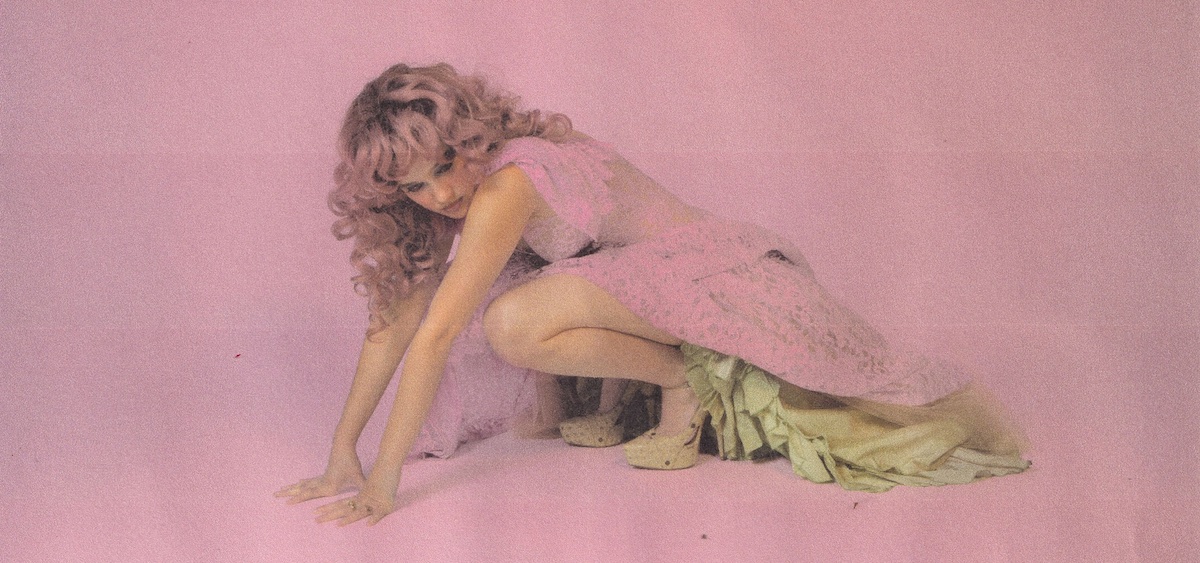
Susannah Joffe on trusting herself, ‘Dust Settles and So Will I’ and her festival debut
By: Nicholas Kobe
Posted on:
COLUMBIA, Maryland (WOUB) – Susannah Joffe is an alt-pop up-and-comer on the precipice of even more success. Gaining traction with her 2024 single “Die Your Daughter,” Joffe has cultivated a unique aesthetic and sound in the pop music landscape. In late September, Joffe’s first LP, Dust Settles and So Will I, was released, giving fans their first full-length look at the singer’s expansive world-building and songwriting abilities.
Just a day after the album’s release, Joffe made her festival debut at All Things Go DC. After the set, WOUB’s Nicholas Kobe spoke with Joffe about her performance, the new album and trusting her gut going forward. Find a transcript of their conversation, edited for length and clarity, below.
Susannah Joffe: Something about me, which is also the opening track of the album, is that it’s really hard for me to stop and feel proud about something because I’m just like, “Well, like I wanted to be number one,” you know what I mean? I dream really big. So I think I’m like, “Wow, I have a long journey ahead of me,” but I’m also like, “Wow, I’m so grateful to be where I am.”
It’s so surreal having an album out. I feel like my brain doesn’t even really comprehend it yet. I think today, performing songs from the album, was one of the first times I’ve been like, “Whoa, this is a body of work that I have spent so much time on, and now it’s like a real thing that people get to experience.”
Nicholas Kobe: Absolutely. And speaking of firsts, today was your first festival performance. How are you feeling?
Susannah Joffe: So good. So good. It was so pleasant. I was so happy to see such a huge crowd so early in the day and to see, like, so many people singing every single word. Just to be performing in front of a crowd that was so engaged. There was just a lot of joy and enthusiasm, just, like, energy buzzing, and yeah, it was electric. I felt like a star on that stage. It was so fun.
Nicholas Kobe: I was there; it was a big crowd, absolutely. And were there any songs in particular that you were really excited to perform live from the album?
Susannah Joffe: “All I See Is a Sky.” I was definitely excited to perform it live because it’s just, like, it’s one of those songs that when I was in the studio writing it, I was like, “OK, this is going to hit live.” And I’ve played it before when it wasn’t out, but now that I’m playing it when it’s out, it feels like such a powerhouse song to do with a huge crowd.
Nicholas Kobe: Absolutely. And now that you’ve done a festival, what would you say is the difference between doing a show like this versus doing a non-festival show?
Susannah Joffe: It’s very different energetically and vibe-wise, but I don’t really know why. I think people that are coming to a festival, like, they’re just there to hear good music and to experience it and, like, be in a community for however many hours or days. So I feel like there is this enthusiasm and, like, electricity in the air at a festival.
Nicholas Kobe: Tell me a little bit about the set design and everything going on onstage. What made you decide that that was the route to go?
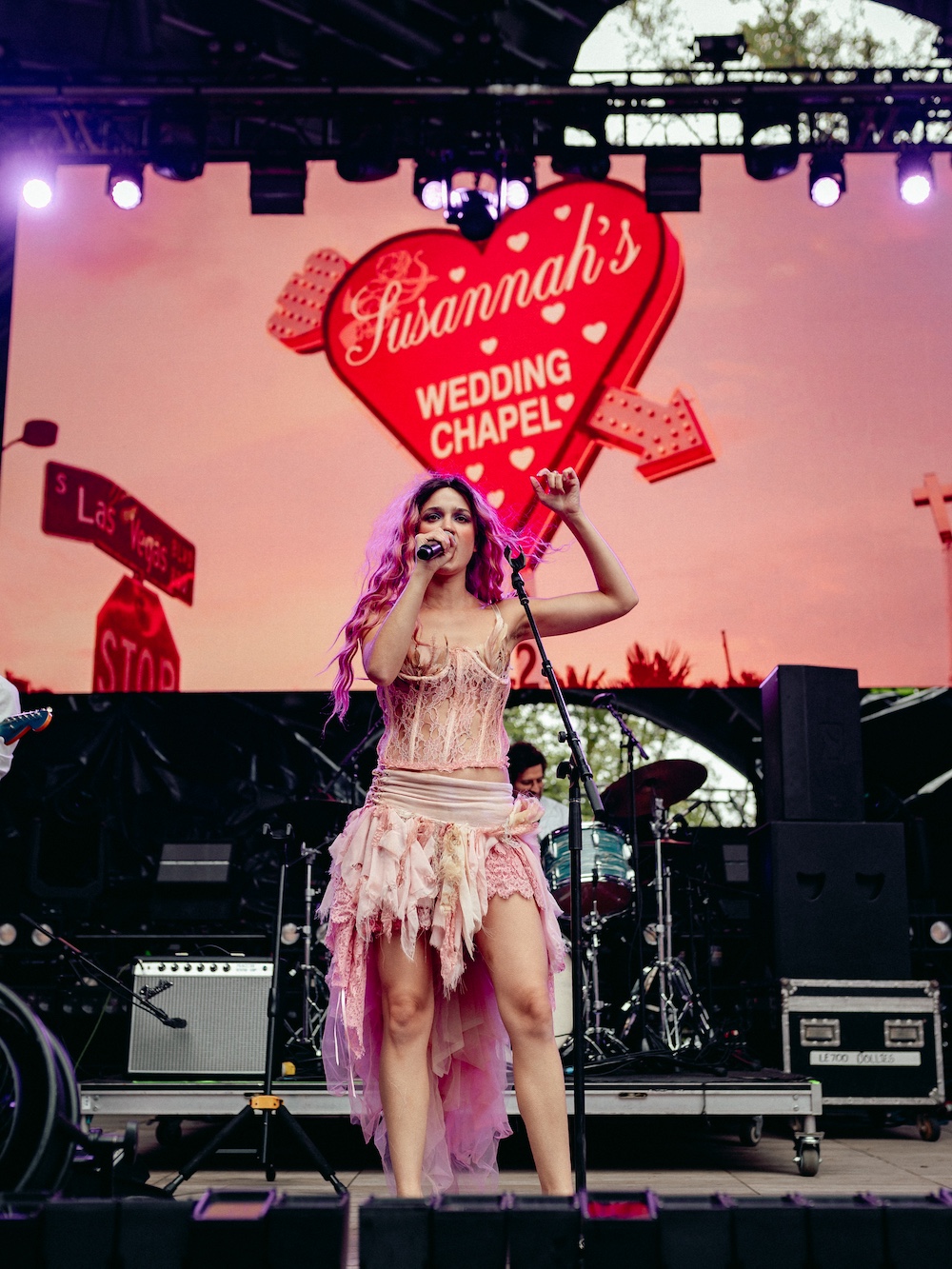
Susannah Joffe: Totally. Well, I worked with Natalie Tru, who approached me with this idea of doing something with billboards, and then I pivoted. I wanted it to be kind of like a Vegas wedding, so we looked at billboards from the Little White Chapel in Vegas and recreated one of those to be very “Susannah Joffe style,” in my color palette and stuff. Then we also had the visuals on the projector be, like, photos that we had added my name to and such. A really great artist, Jess Jaffe, made those. They have the same Vegas wedding vibe.
Then I wanted a callback to the “Happiness is Just a Myth” music video, where I’m in a wedding dress in this abandoned-seeming Middle America town. Conceptually, I wanted something that summed up the album’s feeling and visual language. This idea of a deserted desert wedding felt like it summed up the project perfectly.
Nicholas Kobe: Why does that language specifically sum up this album?
Susannah Joffe: I think the literal title, Dust Settles and So Will I, carries, like, a whole visual world with it, in terms of even the colors and certain aesthetics. I think that it just pairs perfectly with that. I also think the title carries this kind of bittersweetness. Because it’s like dust settling. It feels like this kind of beautiful thing, but also, like, it feels like putting an old house to rest. It’s, like, kind of a new start, but also, like, a really hard closing.
I feel like, I don’t know, it just, to me, makes sense with this kind of bride who’s been abandoned and is walking past all these dusty billboards on the side of the road with these messages saying, like, “Happiness is Just a Myth” and “Die Your Daughter” and “Dust Settles and So Will I.”
Nicholas Kobe: Absolutely. Moving forward into whatever comes next for you, what did you learn from making this first album that you want to take into the next one?
Susannah Joffe: So I think going into the album, I had to learn to trust myself and to trust my opinion. I remember I met up with Samia [Finnerty] and I was like, “I need advice. Like, I’m making my first album. I’m going literally crazy.” And it sounds so simple, but I think, like, having someone whose work you really admire be like, “Trust yourself, because the little voice in the back of your head that isn’t happy with something, despite what everyone else is saying, it’s still gonna be unhappy with that thing a year down the line, even if everyone else loves it.”
And so I was just like, “You’re so right.” Then I just fully leaned into that little voice in the back of my head that was, like, really annoying and definitely made me a bigger pain in everyone’s ass, especially my producers. But yeah, I think now I feel so much more gutturally; I know what I like and when I don’t.
Nicholas Kobe: Is there a particular moment from the album that defines that?
Susannah Joffe: Yeah, I think “End of the World,” actually, because we had made a full other version of that song that had full verses. It was a pop song, and it was just objectively good, and people liked it, but I was just like, “This just doesn’t feel right, and I just know it’s not right, and I can’t shake that feeling.”
I feel like after I talked with Samia, I had a new approach to all the songs. So I went back to “End of the World,” started the whole thing over from scratch and made it a much more experimental, avant-garde song with no real structure. It’s kind of like a free-flow thing. It has, like, a 30-second orchestral intro. I don’t think I would have done that before.