

News

Modern Science: An Ohio University researcher is looking into how the chemicals in plastic are attaching to our bodies
By: David Forster
Posted on:
ATHENS, Ohio (WOUB) — New research out of Ohio University focuses on developing chemical tools to study and manipulate protein-to-protein interactions. Knowledge gained from this research can be used to advance development of new therapeutic approaches for diseases and provide insight into how plastic impacts the human body.
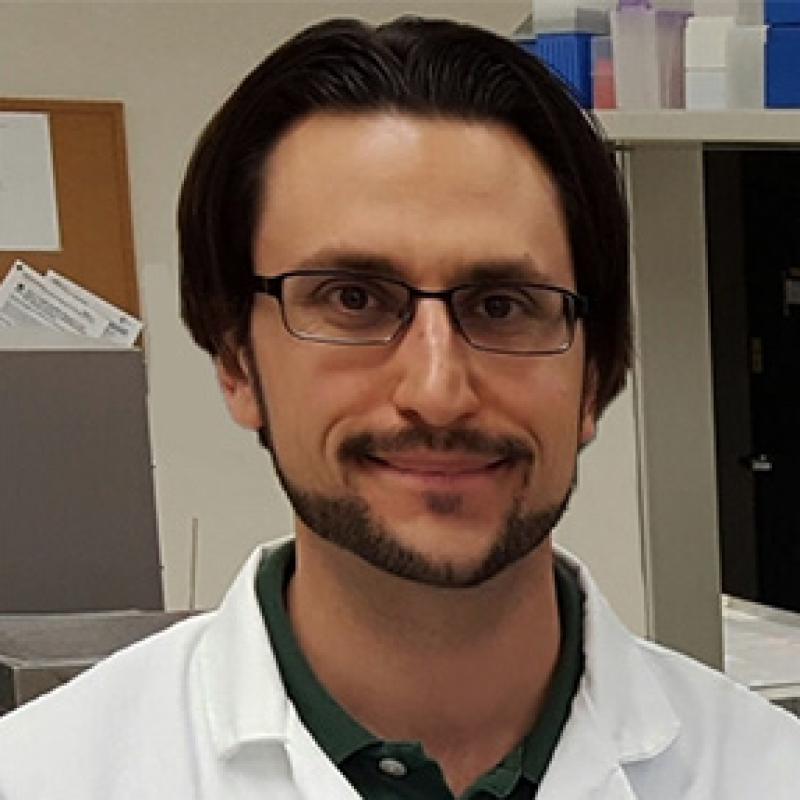
Justin Holub is an associate professor of biochemistry at Ohio University. He received a federal grant to study how certain environmental toxins bind to proteins and can lead to debilitating physiological disorders, including inflammation, autoimmunity, and cancer.
Holub sat down to speak with WOUB’s David Forster for “Modern Science.”
This interview has been edited for brevity and clarity.
On the environmental toxins from plastic that end up in our bodies
“One of the main sources of these endocrine disrupting chemicals come from plastics, single use plastics, plastic straws, plastic bags that end up in the environment. What happens is those plastics begin to break down and they become smaller and smaller. As they become smaller, they can end up in our bodies and end up in proteins and cause massive issues with physiological changes and physiological disorders.
“Approximately four hundred million tons of plastic waste were actually dispensed into the environment. Now they’re everywhere, they’re ubiquitous, and they’re actually being called forever chemicals because they don’t get broken down by bacteria or other types of biological breakdown in the environment.
How these plastic toxins impact the endocrine system
“The endocrine system is made up of numerous types of organs. There are organs like the adrenal gland and parathyroid and thyroid glands. These particular glands release hormones into our bodies.
“Now, one of the issues with the forever chemicals and the endocrine disrupting chemicals that we are studying is that they can actually mimic the small steroid hormones that are found in our bodies. What happens is that those small molecules, things like polystyrene, can break down into monomer units of styrene. Those particular molecules can actually bind to the proteins like the estrogen receptor or androgen receptor that normally bind estrogen or testosterone, respectively. They can cause those particular proteins to become active or inactive. Then that can cause major issues because the proteins that are involved in endocrine signaling are involved in things like growth, differentiation, gene transcription, all these things that are very important for our physiological health. If those things get disrupted, that can cause major issues, things like neurodegeneration, inflammation and also cancer in certain cases.”
On Holub’s research
“We have a way that we can actually monitor the activation of these proteins in vitro, which basically means in glass. What we’ve got is a high throughput screen in which we can actually study whether or not these proteins, like the estrogen receptor or androgen receptor, are actually turned on or off by these chemicals that we actually treat it with.
“We’re hoping to to sort of make it maybe take this to the next level and study something that is, you know, is really in the news nowadays. And it’s actually something that I think people will really begin to care about.”
How the toxins in plastic have a connection to cancer
“When those estrogen receptors become activated, they end up stimulating things like cell growth and cell differentiation and proliferation, which if left unmitigated and unchecked, that can lead to things like cancer and other debilitating physiological disorders.
“We actually want our cells to be able to replenish, we want ourselves to be able to reproduce. A lot of cell pathways and specific proliferation pathways in multicellular organisms have what we call cell cycle checkpoints, in which the cell is sort of stopped at a certain point. The cell kind of takes a survey of its nutrients. It takes a survey of whether or not it should divide and all these things. And once those particular checkpoints are all sort of checked off, for lack of a better term, then the cell goes ahead and says, ‘Okay, I’m going to divide.’
“Now, if the cell is getting stressed and it’s getting pushed to divide by other chemicals that are present that are not normally found in the body, then that can cause major problems because then the cell undergoes uncontrolled or maybe even unchecked cell division. And that can cause major problems.”
On if their research could lead to new treatments
“That could be one way to to sort of go about it.
“Let’s say you’re a drug company that’s interested in a new cancer therapeutic that’s targeting estrogen mediated cancers. There’s a lot of work that’s done to figure out whether or not that particular molecule can actually bind any of the proteins along the estrogen pathway. There’s a whole lot of work that’s done with respect to drug development on looking at the specific types of interactions that these molecules have with multiple proteins in the body.
“Our little niche here is to try to better understand how specific molecules interact with the estrogen receptor and whether or not they activate or inactivate it in a very rapid and high throughput manner that we can and if it’s very cost effective and very easy to access. Then what we can do is we can use that knowledge of whether or not, let’s say something like this particular estrogen derivative, causes the estrogen receptor to become active in this context, but not active in this other context.
“Let’s say there’s a mutation in the estrogen receptor that maybe that particular molecule then can’t activate it because it’s hitting a specific region of the receptor that’s been mutated or something. What we could do is utilize this technology in order to better understand how specific therapeutics might bind or target the estrogen receptor in different contexts.
“Often what we can do is use this technology to determine whether or not that particular molecule will compete with the natural estrogen in a specific context and how it affects that activation mechanism. I think that better understanding of molecules and proteins from a structural standpoint as a whole is really going to get us to the point where we can develop better therapeutics that are much more specific, less side effects, and a lot more effective overall.”
The first draft of the transcript used for this story was created in Adobe Podcast, which includes an AI transcription tool. A WOUB news editor then reviewed, corrected and reformatted the transcript before publication.