

News
A judge dismissed the James M. Gavin power plant’s lawsuit challenging EPA rules on toxic waste disposal
By: David Forster
Posted on:
ATHENS, Ohio (WOUB) — Regulators say a coal-fired power plant in southeast Ohio did not comply with federal rules on the safe storage of toxic waste, putting groundwater at risk of contamination.
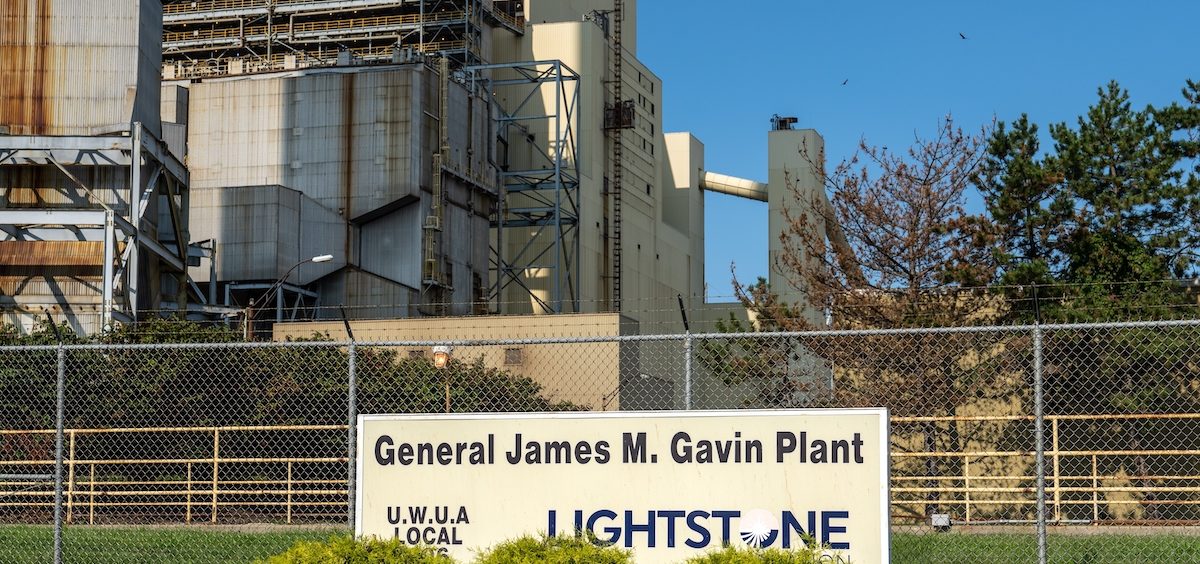
Last week, a federal judge dismissed the lawsuit.
In his decision, the judge detailed the threats to people and wildlife should chemicals in the waste seep into the environment and said the plant’s storage unit is subject to the rules as interpreted and applied by the EPA.
The judge’s decision hinged in part on what is considered a liquid under the rules. Gavin argued that liquid did not include groundwater. The EPA argued it did.
At the center of the case is a 314-acre surface reservoir filled with coal ash at the James M. Gavin power plant in Cheshire, a tiny village in Gallia County.
Coal ash is a waste byproduct of burning coal to generate electricity and is typically stored on site in some kind of reservoir, known as a coal-residual unit.
Judge Michael Watson begins his decision detailing the dangers posed by coal ash, which he notes “contains high quantities of arsenic and other carcinogenic, neurotoxic, ecologically-devastating substances.”
Watson notes that liquids can seep into storage areas, mix with the chemicals in the coal ash and then seep back out “into the fish we eat and the water we drink.”
“Bluntly, coal ash disposal threatens perhaps our most precious natural resource: water,” Watson wrote.
In 2015, the EPA developed its first rules regulating the storage of coal ash.
The rules said unlined storage units that are leaking and causing groundwater pollution must be retrofitted with a liner or closed. The rules also detailed the options for closing storage units.
One option involves leaving the waste in the unit and sealing it with a cover. The rules require eliminating “free liquids” from the unit before covering it and then making sure liquids leaking into or out of the sealed unit are minimized to the extent feasible.
This waste-in-place option is the one the Gavin plant used to close its unlined 314-acre storage reservoir.
Meanwhile, the EPA in 2020 amended its rules to require that unlined storage units be either lined or closed regardless of whether they are already leaking.
Gavin was planning to close another unlined surface storage reservoir, this one about 60 acres, when the rules were amended.
It asked the EPA for a two-year extension of the April 2021 closure deadline in the amended rules. The rules allowed for extensions provided the applicant was in compliance with all of the storage unit rules.
The EPA denied Gavin’s request. The agency said all 314 acres of the first storage unit Gavin closed are in contact with some amount of water. About 40% of all coal ash in the unit is saturated with groundwater, the EPA estimated.
This violated the waste-in-place closure rules, the EPA said.
“In essence, the EPA found that groundwater could infiltrate the Reservoir, absorb ‘contaminants of concern,’ and migrate out of the Reservoir into the broader environment and maybe even our drinking water,” Watson wrote in his decision.
Gavin sued the EPA over the denial of its extension request. Gavin’s central argument was that the EPA was trying to retroactively apply a new interpretation of the 2015 rules to the closure of the first storage unit.
The EPA’s new interpretation, Gavin argued, was that the 2015 rules prohibited groundwater from migrating into or out of a closed storage unit.
Gavin argued the use of the word liquids in the original rules did not include groundwater. As evidence, Gavin noted that when the EPA amended the rules a second time in 2024, it adopted a definition of liquids that specifically included groundwater.
Watson said the definition simply made explicit what was already implied in the original rules.
“The EPA’s new definitions prove only that it believed it could make the minimize-groundwater-saturation requirement clearer,” Watson wrote in his decision. “They do not show that the 2015 Rule omits the requirement, nor that the requirement is even ambiguous.”
“The 2015 Rule describes its ‘prime objective’ as ‘protect[ing] groundwater,’ Watson wrote. “Preventing groundwater from infiltrating coal-residual units—where it can absorb coal ash’s hazardous constituents and then leach back out—is critical to that end.”
WOUB reached out to Gavin’s lead attorney in this case to find out if the company plans to appeal the judge’s decision or take some other legal action, but he was not available to provide a response.