

Culture
Louder Than Life 2025 shows there’s still life in rock music
By: Nicholas Kobe
Posted on:
LOUISVILLE, Kentucky (WOUB) – Danny Wimmer Productions’ Louder Than Life has long been a stalwart of modern rock festivals.
Yet even after 11 years, the 2025 festival still felt hungry.
From the bands to Wimmer’s on-site adjustments and responses to last year’s feedback, to the way artists and fans alike showcased metal’s new era, Louder Than Life 2025 roared bigger and bolder than ever.
First off, Louder Than Life featured a stellar lineup. Thanks to smart scheduling and an unexpected venue expansion, you could actually see most of the bands you wanted to on that lineup. After missing too many exciting acts at Sonic Temple this year, that felt like exactly what I wanted.
Still, I’m not sure it was what I needed.
Bigger bands went on earlier in the day than ever before, and the conflicts often hurt the lesser-known artists on the lineup. There was no unexpected “wow” moment from bands like Descartes e Kant or Scowl, like in previous years.
For better or worse, and perhaps primarily due to more thorough pre-festival research, I often caught myself choosing the “safe” picks when deciding who to watch. While I did see some smaller bands like Liliac and XCOMM, I can’t shake the sinking feeling that, with so many mid-tier names filling the early afternoon, I may have missed out on a group that could have become my new favorite.
Not only was the festival lineup objectively solid, but I also loved that it was so sonically diverse, even if not all of the artists hit. For example, hip-hop was a huge mixed bag.
I love the idea of committing to $uicideBoy$ as Sunday’s subheadliner. However, in practice, the fact is that $uicideBoy$ not only makes pretty bad music — it also doesn’t translate well live.
That said, I get why, compared to the recent dominance of mellow trap, $uicideBoy$ might seem hype. Put them next to metal bands, though, and it’s another story.
The group leaned on lifeless instrumental backing tracks, and the set fell flat. More people left during this performance than any other subheadliner, choosing to see In This Moment instead, which speaks volumes. I respect taking a swing and missing rather than not swinging at all, but next time, a more energetic modern rapper would be the better call.
In a similar sense, Insane Clown Posse underwhelmed. Their connection to rock is clearer, yes, and I was looking forward to the band’s legendary zaniness. However, ICP’s set just boiled down to spraying Faygo and rapping serviceably over a backing track.
On the other hand, Tech N9ne’s music was actually hype and proves that a rock crowd can get going for hip-hop under the right circumstances.
Cypress Hill delivered Saturday’s best performance by adding more live instruments to their already bombastic setlist. The tag team charisma of the group worked in a way that ICP or $uicideBoy$ couldn’t dream of. Those live instruments, and being a band that generally picks more exciting beats, made the oldest rappers at the festival somehow feel the freshest.
Other niche genre pockets excelled, such as post-grunge, power metal, and hardcore.
Three Days Grace and Breaking Benjamin were some of the best-attended sets of the festival, leading me to believe Danny Wimmer should lean further in. Power metal was a new addition to this year, and the fun, forward corniness of these bands, I thought, worked well to varying degrees.
Even if Dragonforce was the most recognizable, their energy was outdone by bands like Gloryhammer and Alestorm.
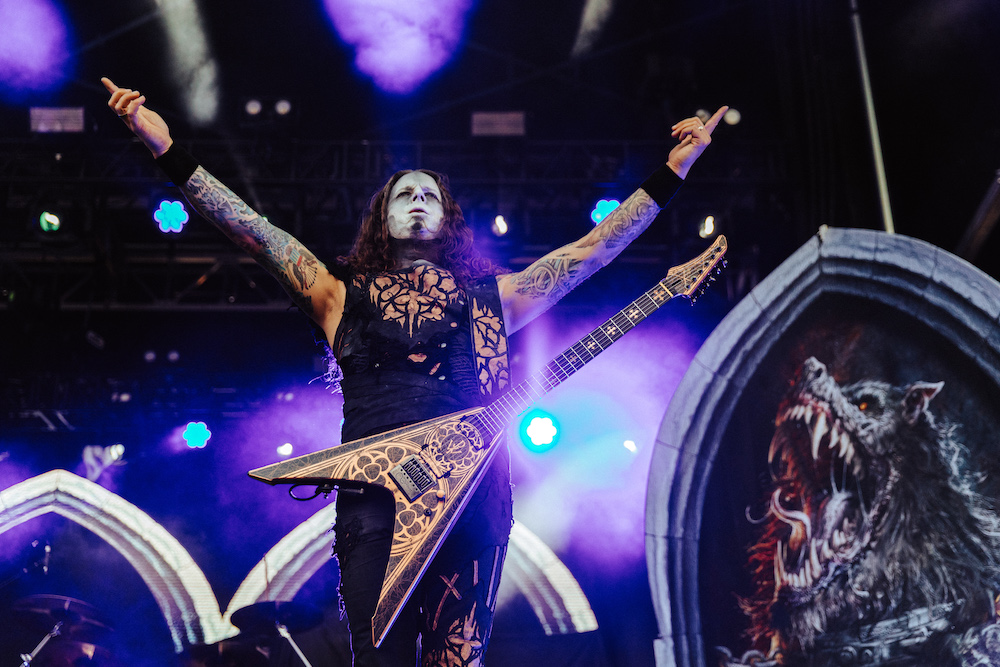
The biggest act of this sub-genre, Powerwolf, was Friday’s best performance, packed with catchy, fun songs, incredible musicianship, and a commitment to their “wolf church” that was so strong you couldn’t help but smile.
There was also a healthy dose of “classic metal” on Sunday, which I personally was all here for. Queensrÿche killed, even with the omission of their two biggest hits, as did Accept.
Bruce Dickinson (of Iron Maiden fame) really stole the show, however. Everyone who missed his set for Three Days Grace and Evanescence missed out on Bruce, once again proving why he’s one of metal’s top three living vocalists.
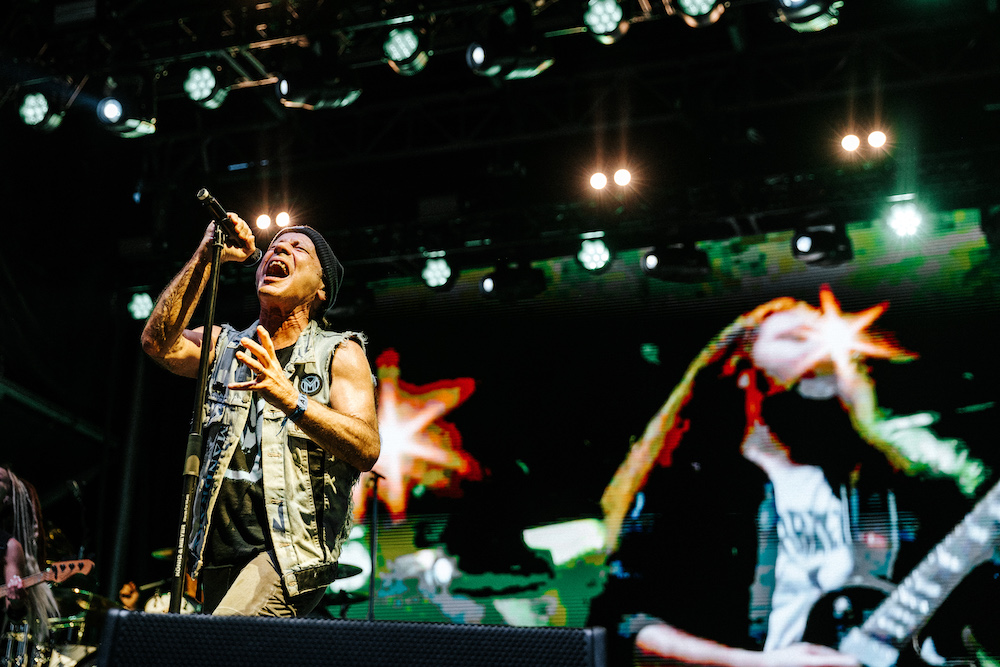
Hardcore punk also had a healthy showing, my favorite being Drain. Their unrivaled energy, matched with a great crossover thrash-adjacent style, makes them the type of craziness I go to hardcore for.
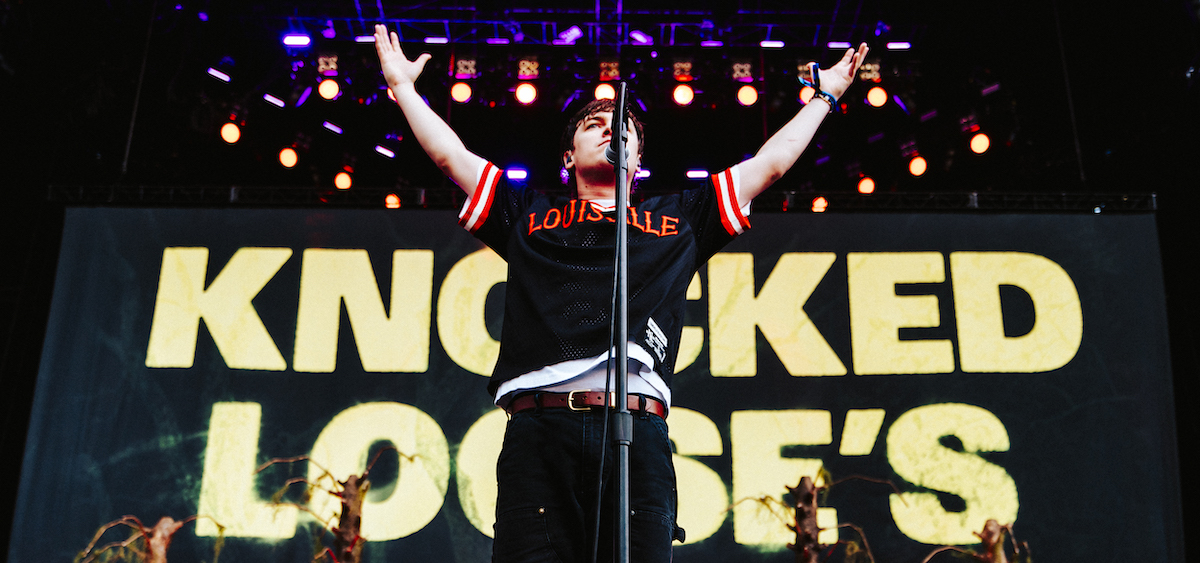
Of course, you can’t talk about hardcore without mentioning Louisville’s own Knocked Loose. Frontman Bryan Garris made clear how much this hometown show meant, both in my interview with him and on stage. It was like a cathartic victory lap — not complacent, but a fierce display of power. With the weekend’s biggest, most intense wall of death, these local legends couldn’t have asked for a better homecoming.
Speaking of catharsis, let’s talk Slayer.
I was thrilled to see their return after last year’s full-day cancellation, and they proved to be the perfect one-night headliner.
Slayer felt like the musical equivalent of having your head slammed into a wall for ninety minutes — and that’s why it was the best set of the weekend.
They opened smartly with South of Heaven, its first verse the perfect buildup to the intensity that followed. Musically, Slayer hasn’t missed a note since their 2018 breakup; if anything, they sound sharper than ever. Kerry King and Gary Holt ripped through some of thrash’s wildest solos with ease, while Tom Araya’s voice soared, especially in the high moments like the iconic opening wail of Angel of Death.
As clearly the oldest headliner, Slayer may initially look out of place, but thrash and death metal were well represented. Aside from Slayer, the thrash standouts were the pure messy fun of Municipal Waste and one of thrash’s most consistently great bands, Testament.
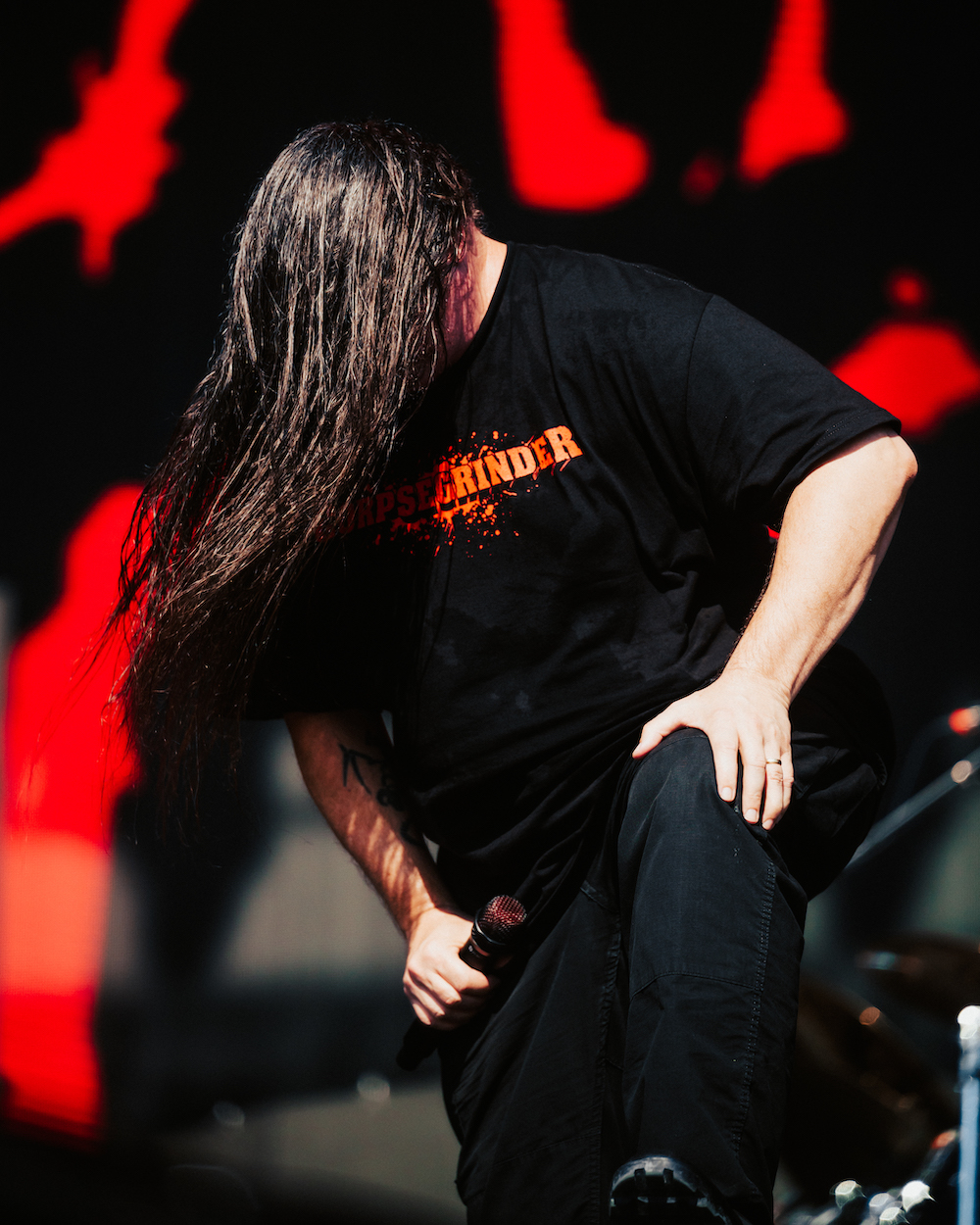
Another huge standout for Thursday was Cannibal Corpse, one of only a few pure death metal bands on the lineup, alongside Sanguisugabogg and Carcass, who were also great. With a discography so long, it’s impressive that Cannibal Corpse was able to create such a tight and vicious set. That doesn’t mean I didn’t want more, but in terms of “ass-kicking-to-minutes” ratio, it doesn’t get better than this.
The non-music side of Louder Than Life was a pleasant surprise. My expectations were low after Sonic Temple 2025, where preventable logistical issues and sidelined vendors soured the experience. Despite those shortcomings, it seems Wimmer made a conscious attempt not to repeat the past, not only by the vows they made to better Sonic Temple 2025, but also by the way that Louder Than Life got right back on track with a pleasant festival experience.
I can’t speak to parking, but Wimmer responded quickly to the heat by adding extra water stations, relocating some merchandise inside to reduce lines, and striking a healthier balance between vendors, artists, and food. Not everything worked, but the effort was apparent.
Sunday’s thunderstorm tested those improvements. However, thanks to the new location across the fairground from last year, the concrete, rather than grass, kept Louder Than Life from becoming a muddy soup, a change I have to imagine was intentional.
Speaking of the new location, there’s no way to talk about Louder Than Life 2025 additions without talking about the Kentucky Kingdom theme park. With this announcement coming months after the lineup reveal, no one bought Louder Than Life tickets expecting a free theme park, so this is a huge bonus, regardless.
Better yet, it was genuinely fun. The three big coasters — Lightning Run, Wind Chase, and Woodland Run — each dropped about 100 feet, delivering fast, intense rides. Watching bands and crowds from the top of a coaster, seconds before plunging, was unforgettable — a thrill I can’t imagine anyone not loving.
The biggest takeaway from Louder Than Life was not just the strength of the lineup, but the reaction and response from the audience. This mainly applies to Saturday and Sunday, headlined by Avenged Sevenfold and Deftones, respectively.
Both bands put on a perfectly good performance. Avenged took some gambles with some deep cuts, but despite those little twists, their performance hadn’t leveled up since I saw them in 2023. Musicianship was, of course, great, and they brought plenty of energy, even so late into their career. While I could’ve done without the heavy reliance on AI art (across the whole festival, to be frank), Avenged was just as solid as always.
The same goes for Deftones; while they surpassed Avenged Sevenfold by being a more consistent band, especially with a pretty excellent 2025 album, they felt a little off as a headliner. Perhaps the exhaustion of the weekend was kicking in, but it felt like the guitars lacked the kind of punch that reminds you to put in your earplugs, and the set just didn’t have the kind of dramatic climax I hope to see in a festival headliner.
However, neither Avenged nor Deftones were the real headliners of their days, as Friday and Saturday really were overtaken by Sleep Token and Bad Omens.
Danny Wimmer’s official Louder Than Life app reported that over 21,000 people were “scheduled” for Sleep Token’s subheadlining performance. Not only was that more than Avenged, but it was also more than any other band all weekend by 5,000.
Bad Omens didn’t hit that high, but they were sitting at a similar crowd size to all of the headliners, including Slayer and Bring Me the Horizon. There was a noticeable exodus following these subheadlining sets.
While Deftones and Avenged brought good, Bad Omens and Sleep Token brought great. Both excel in a live setting, with a focus on live instruments and the “metal” side of pop-metal; both can elevate their setlists above the studio versions. Both groups drew massive, ravenous crowds, with every lyric screamed back at them in unmatched enthusiasm.
Sleep Token’s fake castle ruins were among the weekend’s best visuals, and combined with their striking costumes, the band was a spectacle. When Vessel, Sleep Token’s masked lead singer, growled “make a good girl bad” during The Summoning, it elicited shrieks that wouldn’t have been out of place at an Usher show.
Both of these bands, and those like them on the bill (Motionless in White, In This Moment, Spiritbox), not only draw in new, younger fans but are appealing to a female demographic that metal hasn’t tapped in a long time, if ever. This was evident just by walking around Louder Than Life, but it really stood out in these two specific sets, where Sleep Token and Bad Omens tore through their setlists with the fervor of rock gods.
Speaking of which, Danny Wimmer’s gamble on a “younger” headliner paid off. Bring Me The Horizon delivered high-concept visuals, triumphant anthems, and one of the weekend’s best performances — sending the festival out on a high note.
Let’s be clear, I dislike the recent output from these bands, and personally, their visual production hasn’t saved them from their boring music. Even if I don’t like the music, a passing of the torch from ’90s has-beens has been what I’ve been begging for in the rock scene for years. Bands like Sleep Token, Ghost, Bad Omens, and more have finally taken that mantle to the point where my calling for “new headliners” isn’t a far-fetched wish; it’s an inevitable reality.
Rock has been “dead” for years, and while a lot of us know that’s not really true, it’s not unreasonable to assume that later millennials and Gen Z haven’t had “their rock bands” to the same extent as their predecessors. Finally, that prayer has been answered, and young bands are finally atop the mountain.
With love for bands across subgenres and eras, Louder Than Life proved that there’s not just a heartbeat in rock music, there’s an energy and fire we haven’t seen in a long time.
Louder Than Life 2025 was not only fun, it was also a testament to the health of rock music, and what more could you want than that?