

Culture
Drive-By Truckers’ Patterson Hood talks new album, songwriting process and next generation of southern rock ahead of Stuart’s performance
By: Julia Weber
Posted on:
NELSONVILLE, Ohio (WOUB) – Though some may know Patterson Hood for the raucous southern rock of the Drive-By Truckers, his latest album Exploding Trees & Airplane Screams is anything but. Still, it retains the intrinsic lyricism that defines Hood’s songwriting—both with the Truckers and in his solo work. It’s vulnerable and reflective, and, according to Hood, might be his most autobiographical record yet.
Tomorrow, Hood takes the stage alongside singer-songwriter John Moreland for a double-bill performance at Stuart’s Opera House (30 Public Square), drawing from his latest album, past solo work, and the Drive-By Truckers repertoire.
Ahead of the show, WOUB Culture writer Julia Weber spoke with Hood about Exploding Trees & Airplane Screams, his approach to songwriting, and a new generation of southern rock.
A transcript of their conversation, edited for length and clarity, is below.
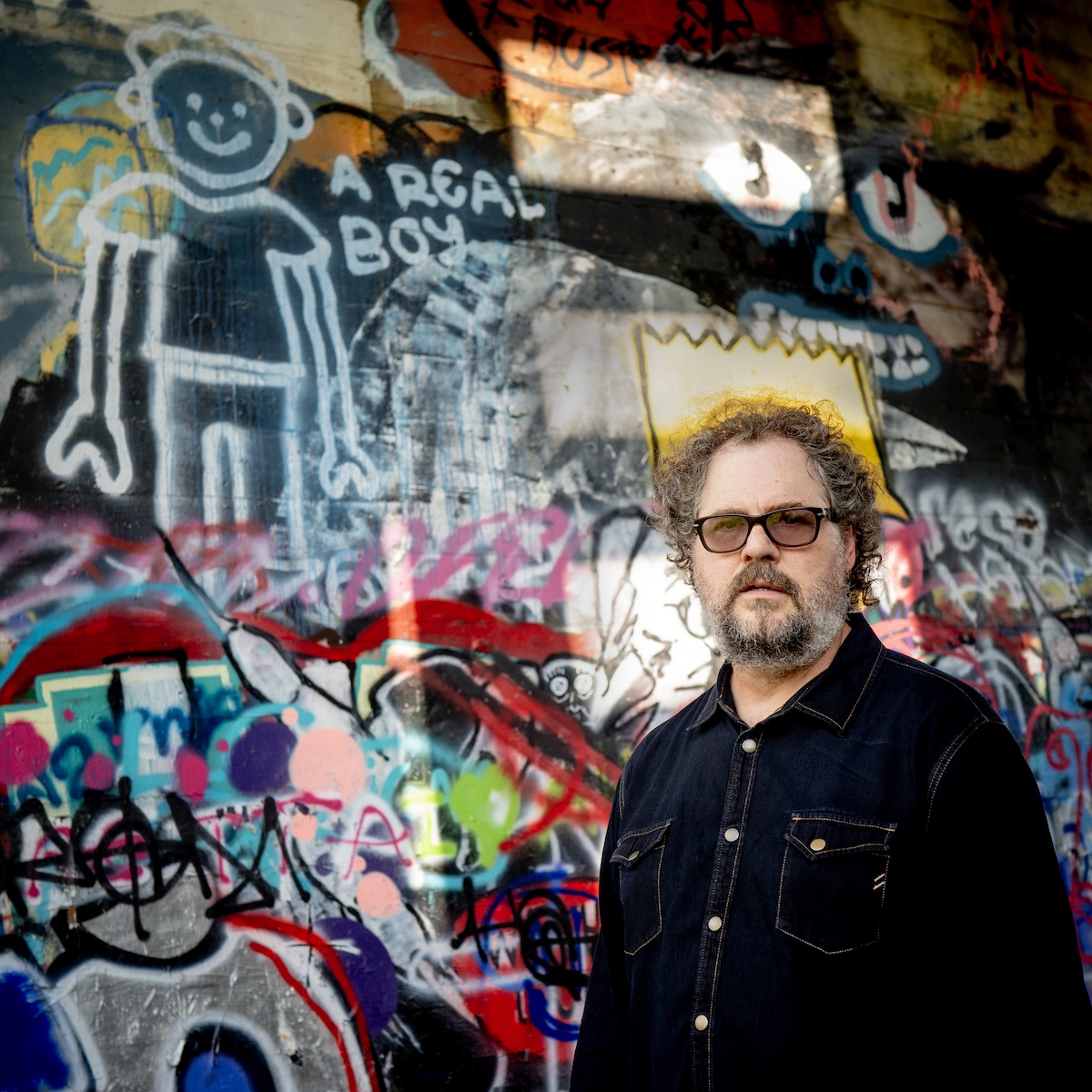
JULIA WEBER: You worked with Chris Funk of The Decemberists on Exploding Trees & Airplane Screams—what was that collaboration like?
PATTERSON HOOD: I moved to Oregon about 11 years ago, and right before I moved there, I met him and we became immediate friends. Whenever I’d play solo gigs in that region, he would sit in and we’d play together—we had great chemistry and rapport.
I thought it’d be fun to make a record with him, so I started a folder, and every time I wrote a song that felt right for that—something different from my day job with the Drive-By Truckers—I’d put it in there. At some point, I had an album’s worth, so we went in and cut it.
We had a great time and brought in a bunch of friends to play on it, including people I’d wanted to collaborate with for a long time—MJ Lenderman, Wednesday, Waxahatchee, Kyleen King, and Steve Berlin. I’ve been a huge Los Lobos fan, and a fan of Steve Berlin since his days with the Blasters before he joined Los Lobos in the ’80s, so I’d always wanted to record with him.
Can you talk about working with so many different artists and bringing them into the album to help fill out the sound and incorporate a range of perspectives and musical approaches?
HOOD: It was a treat for me because they’re all people I’m a huge fan of. I made a dream wish list, and every single one ended up on the record—no one turned me down. Some did their tracks separately and sent them in, mostly because of touring schedules and where I live, but it was always a treat to hear what they did—like, “holy sh*t!”
Hearing Katie (Crutchfield) of Waxahatchee sing on “The Forks of Cypress,” Kyleen’s viola on “The Pool House,” and what Lydia did on “A Werewolf and a Girl”—she just knocked it out of the park—it was all a treat. “The Van Pelt Parties,” with Wednesday and MJ Lenderman, we did together in Athens, Georgia. They’d played there the night before and were driving to Chattanooga, but took a couple hours that morning to come hang out, record their parts, and it was joyful.
I love collaborating—and of course I love my band and what we do—but this opened things up to work with people I don’t usually get to, and that was fun. And working with Chris Funk was great—he’s a great producer and artist, and brought in some cool ideas and players I didn’t know, like Stuart Bogey on woodwinds, especially on “Miss Coldiron’s Oldsmobile,” which was stunning. It was a great experience, and I’m proud of how the record turned out.
Walk me through what you were thinking about when you wrote the album. There are strong themes of solitude, sorrow, and reflection—what were you working through?
HOOD: That’s a good question, because it has kind of a funny answer. It really happened the way I said—just putting songs in a folder, thinking, “this would be cool to do with Funk,” and not thinking much about it until later, when I pulled them out to see if I had an album.
We got all the way through recording and were mixing it when it dawned on me that it tells a story—it’s very much a concept record, like Southern Rock Opera, except it happened accidentally. The only explanation I have is that I’ve done so many records like that, my brain just works that way, even when I’m not thinking about it.
It’s extremely autobiographical—probably the most of any record I’ve made. It tells the story of my first 30 years, beginning in early childhood and ending right before my thirtieth birthday, but mostly in reverse. The first song is the end of the timeline, and the last song, “Pinocchio,” is the beginning. It jumps around a bit, but it’s essentially a backwards journey through those years.
My life changed drastically a week after my thirtieth birthday, when I moved from my hometown to Athens, Georgia—honestly, for the better. The record ends up telling the story of what I lived through to get to that point and start the life I know now.
It’s so fascinating to me that you didn’t set out to create a concept album at all.
HOOD: Me too—I’m endlessly fascinated by that. I’ve been writing songs since I was eight, and it’s the thing I do most. I’ve always thought of myself first and foremost as a writer, with songs being the dominant form. I write other things, too, but writer comes first—maybe entertainer second. Guitar player and singer are things I’ve worked at to serve that purpose.
After all these years—more than 50 as a songwriter—it’s still a mystery. I know how to do it, and I’ve learned a lot of technical sh*t along the way, but the basic spark—where it comes from—I still don’t understand. I often think of it like an antenna picking up a signal from somewhere out there, and I write it down.
I can control certain aspects with technique, but the core of it comes down to that. There’s something out there I can sometimes tap into, and when I do, I get a song. It’s up to me to make the most of it, but I don’t have much control beyond that—and I love that. I’m endlessly fascinated by it because it’s a mystery I can’t—and probably never will—fully explain.
As both a songwriter and writer, do those practices inform each other, or differ in meaningful ways?
HOOD: They’re different, for sure, but as long as I’m writing, it’s good. Writing anything helps all of it—whether it’s an essay about a musician I love, something political, a short story, or even an obituary. I’ve written a lot of memoriams for people we’ve lost, and all of it seems to help the other.
If nothing else, it opens up channels in my brain so when the songs come, I’m better able to articulate them. It sounds hippy-dippy, but when I get one of those transmissions from the beyond, it’s a race to write it down before it’s gone—because if I don’t catch it, it’s gone and it rarely comes back.
Sometimes they come at the most inopportune times, and sometimes you just have to lose them. I hate that—I feel like for every song I’ve gotten, I’ve lost one or two just as good. But you’ve got to live your life, and that’s part of it too.
What are some of your favorite songs you’ve written?
HOOD: My favorite song I’ve ever written is now painfully old—it turns 30 this week. It’s called “The Living Bubba,” from the first Drive-By Truckers record. It’s about a guitar player from Georgia who died of AIDS and played a hundred shows in his last year because he knew he was dying. Back then, there was no cure—no real hope yet.
He threw himself into his art with everything he had. I got to play with him a couple times and ran sound for some of his shows in Athens, Georgia. It was a life-changing experience. I wrote the song as a thank you a few days before he died. That’s one of my favorites.
And “Heathens”—that’s an exception to what I said about writing songs quickly. It took me about three years, in three different stretches. I wrote the music first—which is rare—then the first half of the lyrics about a year and a half later, and the second half a year and a half after that. It’s a weird one, but definitely one I’m proudest of.
“Pinocchio,” on the new record, is another I feel strongly about—I’m very proud of it. I think it’s my wife’s favorite song I’ve written.
I’m still trying to write my best song, so when I say my favorite is 30 years old, I’d love to top it. But there’s something special about that one—the subject, the inspiration, and how it turned out. When I was writing it, I had no idea it would become a favorite. I didn’t even think it was very good at first, and then it hit me—there might be something special here, maybe next level from anything I’d done.
I may never top it, and if not, I’m okay with that. It’s very special to me on a personal level.
It feels like a moment for Drive-By Truckers and the disciples, if you will, of Drive-By Truckers. There are a lot of bands channeling those sounds and influences right now—perhaps most notably Wednesday.
HOOD: Who I love—I absolutely love them. They’re my favorite band right now. I’m also a huge MJ Lenderman fan, and we’ve become good friends. I’m friends with Karly and all the Wednesday folks too. I’m so proud and honored that these younger, amazing players are talking about our band and seem to like it. I don’t take that for granted.
My taste stays pretty contemporary, even though I love a lot of older stuff. I pay attention to what’s new, and there are so many young bands I love—Ratboys, Wild Pink, Friendship, Florry. God, I really love Florry. It’s such a great time for really cool music right now.
Just when everyone was saying rock was dead or dying, this new generation came out making these ass-kicking records—taking what older folks like us did and pushing it to new places. Karly from Wednesday is like a poet—her storytelling is wonderful and interesting. Jake is such a great writer. It’s a pretty wonderful time for music. My top 10 last year had about 25 records—that makes me happy.
You mentioned this new crop of artists is taking some of those innovations to a new level—how have you seen that?
HOOD: To me, it’s a continuum. Music always influences other music. I was influenced by so many bands before me—and I’d like to think I’m being influenced by what’s happening now. I’d love to think Wednesday is influencing me, because I can draw a connection between what they do and what I do—and maybe it pushes me in new directions.
The same thing happened when I fell in love with Vic Chesnutt’s music. There was a commonality between what he did and what I did, but he took it so much farther—it was liberating. It made me think, “Oh, wow, you can do that.” We became friends later on—I loved the guy.
There should be cross-pollination among musicians, and the younger generation really embraces that—collaboration, sharing ideas. I’m trying to bring more of that into what I do, solo and with the Truckers, especially as we work on a new record this year.