

News
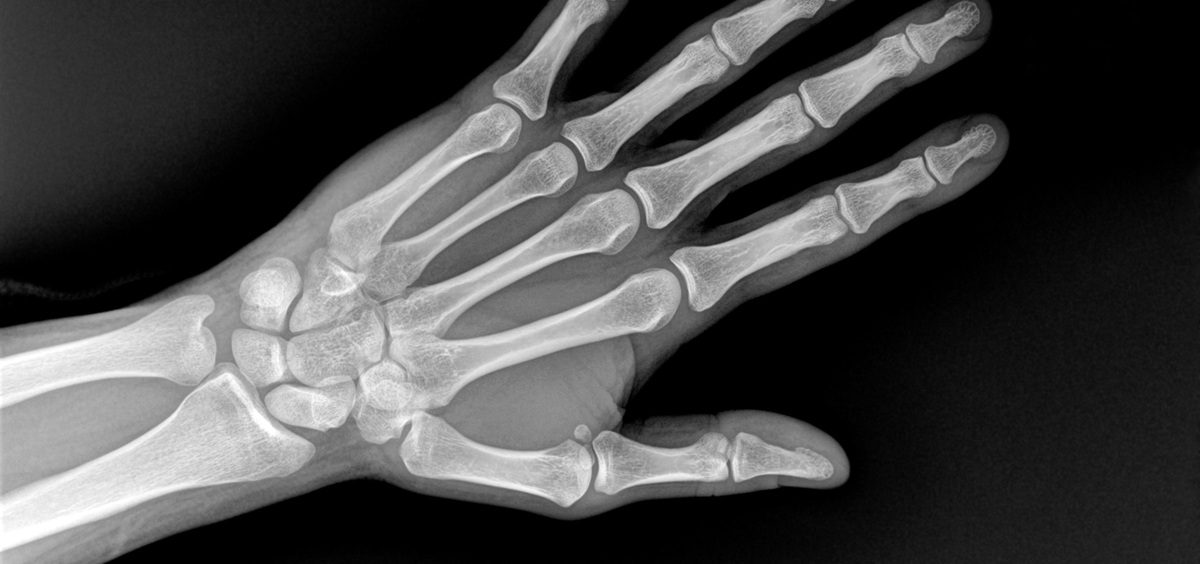
A technology developed at Ohio University may improve testing for older women at risk for broken bones
By: David Forster
Posted on:
ATHENS, Ohio (WOUB) — One in two women will experience a fragility fracture in their lifetime. A new study shows a technology developed at Ohio University may do a better job of identifying older women at risk for broken bones than the current test.
Brian Clark is a professor of biomedical sciences at the Ohio University Heritage College of Osteopathic Medicine and director of the Ohio Musculoskeletal and Neurological Institute. He was the lead investigator on that study.
Clark sat down to speak with WOUB’s David Forster for “Modern Science.”
This interview has been edited for brevity and clarity.
On how pervasive the issue of broken bones is for older women
“Fifty percent of women will break a bone due to a low-trauma accident, and it’s one out of four men in the world. That equates to 37 million fractures per year. Fractures are painful, disabling, and in the case of hip fractures, they kill.”
How the new test differs from the current one

“The current technology that’s used is called dual-energy X-ray absorptiometry, which basically is two small beams of radiation that go through the body. Based on how muscle versus fat absorb the radiation, it estimates the density of the bone.
“The density of the bone only explains about 50% of bone strength. There’s a lot of things beyond how dense a bone is that determines the strength of a bone, which ultimately is what’s going to decide whether or not a bone breaks when you fall on it.”
On how the new test evaluates risk of broken bones through vibration
“It is what we call a three-point bend test. We stabilize the wrist in the elbow and we apply a vibration at the midpoint of the arm dynamically.
“I always tell people it’s like the amount of pressure the little device places on the arm is about the amount of force you push an elevator button with. The vibration feels like an electric toothbrush. But that minuscule amount of vibration is actually vibrating the bone. We’re able to detect that small vibration. We’re assessing how stiff the bone is. The stiffness of the bone is near perfectly correlated with actually how strong the whole bone is.”
What you can do with the information provided by the new test
“The [current] bone density tests are missing 80% of fractures. This means 80% of people who are having these fractures, they’re being denied treatment. They’re not eligible for insurance to cover medications that may prevent fractures.
“Ultimately the goal of a diagnostic in my mind is always to have better treatment that’s more actionable to help you make better decisions.
“You don’t want people taking medicines who don’t really need it because they do come with risks. On the other hand, if someone really needs a medicine, those benefits outweigh the risks. It’s all about helping people better make those risk-benefits assessments.”
The first draft of the transcript used for this story was created in Adobe Podcast, which includes an AI transcription tool. A WOUB news editor then reviewed, corrected and reformatted the transcript before publication.