
Culture
Denver author Tom Cladis discusses trusting characters in debut fantasy book, Cleveland career detour
By: Ian Saint
Posted on:
DENVER, Colorado (WOUB) — As a young flight attendant, Cleveland was “not my first choice” as an operating base for Denver native Tom Cladis. But trusting the process led to an unexpected transformation, as his time in Cleveland inspired many lasting memories and his first published story.
Four decades later, back home in Denver and writing his first fantasy novel, trusting the process once again led to another transformation.
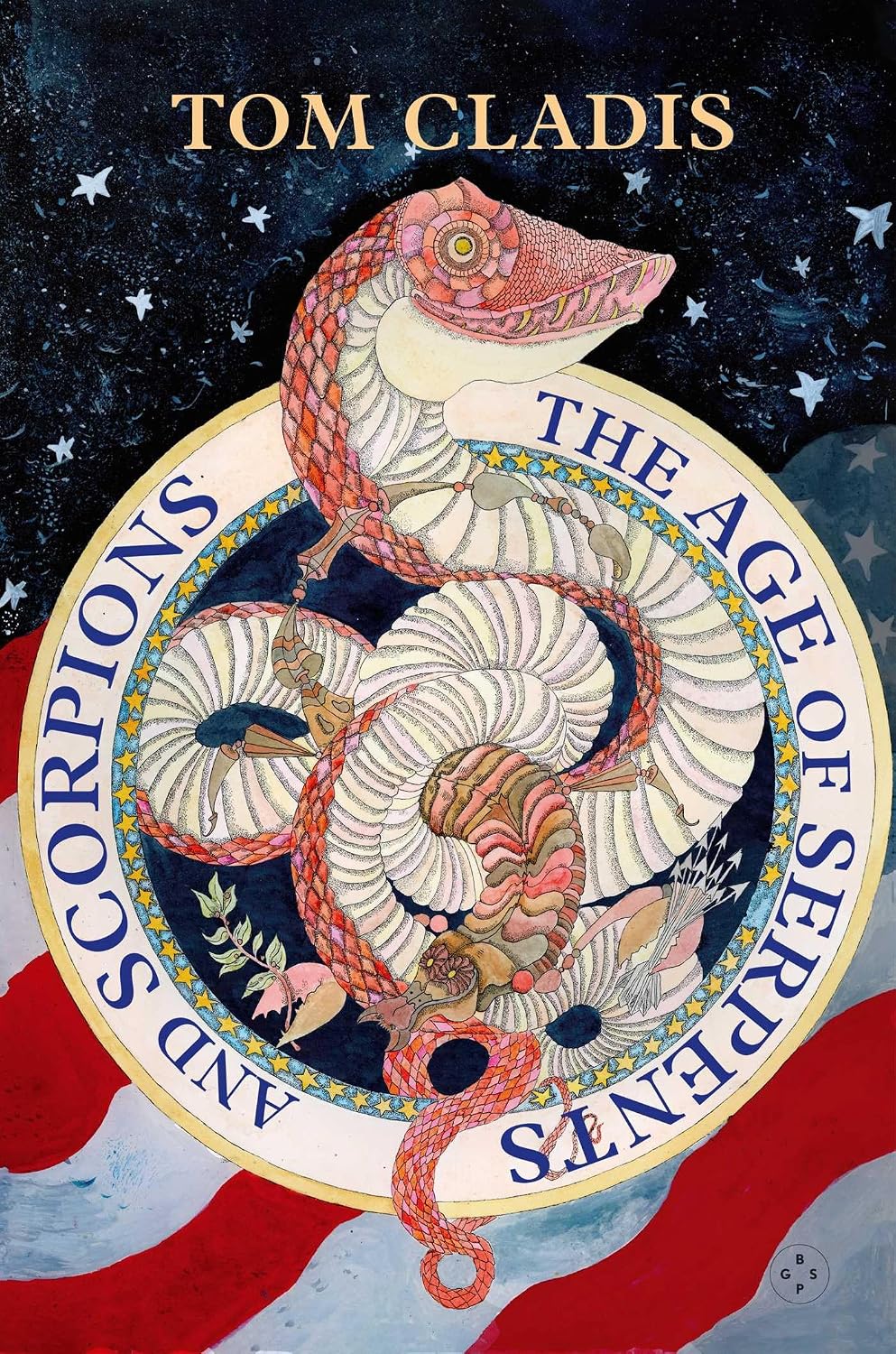
The Age of Serpents and Scorpions follows Colorado teenagers Jimmy and Sasha as their relationship is challenged by a mysterious conflict that blurs the line between the physical and spiritual worlds. Released in hardcover in the U.K. last year, the novel is now available in paperback in the United States.
Ian Saint: What’s your Ohio residency story?
Tom Cladis: I was a United flight attendant from 1978-1983. We had a choice of NYC, DC, and Cleveland. I was 22, bottom of our class; so the only choice left was Cleveland. Turned out the best thing that could’ve happened.
Ian Saint: Pat Benatar and Foreigner’s Lou Gramm told me how Cleveland rock radio was crucial for their era.
Tom Cladis: WMMS was a great station. I got off a flight late one night, and (WGCL) late-night DJ Caroline did a radio version of The Dating Game. She had five callers, and I got in. I answered questions as best I could, a little flirtatiously, and won the date with Caroline. We went to That Place On Bellflower, a really trendy and hip restaurant. Caroline comes across as this very sultry-voiced vixen on radio; but in-person, she was like Marianne from Gilligan’s Island — a lovely, fresh, fun personality.
Ian Saint: Cleveland is also where your first story published?
Tom Cladis: Yeah, a local magazine short story contest. Everything You Always Wanted To Know About Flying But Were Afraid to Ask. It involved international espionage: a girl I met on the plane happened to be the girlfriend of a dangerous terrorist. They were planning a big plot, so the CIA wanted me to pursue this relationship with this girlfriend. I ended up saving the day, but getting shot in the process. A few months later, a girl who’d read the story goes, “Tom, I can’t believe you got shot!” I had to tell her I made that up. That got me excited about how I can really move people with my writing.
Ian Saint: Writing this novel took 8 years?
Tom Cladis: Yeah, I had three young daughters and a full-time job. My writing time was 4 a.m. to 8 a.m. on Saturdays and Sundays. That was critical because I found, in writing this story, I’d get so immersed. These characters were so vivid in my imagination, like I was inside the story — following them along, taking notes on the decisions they made.
Ian Saint: Did your finance job influence the novel’s direction?
Tom Cladis: Yeah. In finance, I’m very aware of what’s going on politically and how it affects everyday life — there’s a political element to this story. It’s been compared to C.S. Lewis’ Chronicles of Narnia, and there’s deep themes — religiously, politically, faith, human nature.
Ian Saint: Why did you decide to make it a Young Adult novel?
Tom Cladis: We’ve all gone through young adulthood. Teenagers are at turning points in life — very open to new ideas, questioning things, pursuing things in the belief that everything is possible. I needed the freedom of teenage mind to explore and accept anything could be possible; that mindset is critical to the story.
Ian Saint: How did Jimmy and Sasha develop over the course of those 8 years, and how were you impacted by their development?
Tom Cladis: When you’re writing, you have a roadmap of where you want to go — beginning, middle, and end — in mind. You have an idea of who these characters are; but once I started writing, I found I got so immersed in the story, and these characters became so alive, that I let them make the decisions on which way to go. Through the choices they made, they became more than I’d imagined them — so I became a note-taker, and I followed them around. Ultimately, the choices they made and the direction they took the book — which was not my original intention — were better than it would’ve been. Over that 8 years they grew, and I grew through them; it was synergistic.
It started out as just a short story. Each year, I’d write a Christmas story, like 20 pages long. I had a New York publicist help with my first book, How To Lift Cars Off Your Face and Other Tips for Living Forever. She said, “Gosh, these characters are awesome. You need to expand this into a full novel.” I didn’t have any agenda other than a cute Christmas story, then it evolved — following the characters around, letting them make the choices — and it couldn’t have been more timely, with everything going on in the US and world right now.
Ian Saint: What was the hardest aspect of writing this book? For my writing, crafting the ending is usually hardest.
Tom Cladis: I completely agree. I go to lots of movies. I always watch the whole movie, even if it’s a bad movie; but if it has a good ending, then I feel good about it. This was not the ending that I’d envisioned; it naturally evolved through the choices the characters made. The hardest part was trusting the characters. I realized I wasn’t in control of this story. A lot of what factored into it was politics that I was having to address with my day job. I was also the youth minister for our Greek Orthodox church for 19 years. There were issues that cropped up during my ministry, that I couldn’t really address in my position; but my characters, Jimmy and Sasha, were able to — religious ones, and political as well.
Ian Saint: What is your novel’s overriding theme?
Tom Cladis: Strive to see the world not as it is, but as it should be. Leave your mind open to all possibilities. I’ve compared the mind to a parachute; for a parachute to function properly, it has to be open. Same with the human mind: it has to be open to all possibilities. Too often, as we get older, we accept things just because — that’s the way traditions are, the way it’s always been. But what if the traditions are wrong? Then you’re perpetuating a fallacy without any critical thought.