

News
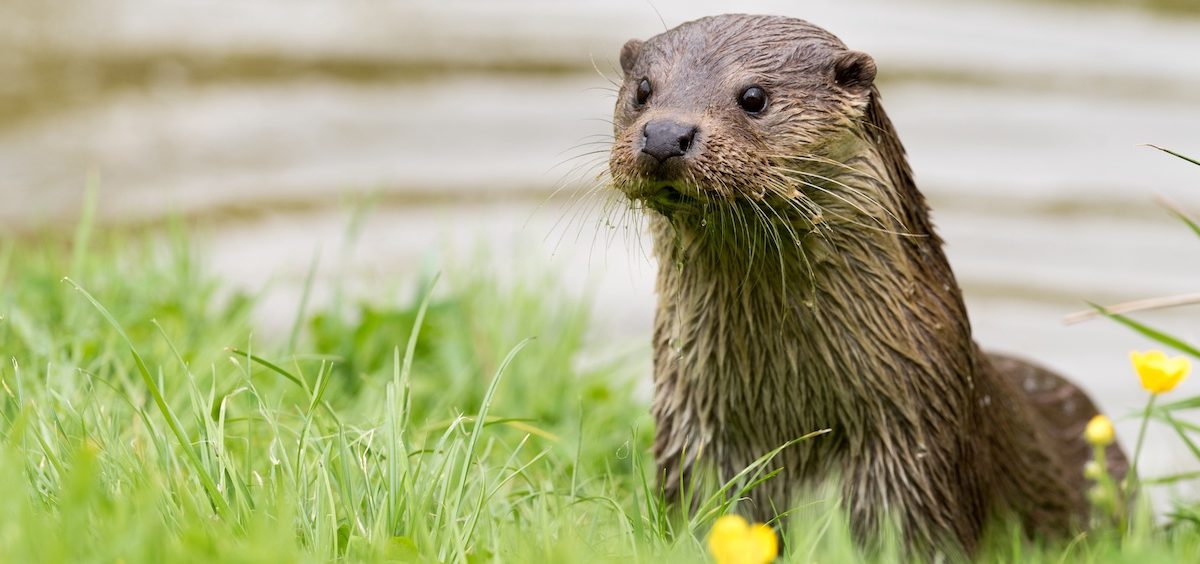
River otters are returning to southeast Ohio after a very long absence
By: David Forster
Posted on:
ATHENS, Ohio (WOUB) — “That muddy little bank there, that’s where I first saw ’em,” says Joe Brehm as leads me down a trail along Sunday Creek a few miles north of Glouster in Athens County.
Brehm is referring to the river otter tracks he spotted here while on a hike weeks ago.
That’s a big deal. There have been no reports of river otters along this stretch of the Sunday Creek watershed for more than a century.
Brehm is the co-chief executive officer of Rural Action, which has been working for decades to clean up the creek, which was severely polluted by acidic runoff from abandoned mines.
On a sunny fall afternoon, we’ve returned to the spot where he saw the tracks, hoping to find more. But mostly we see raccoon tracks. Lots of them.
“Raccoon tracks can be kind of maddening because they can look like a lot of different things,” Brehm says. Including river otter tracks.

Still, Brehm is excited about the prospect of river otters taking up residence in this region again after such a long absence. He’s also spotted otter tracks along the Hocking River.
It’s validation that so many years of restoration work in southeast Ohio watersheds are paying off. River otters are an indicator species, which means if they’re around, the environment is also suitable for the critters they feed on, and so on down the food chain.
“If they’re here then we’re doing something right,” he says. “After seeing tracks here and realizing, yes, this is what I’m looking at … I was hit by a wave of emotion, thinking about the last 40 years of people working so hard to clean up Sunday Creek. People have devoted their careers to this, and project by project, bit by bit, the water quality has improved enough that this keystone species has been able to come back.”
Loss of habitat drove river otters away
Brehm once caught a glimpse of a river otter at Big Bailey run, a stream a few miles from here. But otherwise he hasn’t seen one in this area, just tracks.
This is to be expected — river otters tend to be very shy. Also, until fairly recently, otters were pretty much nowhere to be found in Ohio.
This wasn’t always the case. Otters were once abundant throughout the state. But the industrialization of Ohio beginning in the mid-1800s destroyed or polluted much of their habitat.
Otters were also prized for their pelts, and there were no restrictions on trapping them at the time.
“We don’t have an exact date that we know otters were extirpated from the state, but based on the records that we do have, it was likely around the early 1900s. … Everything kind of points to otters were rare or gone by that time in Ohio,” says Katie Dennison, a wildlife biologist with the Ohio Department of Natural Resources.
Changes to otter habitat included widening and deepening rivers to create shipping lanes, which eliminated riparian habitat that otters and their prey use for cover and protection.
Wetlands, a critical source of food and shelter for otters, were drained or developed.
Runoff from abandoned coal mines altered the chemistry of streams and rivers, making them uninhabitable for fish, otters’ primary food source.
Dennison says the passage of the federal Clean Water Act in 1972 made it possible to begin restricting and even reversing some of this damage.
Otters are elusive, so sightings are rare
The return of river otters to Ohio was part of a deliberate campaign by state wildlife officials to bring them back.
“They were reintroduced in the late ’80s, early ’90s into four watersheds in eastern Ohio,” Dennison says. “The watersheds were selected in the first place because at that time they had really the best available otter habitat in the state.”
These included the Grand River in northeast Ohio and the Little Muskingum in the southeast. Otter populations are still the most dense in these areas, but they have spread out over the years.
State wildlife officials conduct tracking surveys every year, including two sites on Sunday Creek. Earlier this year otters tracks were spotted at one of those sites for the first time.
So it’s exciting, but not totally surprising, that Brehm saw tracks farther downstream from those survey sites.
River otters, despite their name, spend most of their time on land. They’re in the water hunting at dawn and dusk, but otherwise they’re often taking shelter somewhere. And when it comes to shelter, otters are opportunistic.
“They don’t dig their own dens or anything, but they might use a den that was dug by another animal like a raccoon,” Dennison says. “They’ve also been known to rest in old beaver lodges and things like that. So, they’ll kind of take advantage of what’s in their environment.”
For those looking forward to an otter sighting as the mammals expand their range in Ohio, prepare for disappointment. Dennison has seen many otter tracks in her years as a wildlife biologist, but has yet to see an otter.
“It’s definitely not impossible,” she says. “We get sightings reported to us of the actual animals, but you can also familiarize yourself with their tracks and their poop and be just as excited about that.”