

News

Child care is critical to keeping parents at work. But Appalachian Ohio continues to lose more providers than it gains
By: Amanda Pirani
Posted on:
GLOUSTER, Ohio (WOUB/Report for America) – To say Alex Sams’ summer was busy would be an understatement. Sams is unit director of the Boys and Girls Club in Glouster, which provided child care to local families for the first time this summer.
“We served almost 100 individual kids over the summer, which is a massive increase from our school year programming last year,” she said.
The club opened last fall as a satellite location of the Boys and Girls Club of Parkersburg.
Sams said it is already outgrowing its space in the building that once housed Trimble Township community center. The spike in enrollment she saw this summer hasn’t slowed down as the new school year begins.
The club has become an important resource for the township, which includes the villages of Trimble, Glouster and Jacksonville.
“They don’t have after school programs here, so there was a lot of just spending time and building trust with the community,” she said. “Now, I get calls all the time, especially during summer. Like, how do we sign our kids up?”
Trimble township lacks licensed child care providers, leaving parents to travel farther away for child care, or turn to programs like the Boys and Girls Club.
It’s a challenge that countless families in the region face.
Child care deserts keep parents out of the workforce
Nearly all of Ohio’s Appalachian counties include child care deserts, according to data from the Center for American Progress.
Michelle Corrigan, the children’s division director for the Corporation for Appalachian Development (COAD), said finding child care options like the Boys and Girls Club is rare for parents in southeast Ohio — especially during the summer months.
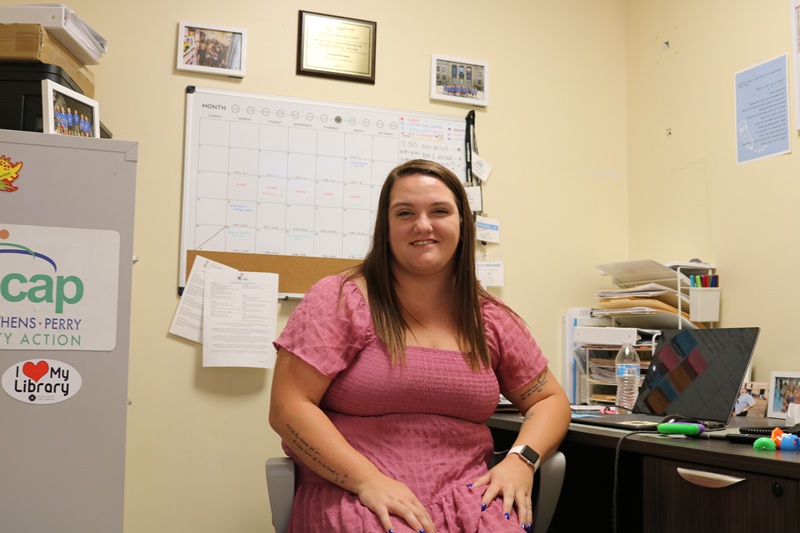
“There is a general lack of care, of hours, that meet the demand of a typical workforce,” she said. “Because of the lack of care available, families either can’t find or can’t commit to working a full-time job, or they have to rely on their employer to be flexible.”
For parents of infants and toddlers, there are often no local child care options at all. Summer camps and youth development programs like the Boys and Girls Club are only equipped for school-aged children.
That absence of care costs parents and the state. The U.S. Chamber of Commerce Foundation found Ohio’s economy loses $5.48 billion on average each year when parents miss out on work or school due to a lack of child care.
To help parents left out of the workforce due to child care needs, state lawmakers included a one-year pilot program in July’s state budget which will allow for employers, parents and the state to share child care costs.
Employers have not yet had the opportunity to sign onto the pilot, which will go into effect in January.
Meanwhile, the search for care is only getting harder for parents as the region continues to lose more providers than it gains. The last fiscal year saw a loss of 16 child care providers in Appalachian Ohio, according to Corrigan.
She said the child care field sees higher turnover rates because of a financial model that isn’t working.
Keeping costs down so families stay enrolled means low pay for both child care workers and business owners.
“Families can’t afford to pay the true cost of care,” she said. “It puts stress on the educators and the families, because both of them are being tapped out to make the model barely work.”
Local providers struggle to keep staff
Amanda Clark, who runs Little Wonders Early Care and Education in Chauncey, is familiar with that stress.
“When I look at our budget, we’re paying our rent, we’re paying the payroll, we’re paying the employee taxes, we’re paying the utilities, and it’s a lot of overhead to keep the building up, and there’s just not enough there,” she said.
Clark has run the center for nearly a year. She opened it with the help of her family after seeing the need for child care in the community.
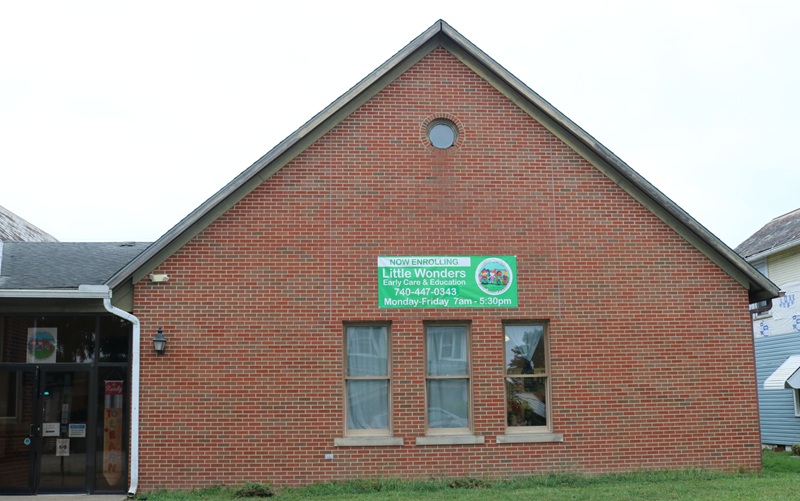
She said it’s important to her Little Wonders meets the state’s Step Up to Quality standards, but that comes with extra costs.
Step Up to Quality is the state’s rating system for child care centers. For a center to become Step Up to Quality rated, they have to go beyond minimum licensing requirements and include early childhood education as part of their care.
Heather Thompson has spent the last 18 years running Stages Early Learning Center in Athens. She said staffing is one of her main challenges, because it can be hard for early education centers to compete with public school systems.
“If these teachers are required to have associates or bachelor’s degrees in the early-ed field for us to maintain our Step Up to Quality Rating, but we’re not getting supports from the state or the federal government, then we can’t supplement their pay,” Thompson said.
The average child care worker in southeast Ohio makes $14.89 an hour, according to the Ohio Child Care Resource and Referral Association.
Kim Swart is an assistant early childhood education coordinator with Athens-Meigs Educational Service Center, which runs local preschool programs.
She says staffing shortages put child care workers in uniquely stressful situations because children cannot be left on their own.
“If you went into a business and just said, ‘Oh, for the next four hours, you’re not legally allowed to pee’ and let that group of business people handle that it wouldn’t go well for them,” she said. “They would be outraged. But … if we’re short-staffed, we do what we have to do.”
State solutions attempt to ease the cost of care
Advocates say even as child care centers face thin margins, families struggle to meet the costs.
Sara Loken, director of communications at Groundwork Ohio, said the average cost of child care in the state ranges from about $12,000 to $14,000, depending on whether that care is for preschoolers, toddlers or infants.
“We often hear it compared to being more expensive than mortgage or rent payments for many families on a monthly basis, or on an annual basis, being more expensive than college,” she said.
To help families offset this cost, the state offers publicly funded child care assistance for families whose income is below 146% of the federal poverty level. However, Corrigan said that threshold isn’t high enough to help many families that still struggle with child care costs.
“So even folks who have a challenge paying for child care, they’re not eligible for the assistance at the state level,” she said. “It’s just, it’s a math problem. This leads to low wages for child care educators and high turnover in child care businesses.”
Last year, the state launched the Child Care Choice Voucher program for families who don’t qualify for public child care aid. The voucher program provides partial funding for child care for some families whose annual income is below 200% of the federal poverty level.
For families that do qualify for a subsidy, the search for nearby child care may become even more difficult.
In child care deserts, many families turn to “patchwork” options of family, friends and babysitters, or unlicensed caregivers. But families using a public subsidy must find a licensed provider.
Clark said that can be difficult, because centers that aren’t Step Up to Quality rated are limited on the number of publicly funded students they can take.
“People call us and we’re like, ‘Sorry we’re full, we can’t take any more kids,’” she said. “More than likely they’re on publicly funded child care, and other people can’t take them because they can only take a certain percentage.”
The public assistance program can also pose challenges for providers. The reimbursement for publicly funded child care slots is usually below typical child care rates. In areas where more families live below the poverty level, public payments can strain already difficult business margins.
In most southeast Ohio counties, a fifth to over a third of households live below 200% of the poverty level, making them eligible for a public child care subsidy or voucher.
Clark says she knows of at least one local provider who closed due to a lack of families who could pay privately for child care.
Right now, child care providers receive reimbursements at the 50th percentile of the state’s Market Rate Survey. That means they receive the midpoint of what all child care providers are being paid in their area.
Federal guidelines recommend providers be reimbursed at the 75th percentile benchmark — the price at or below what 75% of local providers report charging — in order to increase equitable access to child care.
Providers can receive a bump in reimbursement depending on their Step Up to Quality rating. To help increase the number of licensed and rated child care centers, COAD provides training and technical assistance to those looking to become accredited.
Corrigan said persuading providers the process is worth the time and cost isn’t always easy.
“The bottom line is that we need to pay our child care providers more money, because then more people would want to join the field, and then there would be more access,” she said.
Amanda Pirani is WOUB’s Report for America Journalist covering Economic Livelyhood. For more information about Report for America, you can click here.