

Culture
‘Dahomey’: A superlative documentary about art, history, and storytelling
By: Gordon Briggs
Posted on:
I must confess that I haven’t watched many documentaries lately. It feels like streaming platforms have been overloaded with true-crime documentaries, celebrity bios, and retrospectives of various tragedies. Unique educational films that really open your eyes to the world around you are becoming increasingly rare these days.
That’s part of the reason why I was so taken with Dahomey, a movie that is part documentary, part ghost story, part cultural reckoning that made me rethink my feelings about museums and how we understand history. As of now, it’s available for purchase on demand, and it’s one of the year’s best films.
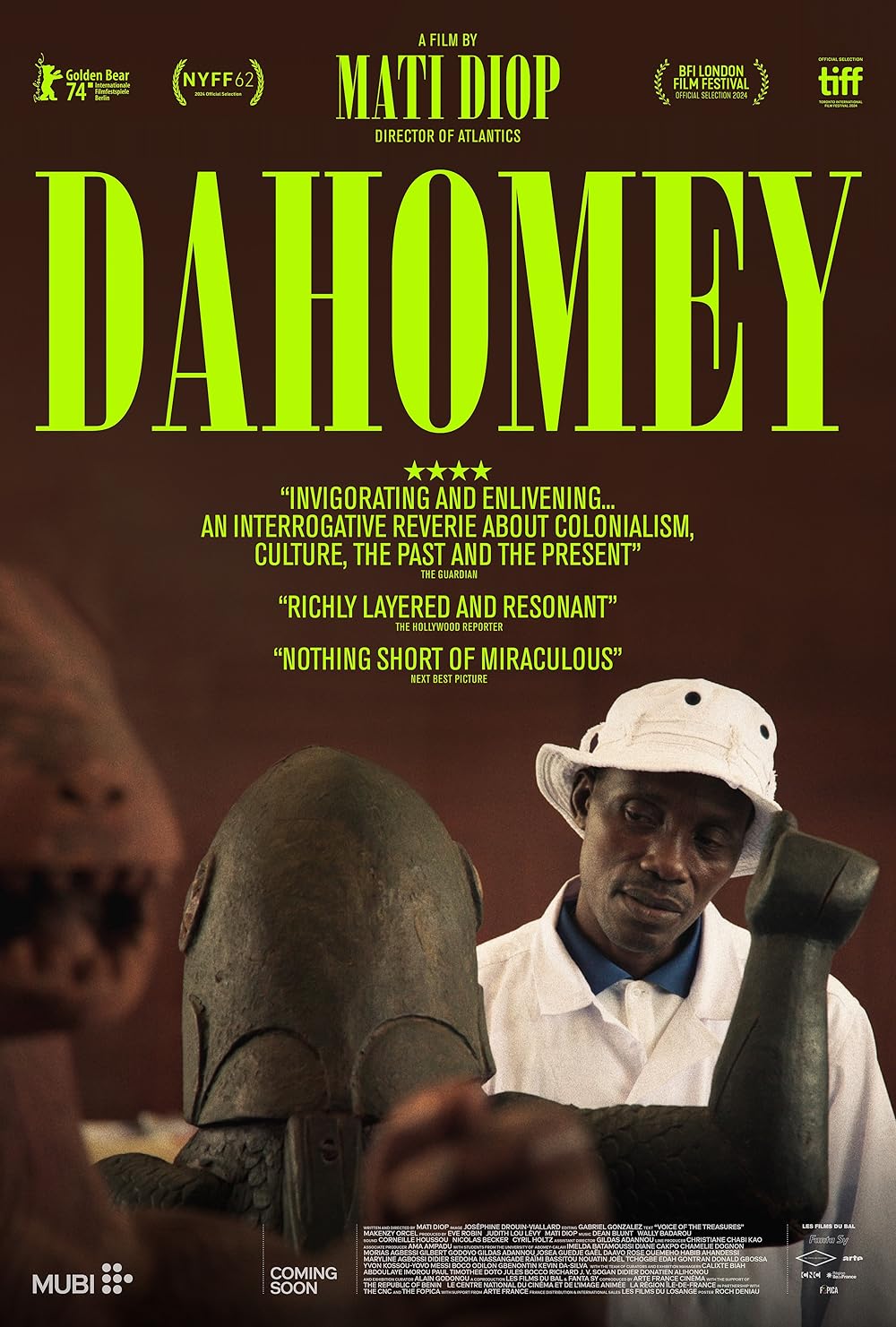
To understand what the film is about, we first need some historical context. Dahomey concerns repatriation. Specifically, the return of 26 royal treasures from the Kingdom of Dahomey (in modern-day Benin), which had been held in a museum in France for decades. In chronicling that repatriation, the film not only shows the packaging and transportation of these objects, but it also includes a discussion by students at the University of Abomey-Calavi, presenting their views on the repatriation of these artifacts.
Usually, in films like this, information is given to us via exposition from “talking heads.” A director would interview a series of experts who would explain to us what these artifacts were and what the significance of their return is. Thankfully, the director, Mati Diop, chose to go in a different direction. Blending fact and fiction, Diop gives the film an eerie, almost haunted quality by simply observing the events.
I particularly enjoyed how she covers the controversy around the artworks by documenting the campus debate their repatriation had spawned. There isn’t any one individual viewpoint that directs this story… at least not a human one.
The documentary’s most unconventional element is actually giving a voice to the artifacts themselves. Specifically, instead of using a traditional documentary narrator, Dahomey is narrated by one of the 26 returned treasures, a statue of King Ghézo, who, using a deep rumbling, distorted voice, narrates the events of its return home. This choice to give the objects themselves a voice conveys the symbolic weight of the artifact’s displacement and its ghostly presence in the film.
This is where the art professor in me really begins to appreciate this work. The filmmakers are not just observing history; they are giving narrative and emotional weight to a concept that could just feel abstract and cerebral. In this respect, the film could be of great use to educators who want to introduce Art History and African Art into their curriculum.
That’s what I continue to admire about Dahomey. It’s not just an engaging film, it’s a useful one.
Rating: ★★★★