

News
Business owners, stakeholders weigh potential hemp regulations in Ohio
By: Amanda Pirani
Posted on:
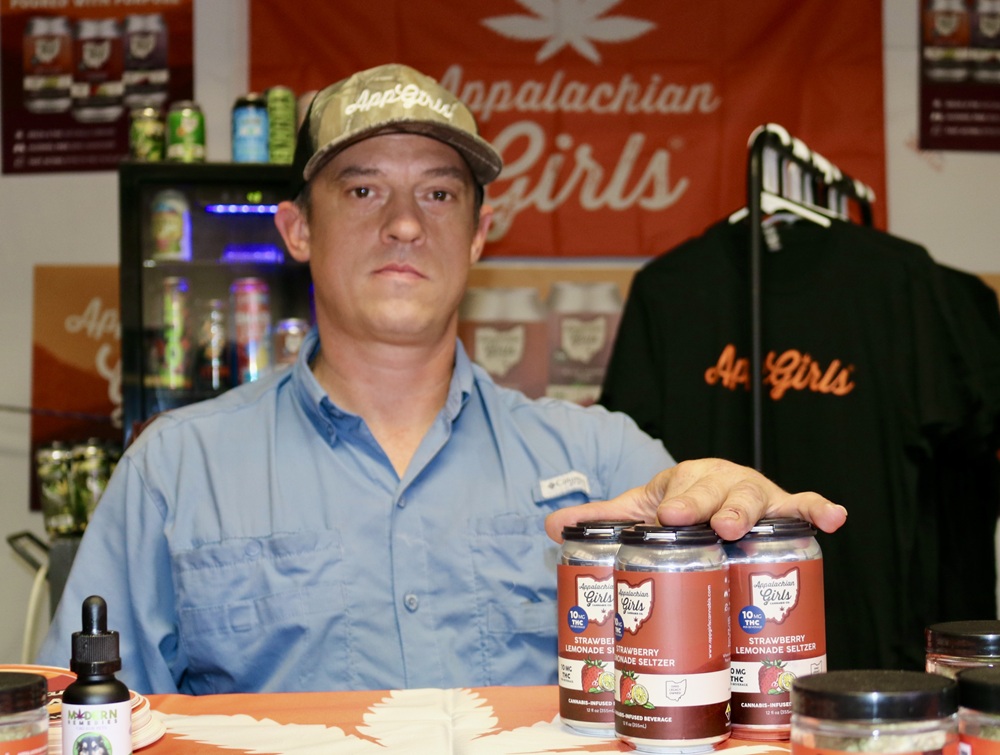
NELSONVILLE, Ohio (WOUB/Report for America) — It’s been a hectic month for Josh Crosier. He’s the co-owner of Appalachian Girls, a small hemp business based in Nelsonville.
Earlier this month, Gov. Mike DeWine signed an executive order banning the sale of what he called intoxicating hemp — products that include the kinds of beverages and dried hemp flower sold by Crosier.
Now, he waits for the state legislature to negotiate Senate Bill 56, which could transform his business model as he knows it today.
“It feels like, for the last week and a half, that’s all I’ve done is read and consume information on this,” Crosier said.
The legislation would make several changes to how intoxicating hemp products would be sold in the state by creating licenses for hemp dispensaries and restricting the products to those 21 and older.
The bill passed a House vote Wednesday and now returns to the Senate. If the Senate does not agree to the House changes, the proposed law could face another round of negotiations in a conference committee.
How did we get here?
Hemp and marijuana both come from the Cannabis sativa plant species and contain some of the same compounds. Hemp has lower rates of naturally occurring Delta-9 THC, the compound in marijuana known for producing a high.
Intoxicating hemp products entered the market after the passage of the 2018 farm bill, which removed hemp and cannabis derivatives with less than 0.3% of their dry weight in Delta-9 THC from the Controlled Substances Act.
Since the language used in the law only referred to a percentage of dry weight as opposed to limiting the total amount of Delta-9 THC in a product, companies could still sell products with enough Delta-9 THC to produce an intoxicating effect. For example, a gummy weighing 3,000 milligrams, or 3 grams, could legally contain up to 9 milligrams of Delta-9 THC.
The farm bill also didn’t address the over 100 other compounds, called cannabinoids, found in hemp and marijuana plants, like Delta-8 and Delta-10 THC. These other chemicals can have similar effects as Delta-9.
As a result of the farm bill, products containing different forms of hemp-extracted THC were able to enter the market without regulation.
In 2022, the Food and Drug Administration issued a warning that Delta-8 products were not federally regulated or tested for safety. It cited national poison control center data, which found 41% of Delta-8 exposure cases affected patients less than 18 years old.
DeWine’s executive order banned all hemp products deemed intoxicating. A judge later postponed the ban, arguing there isn’t yet a legal definition for an intoxicating hemp product.
DeWine suggested a lack of regulation allowed hemp companies to market and sell to children. In a press release, his office criticized hemp products with packaging and names similar to popular candies.
The order spurred progress toward new regulations in the statehouse. Of those proposed, Senate Bill 56 appears the most primed to reach the governor’s desk.
The bill would make key changes to both the legal marijuana industry and the sale of hemp products in Ohio.
Bill to create hemp dispensaries
Under the legislation, intoxicating hemp products would be sold in newly formed hemp dispensaries, licensed by the Division of Cannabis Control.
“That would just nuke everything,” said Alex Schwartz, waving his arm across a case of hemp-derived products.
Schwartz is the co-owner of Silver Serpent, a chain of small businesses in Athens that sell hemp and tobacco products. Businesses like his stand to lose many items to proposed hemp dispensaries, which will not be permitted to sell tobacco or vape products.
Under SB 56, Intoxicating hemp products would include any product containing more than 0.5 milligrams of Delta-9 per serving, more than 2 milligrams of Delta-9 THC per package, or more than 0.5 milligrams of non-Delta 9 THC per package.
Schwartz said the store would continue to sell low-dose products, but that higher potency products make up the majority of customer purchases.
“I don’t think that’s going to work well for the majority of customers who are not buying stuff really below 20 milligrams,” he said. “The people who are using it everyday … that’s just not going to cut it for them.”

Schwartz argued hemp products offered an affordable alternative for his working-class customers and nonsmokers, which may become less accessible if they’re sold in dispensaries.
“They’re just trying to get by,” he said. “People are dealing with chronic health conditions, chronic pain, recovery from drug addiction. … I know a lot of people lean on these products to help stabilize them in recovery.”
SB 56 includes a 10% tax on a licensed hemp dispensary’s gross receipts from the sale of intoxicating hemp products. Gross receipts are the total amount of income a business receives, without subtracting any expenses.
The bill also implements an excise tax on a manufacturer’s sale of hemp beverages, which the bill refers to as “drinkable cannabinoid products.”
Those taxes may affect the prices at which dispensaries choose to set their products.
Hemp beverages will get different treatment
Crosier said the proposed regulations aren’t the worst-case scenario. He’s not opposed to restricting hemp products to adults, and doesn’t want companies marketing to kids.
But SB 56 would require some major changes to his business, which mainly sells hemp beverages.
“We’ll have to restructure our product line,” he said. “Which means we’ll offer more lower milligram beverages to bars and restaurants.”
The bill introduces a different set of rules for what it calls drinkable cannabinoid products. Beverages with under 10 milligrams of THC will be sold in restaurants and bars, while stronger products would only be sold in facilities with a Class C liquor license, such as grocery and liquor stores.
Infused beverages are quickly growing in popularity, and many craft brewers have started to venture into the hemp market.
“The beer industry has not been the healthiest industry for the last five or six years,” said Art Oestrike, owner of Jackie-O’s Pub and Brewery. “We’ve been trying to transition toward making alternative beverages.”
Deanna Schwartz, owner of West End Ciderhouse, said in an email that she’s seen a significant interest in nonalcoholic beverages in recent years.
“The numbers are one part of the story, people that thank us for having alternatives to alcohol are also reaffirming,” she wrote. “The response has been exceptionally positive.”
Both Oestrike and Schwartz said any legislation requiring that consumers be 21 years of age or older would not change how they sell the products now.
Senate Bill 56 faces mixed reception
The bill has received mixed reviews from both industry stakeholders and lawmakers, and it’s unclear whether the Senate will approve amendments by the House. In the meantime, a restraining order on DeWine’s executive order will expire next week.
DeWine’s Office did not clarify whether the governor would terminate his executive order if SB 56 is passed.
Ohio Cannabis Coalition Executive Director David Bowling said there’s no reason for hemp dispensaries, when the regulatory framework already exists for legal marijuana dispensaries to sell hemp products.
Bowling also pointed out that Congress is moving to address the loophole created by the 2018 farm bill. Federal legislation could include intoxicating hemp under the definition of legal marijuana.
“When the loophole is closed, (hemp products) will be marijuana,” Bowling said. “I really don’t think it’s prudent to add an additional 400 dispensaries in this particular market at this time.”
The bill also makes several controversial changes to legal marijuana regulations, including the prohibition of out-of-state marijuana products and the removal of legal protections for marijuana smokers.
Prior law prevented some penalties against marijuana users, such as disciplinary action by a state licensing board or removal from a transplant waiting list.
Crosier said the bill should not impose consequences for cannabis consumption that do not exist for alcohol, pointing to a provision which makes the sale of hemp products to minors a felony on the second offense.
“What we voted for in Issue 2 … was regulate marijuana like alcohol, but none of that’s taking place,” he said.
SB 56 isn’t the only set of regulations proposed by lawmakers. Sen. William Demora proposed SB 266 in September, though the bill has not moved out of committee since being referred Oct. 1.