

Culture
Now Playing: ‘The Odyssey’ is an engrossing journey home
By: Gordon Briggs
Posted on:
When I first read The Odyssey in my high school English class, I appreciated the story as an action adventure. We had monsters, magic, and mythological warfare all wrapped up in lessons about civility and choice.
I am happy to report that the new movie adaptation of the epic poem is filled with a similar spirit of adventure that defined the original story. Its technical aspects make it an entertaining movie. What makes it a great movie is how it skillfully explores the question of what makes us civilized and what happens to civilization when the rules of civility are broken. The resulting film is both an outstanding technical achievement and a thoughtful look at a man wrestling with the consequences of the violence he’s unleashed.
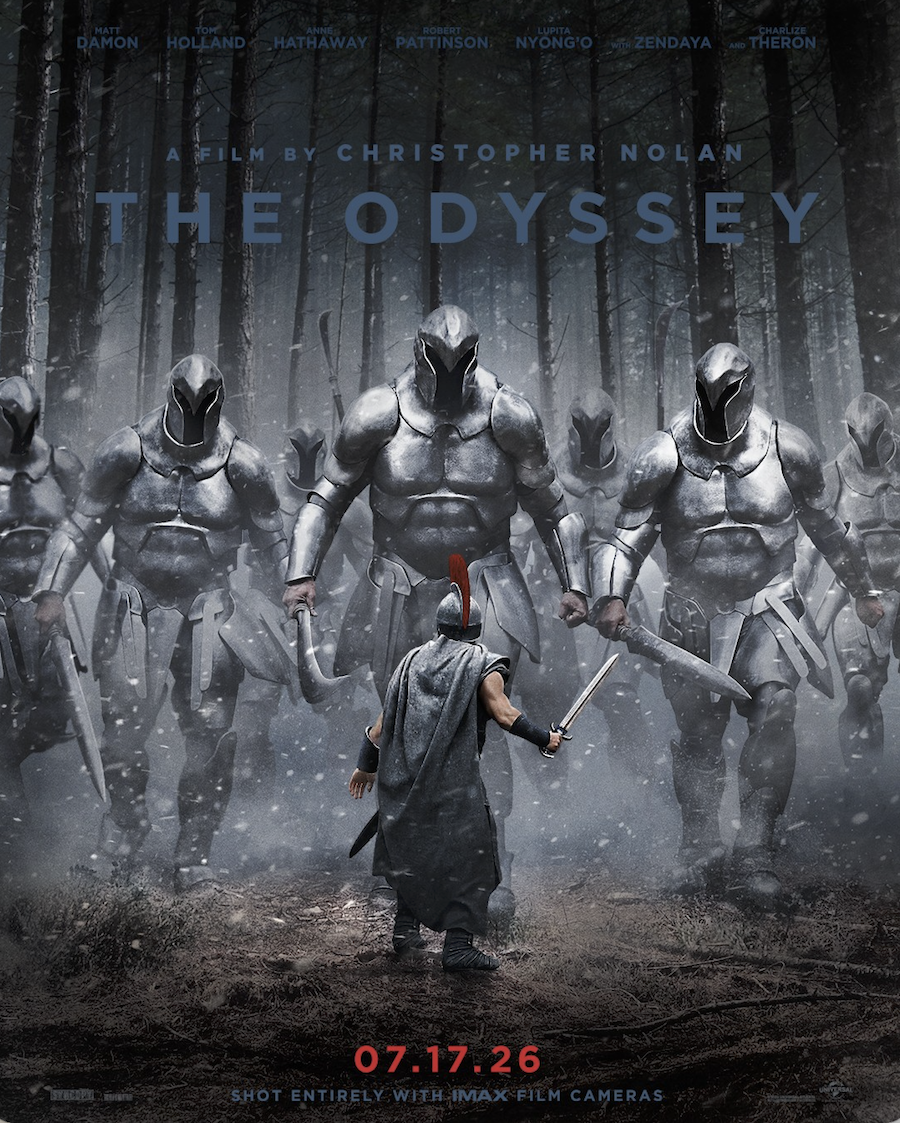
However, the journey home is complicated by obstacles that are both natural and supernatural, as Odysseus and his son must unravel the stories around them and piece together memories of just who he was. In telling this story, the movie employs a non-linear script structure that blends Homeric tradition with a more modern perspective on trauma and memory.
On a technical level, the film is top-notch. Rather than just relying on computer-generated landscapes that never feel tactile, the film reinterprets classical elements into a more grounded, lived-in aesthetic rather than stylized fantasy.
Filmed on location in the Islands of Sicily to evoke ancient times, I dig how the work evokes rugged sea-roving isolation by replacing digital green screens with raw, physical geography that mirrors Odysseus’s isolation. This visual choice doesn’t just make the film pleasant to look at. Watching this film, you get a sense of how small Odysseus and his men are in relation to the vastness of the sea.
In addition to the visuals, the movie also employs an evocative soundscape. The soundtrack does not sound like the triumphant, majestic score you usually hear accompanying historical epics. For instance, the sequence when Odysseus’ crew must put wax in their ears while sailing past an island of deadly sirens. Instead of hearing an external song of the creatures, the sound design forces the audience to experience the intense psychological strain through muffled ambient ocean sounds and Odysseus’s agonizing gasps while tied to a mast.
While the technical aspects of the film are strong, I enjoyed the film’s perspective on Odysseus himself. For the first half of the movie, Damon feels like a traditional action hero. However, that changes when he finds himself making a trip to the underworld to confront his dead comrades. Rather than confronting a mythological monster, the film makes Odysseus confront his deep-seated wartime guilt. The sequence forces Odysseus to face the ghosts of the soldiers he left behind during The Trojan War, symbolizing that his greatest obstacles are internal rather than external.
What further distinguishes the film is its constant emphasis on manners and hospitality. Whether it’s the violent climax where our hero confronts the suitors that have invaded his home or a terrifying sequence in which Circe turns Odysseus’s crew to pigs, manners, civility, and welcoming people frame much of the violence in the story.
Specifically, the fall of Troy as a fundamental breaking of divine hospitality ( referred to in the film as Zeus’s law) curses Odysseus’ journey home. In that context, the film’s heavily marketed image of the Trojan Horse symbolizes the ultimate moral decay. Rather than framing it as a triumph of cleverness, Nolan recontextualizes the horse as the foundational lie that unraveled a peaceful social contract among societies.
This is where historical spectacle and inner psychology meet. Our hero must battle mythological creatures and magic, but also his prophetic knowledge about the fate of himself and his men.
Now our hero’s journey home becomes a more psychological dilemma in which characters are haunted by the future and tormented by the past.
That’s what stuck with me about this version of The Odyssey. It’s an ancient work that lives and breathes with all our modern desires and anxieties about whether we may have lost our “civilization”. ★ ★ ★★