

News
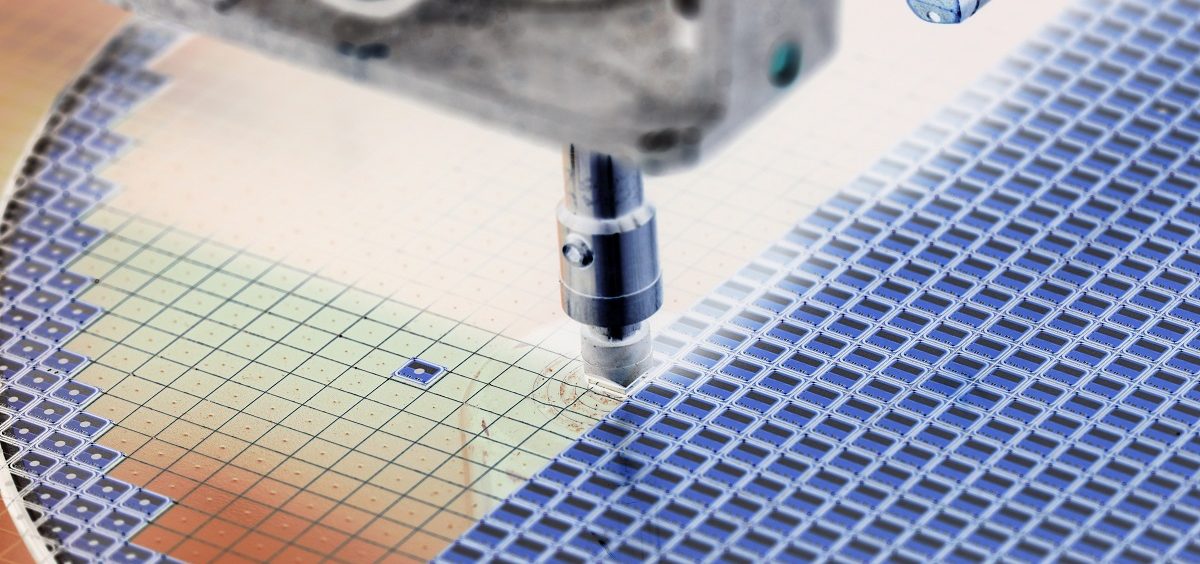
An Ohio University researcher hopes to help engineers identify promising options for faster computers
By: David Forster
Posted on:
ATHENS, Ohio (WOUB) — Accurate predictions of heat transfer are essential for design engineers working in fields such as semiconductor manufacturing, biotechnology and aerospace. Scientists have developed pretty accurate prediction models at the atomic level. The challenge has been scaling these up to larger scale models engineers use for design.
Dave Drabold is a distinguished professor of physics at Ohio University. He was part of a team that recently published a paper on a new method for better predicting how heat will move through materials. This would allow engineers to virtually “test” different combinations of materials before developing prototypes.
Drabold sat down to speak with WOUB’s David Forster for “Modern Science.”
This interview has been edited for brevity and clarity.
On how their research looks to address the challenge of making computer chips faster
“That’s probably the most obvious application for this, trying to improve heat dissipation in electrical electronic circuits. The biggest barrier these days is they’re switching at gigahertz speeds and they’re getting smaller and smaller.
“Getting rid of the heat is the most profound problem. You’ve got to keep them from vaporizing and cooking themselves. If you can find improved materials or structures which would get rid of that heat better, that would be a really significant advance.”
Using virtual models to simulate how heat will move through combinations of materials
“Not to get too mathematical, but if you can give this information about the electrical conductivity and the thermal conductivity, then you can step back and say, ‘Okay, this is an optimization problem.’ It’s a computer optimization problem in the sense that I can imagine moving all my atoms wherever I can think of and consider a whole collection of different structures and pick out the best one.
“You can even imagine trying to automate that, finding some kind of an algorithm to try different structures, different elements, and so on with the specific goal of improving these characteristics to the extent that we can provide good information and say that looks like a useful avenue to explore for the experimentalist or the engineer. That’s valuable.”
On how accurate these simulation models have been so far
“We’ve looked at particular examples of things like silicon nanowires, and it’s definitely reproducing the trends properly. This is something that I pressed on as we were developing it, to try to make sure we’re as connected to the real world as we are. We’ve done the comparisons that we can. We’d like to do some more.”
The first draft of the transcript used for this story was created in Adobe Podcast, which includes an AI transcription tool. A WOUB news editor then reviewed, corrected and reformatted the transcript before publication.