

Culture
Tom Templar of Green Lung talks about showcasing London’s occult underbelly on the new album, ‘Necropolitan’, with WOUB
By: Nicholas Kobe
Posted on:
ATHENS, Ohio (WOUB) – Green Lung is one of the shining examples of classic hard rock and metal’s spirit living on in familiar but inventive ways.
The larger-than-life band incorporates rich folklore into riff-packed, metal epics. They’re a modern, more magical cousin of Iron Maiden and Judas Priest. The band’s incredibly tight songwriting has already earned them a dedicated fanbase and critical acclaim.
That success only continues to their most recent album Necropolitan, where Green Lung takes time to unpack the darker, occult sides of one of the most famous cities in the world.
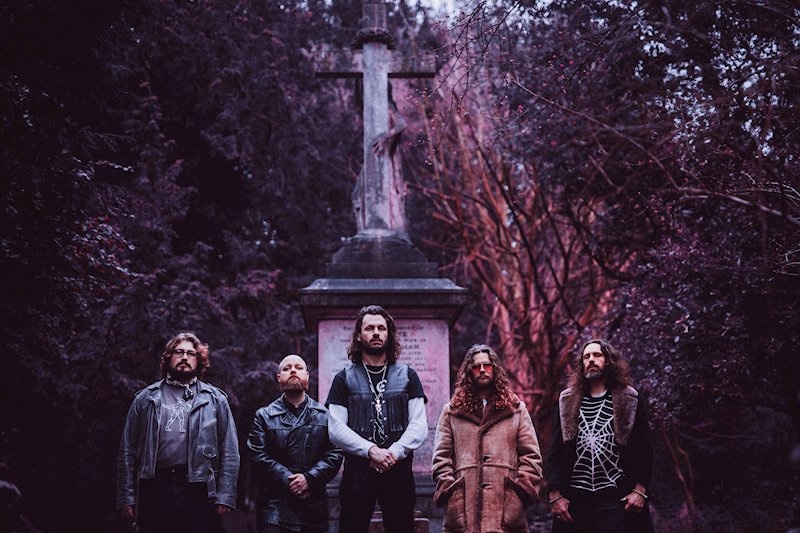
Nicholas Kobe: My first question is: if you had to describe Green Lung to somebody who didn’t know them, what would you say?
Tom Templar: I would say it is an old-school British heavy metal band that is very tapped into the folklore, myths, and legends of Britain, as well as a bunch of gothic and weird things that are sort of related.
Nicholas Kobe: I think that sums it up pretty well. You mentioned being like an old-school band. When you’re bringing back some of those old-school styles, how do you balance paying homage to the old school while still not being too derivative?
Tom Templar: I mean, part of it’s the technology. Some retro bands will record on analog; they’ll record on a tape reel. There’s a studio called Toe Rag in London that has done a lot of that. We’re not really worried about using old equipment. Like, I think all of our albums could only have been recorded in the years they were recorded because that’s the way they’re produced. The way they’re recorded and performed couldn’t have been done back then.
I think we pay a lot of attention to the kind of raw ingredients, the tone, the room feel, playing live where we can, live bass and drums, live rhythm guitars. The actual warmth of those sounds is kind of what we’re after. It’s always a bit of a tightrope. I think there are moments where you do want to go more into homage, but most of the time I think it’s kind of a case of bringing a 21st-century kind of songwriting approach and production approach and seeing what those kinds of bands would have sounded like in modern times.
I also think crucially that the period that we draw from is a time when heavy metal was much less codified. It wasn’t even calling itself heavy metal like Uraheep and early [Judas] Priest. There’s this wonderful time where it’s kind of much more connected to jazz, to blues, to other forms of music. It isn’t this sort of micro-genre kind of spreadsheet of “you are a brutal technical slam band” or whatever. I think you know, Scott [Black] had played in a technical death metal band; I’ve been in a very trad doom band. When we started Green Lung we just wanted to go back to the fundamentals really and see if we could see if we could do it. I think a lot of times people hide behind genre and hide behind heaviness. And actually, early metal is really hard. It was a challenge.
I was strict when we first started, like we’re not wearing bell bottoms on stage, we’re not looking like a seventies metal band. I don’t want to give off the idea that it’s a pageant. I wanna bring this music back to light. I miss this music. I think this is a great tradition, and I think more bands should play with classic songwriting, classic solos, and classic sounds. For me, that is the heart of heavy metal. It’s the thing we all agree on. Back in 2017, when we started Green Lung, there were very few bands that I felt were doing that, which is kind of surprising, considering ten years ago, if you went to a festival, or even now, bands like Judas Priest- I mean, these bands are still at the top of the bill. We all love them, but where are the inheritors of that mantle? It was more than rehashing the past; it was more like, “how can we kind of build a new vehicle from these elements?”
Nicholas Kobe: Building on that musical element and going to what you were saying in that first question about folklore, obviously there’s a big folklore and history focus with Green Lung. When you’re delving into folklore to inspire your lyrics, what does your research process look like, or where do you get the inspiration for these songs?
Tom Templar: It’s an incremental thing, honestly. It’s something that I did before I was in Green Lung; I was doing a lot of reading, enjoying learning about folklore, reading ghost stories, reading classic horror, watching classic horror. I’ve always been a huge fan of the gothic and a huge fan of weird fiction, a huge fan of esoterica generally. It’s just a sort of case that there are some Green Lung songs which are something I would have carried with me since I was like seventeen, ’cause I heard something interesting about this piece of folklore or I read a book about whatever.
Some stuff will occur naturally. With Necropolitan, we had sort of four or five songs that I felt could fit this kind of London forward/memento mori, Seven Cemeteries type theme. Then you can look around and draw things in. A song like “Ozymandias” wouldn’t at first glance feel like a canonical Green Lung song. Still, then when you fold it into that kind of concept and theme, it’s very much at the heart of what we’re writing about, I think, which is this sort of transience of the power of humankind and the sort of power of nature, power of death. It all fit really well.
We’ve been a band for a decade as of next year, so it’s like nine years of Green Lung. We all grew up in the countryside; we all grew up in really rural England, and we all met in London. We became a band in the London scene. We had this one song, “Graveyard Sun”, on the second record, Black Harvest, which was about the Highgate Cemetery Vampire. But we hadn’t really delved into our hometown and its folklore yet. I felt it was a good time to do that because, after living here for a decade, I finally felt I could write about London as a Londoner. I felt like I’d earned my stripes, and it felt like a nice way to pay homage to the record shops, bars, and pubs that had supported Green Lung early on.
We played this festival, Desert Fest, which we headlined; it was our first UK festival headline in May, and the band was formed at that festival. So it felt like kind of coming full circle. It was a really nice way to kick off the touring cycle for this album because ultimately this album is about those people. The first three rows of people at shows in London are giving something back. But it’s also bringing fans around the world into what is a fucking incredible city if you’re interested in the occult and folklore.
I really didn’t want to do the kind of Jack the Ripper usual bullsh*t vision of London. I wanted to go deeper and challenge people’s ideas of what London might be. There’s currently a kind of thing that London is like an unsafe city. Right-wing commentators are saying London’s basically a no-go zone, but London’s safer than it’s ever been. It’s got better air than it ever has, and it’s full of interesting art and culture. That came into it too, I think. It’s showing off with pride, like where we’re from. More than anything, it was just a fun new canvas to play with. I think each Green Lung album feels like you’re building a different world.
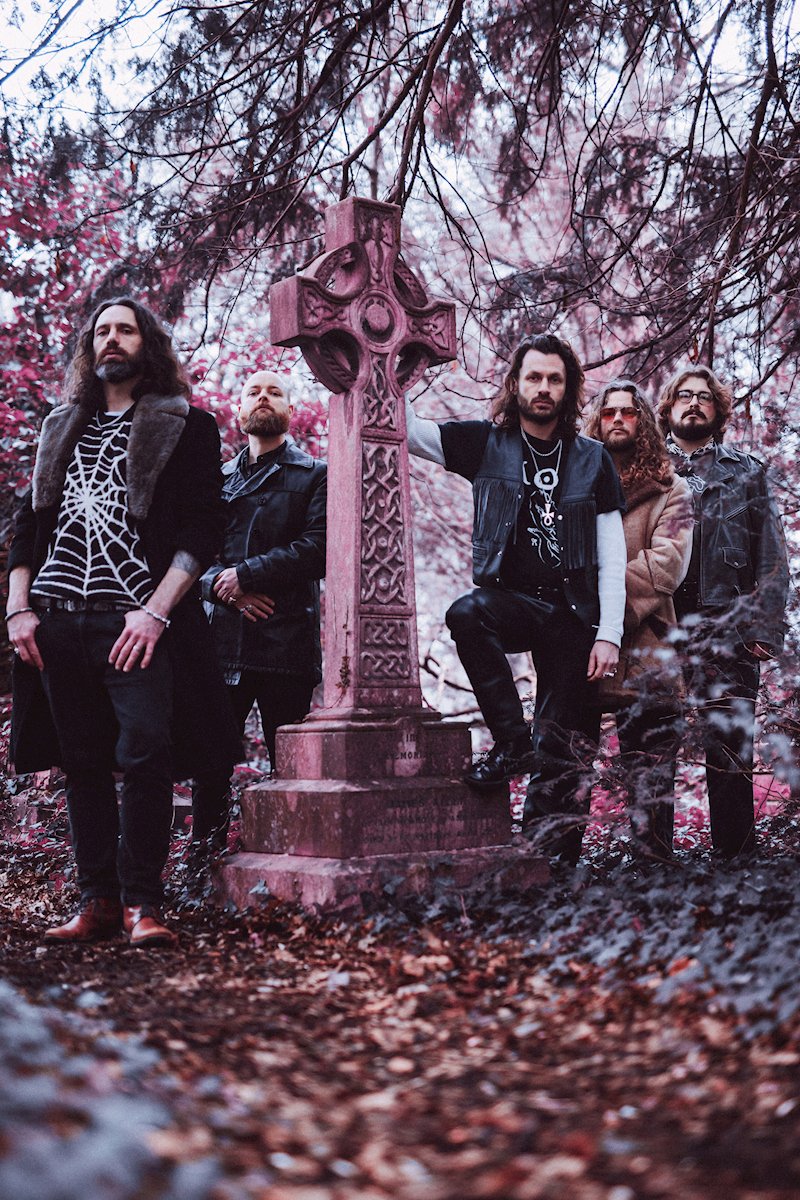
Tom Templar: I think probably people see it as this total shrine to capital. Like it’s like this expensive kind of nowhere place; there is definitely the case that the large neighborhoods have been gentrified. I think what’s great about London is how old and strange it is. I don’t think other than Paris, I’ve ever really been to a city that feels like it’s got half a foot in the kind of magical story realm. Like every pub sign will have a story behind it that is five hundred years old. You know, the way the streets are built, the way they’re named, refers to medieval markets and follows the routes of medieval people.
It’s a very unmodern city in lots of ways, and I find that there’s a clash between modernity and history there. The cemeteries are a wonderful example of that because they’re places that the encroaching sort of forces of capital and modernity try to develop everything into London and make money from it. Still, seven huge spaces within the city are essentially wildlife reserves because three hundred thousand rich people are buried in them. No one can pave them over.
I thought there was something there’s a nice irony in the fact that these places became wild and fell apart, even though they are supposed to be these sort of immortal, immemorial Valley of the Kings type places. There’s something rebellious about them now: they’re the last remaining wild places in a very unwild place. We’ve touched on that before, and I find it really interesting. I think actually it feels the same way about heavy metal itself. In a music industry that’s ever more geared towards just making money and image, it’s occult in itself, and it’s a kind of a wild place. So there are these fun kind of resonances that come from that.
Sometimes you worry: is what we are doing only relevant to people like me who live in London? But it’s really not. It’s more about the city itself as an organism, as a place. I kind of hope that people see this Necropolitian idea not just as about London, but as about all cities being sort of history upon history.
Nicholas Kobe: Yeah. Speaking of all these songs, whether for lyrical or instrumental reasons, which unreleased tracks are you most excited for fans to hear, and why?
Tom Templar: I feel like “Ozymandias” is one that I’m really into. I think it’s kind of as epic as we’ve ever gone. I’m sure someone’s written songs about Percy Bysshe Shelley’s poem Ozymandias, because it’s so famous. Still, doing the heavy metal Ozymandias felt like something we should’ve done 30 years ago. I loved kind of just taking that and running with it.
I think that’s what’s interesting about putting out singles; we’re really an album band. We’re a band that is writing for vinyl, for the whole package to be immersive. The idea that the album is essentially reduced to a thumbnail on Spotify is something you have to deal with. Sure, that’s convenient. I listen to a lot of music on Spotify. But for me, yeah, there’s something awkward and weird about having to share three songs ahead of time when you’ve got this whole, like, worked-out concept.
I think it’s always a relief to have people hear the whole breadth of it and get a sense of how it all clicks together. Like This Heathen Land, we’d shared “Mountain Throne” and “Maxine” and “One for Sorrow”. That doesn’t give you a sense of what that album is really about.
So yeah, I think I’m more excited about people getting the full width of it. I’m also excited to play the songs live because I think it’s a very live-feeling album. The songs are kind of more built for that than they’ve ever been in terms of just the kind of moments. We didn’t have any tour experience really when we started Green Lung. We played a bunch of, like, bar shows and stuff. Just being on a tour for five weeks makes you transform as a musician, but also, like, the tightness of the band and the feeling that we can write songs for that experience.
Once you’ve done a big show to, like, a thousand people and the energy’s off the chart, you can think about writing to that rather than to just the internet or something, you know? When you first start, you’re like, I want someone to hear my f*cking song; I don’t really care how. But when you know you have this audience, you can write to them. I think that does change the way you think about it.
Nicholas Kobe: Over the last ten years you’ve been a band, what have you learned about the Green Lung audience?
Tom Templar: I feel like I know them pretty well, but also I get completely confused sometimes. For me, it’s an incredibly friendly crowd, like they’re good people. It’s a very welcoming crowd. It’s a mix of genders and ages. I think we’re a band that, if you’re a 50- or 60-something diehard heavy metal fan, you can take your teenage or 20-something kids to, and everyone can have a good time because it’s sort of like a bridge. We’re also a bit of a bridge between extreme metal people who like the occult stuff and classic rock people who like the solos and showmanship.
I’ve always found that our crowd is not just a scene crowd. It’s always been pieced together. Last year when we played in London, I turned up at the Black Heart, the pub where we first started the band, and it was full of people in Green Lung shirts. That’s a funny thing ’cause I think we were always like, “I wish more of the Stoner Rock people would come to our shows, or I wish these people would come.” But actually, I think it’s like Rush or something. People like it, and they’re not part of one scene.