

News
WOUB joined all Ohio PBS stations in not airing the politically themed documentary “White With Fear”
By: David Forster
Posted on:
ATHENS, Ohio (WOUB) — A documentary examining how racial tensions are exploited for gain in modern American politics was broadcast nationally Tuesday night on PBS. It did not air in Ohio.
The state’s eight PBS affiliate stations, including WOUB, chose not to show the documentary on television, but they have made it available to stream through their websites.
A synopsis on the PBS website describes “White With Fear” as a “deep dive into the decades-long quest by some of America’s conservative political machine to amass power by exploiting racial fault lines.”
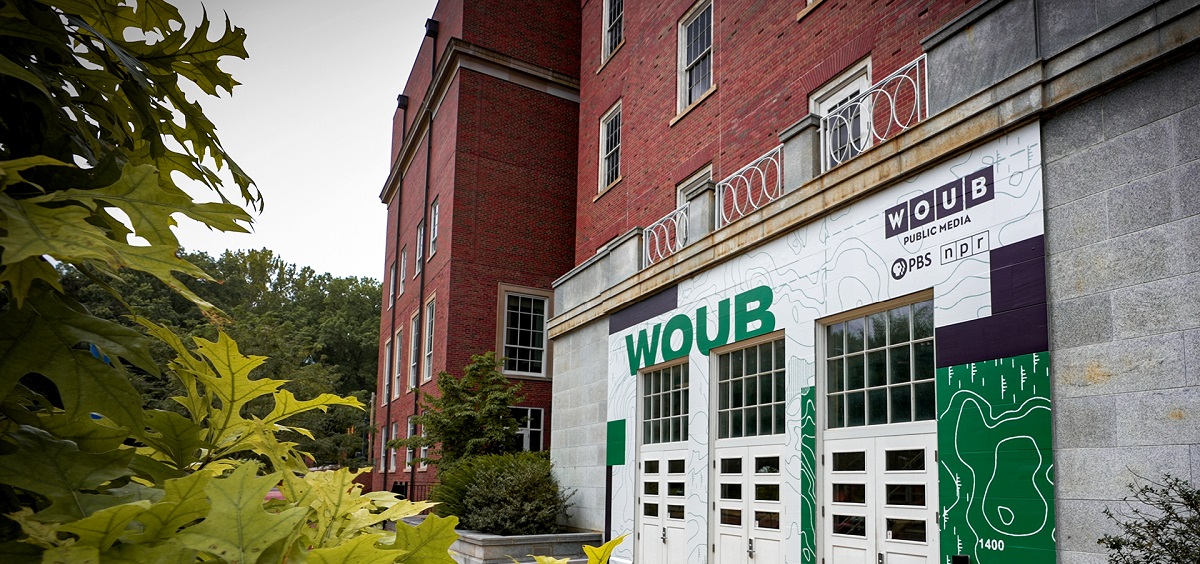
At WOUB, the decision not to air the documentary was made through an internal review process. “We determined that the program did not sufficiently emphasize commitment to serving all audiences, regardless of political affiliation, race or background,” said Steve Skidmore, the station’s interim general manager.
WOUB reached out to PBS to find out if it is possible to quantify how many stations around the country aired the documentary Tuesday night but did not receive an answer by the time this story was published.
A check of television schedules for PBS stations in neighboring states show the documentary aired in West Virginia, did not air in Kentucky, aired on four of Indiana’s eight stations, and aired on four of the seven stations in Pennsylvania.
Kitty Lensman, president and CEO of CET/ThinkTV, which operates PBS stations in Cincinnati and Dayton, said her stations decided not to air the documentary in part because it already had a theatrical release with screenings in several states. This included one in Ohio last April.
“I can’t speak for other stations, but our organization didn’t think there was anything new to offer our viewers,” she said.
Lensman said her stations instead aired a documentary about a group of women in Philadelphia who helped build a movement challenging the patriarchy within Christian denominations.
“This was part of our tribute to a group of extraordinary women during Women’s History Month in March,” Lensman said.
Public media stations are under considerable financial pressure following the loss of federal funding last year, a move initiated by the Trump administration. Stations in Ohio have also seen their state funding reduced.
For many stations in smaller and rural areas, the funding loss threatens their continued existence. WOUB received about $1.5 million, or 30 percent of its budget, in funding through the now-defunded Corporation for Public Broadcasting. It would take 15,000 new members pledging $100 a year, every year, to make that up — and that’s just the loss in federal funding. WOUB has about 5,200 members now, a record high.
Josh Shepperd, a professor at the University of Colorado at Boulder whose research focuses on public media in the United States, said these pressures raise concerns that political calculations might influence decisions around programming.
Shepperd said public media was structured in a way intended to help insulate it from political pressures, but the loss of funding has chipped away at that. Shepperd said he hopes that in the midst of these pressures, and what for some is an existential threat, public media stations can remain true to their mission.
“We should be very careful not to condemn public media stations, but we also have to affirm the purpose or it just becomes commercial media at some point,” he said. “That’s the real death of public media is that it forgets what it is. … There’s also what they call a realpolitik to it, which is there’s actual pressures being exerted right now, and that there’s no good choices. And I think we should respect that as well.”
Lensman said political concerns played no role in her stations’ decision not to air the documentary.
“Public television has had editorial control since its creation specifically so it can operate independently, serve the public interest and maintain trust — without being dominated by political or commercial pressures,” she said. “Local public television stations make their own editorial decisions, and frankly there were many quality shows to choose from and that’s what we did.”
WOUB’s Skidmore acknowledged the financial realities but said this does not drive programming decisions.
“WOUB must remain mindful of all its funding sources, including our viewers and membership donors, and would not willingly jeopardize these resources,” he said. “At the same time, we would not decline airing programming solely based on the potential risk of losing funding. Our decisions are guided by a commitment to our mission, values and responsibility to serve our audience with integrity.”
Disclosure: Under WOUB’s protocol for reporting on itself, no executives reviewed this story before it was posted.