

Culture
Melissa Etheridge talks carrying the fire of Johnny Cash on Wynonna Judd tour & Chris Stapleton duet
By: Ian Saint
Posted on:
HUBER HEIGHTS, Ohio (WOUB) — In 1993, Melissa Etheridge arguably became the first LGBTQ musician to see commercial success skyrocket after coming out publicly. Eight months later, she released her fourth album, Yes I Am, which went six-times Platinum.
Meanwhile, Wynonna Judd was coming out in her own sense: after releasing records alongside mother Naomi since age 19, the Ashland native’s 1992 solo debut Wynonna went five-times Platinum — more than double any album by The Judds.
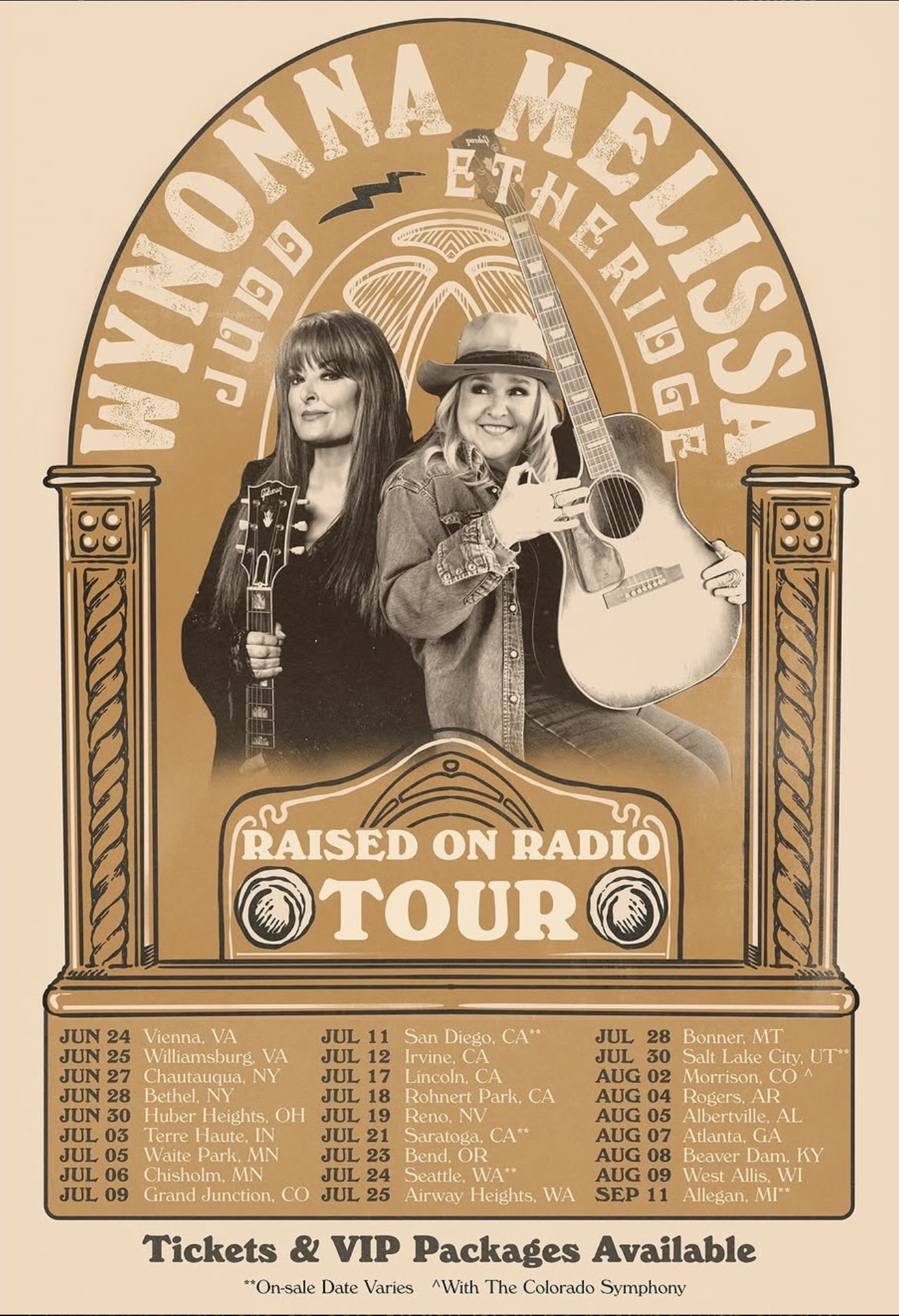
Etheridge is a Rock Hall nominee and Judd a Country Music Hall of Fame inductee; and their Raised On Radio co-headlining tour celebrates their concurrent crossover successes. It comes to Huber Heights’ Rose Music Center (6800 Executive Blvd.) tomorrow, featuring opener Maggie Rose; and Charleston’s Haddad Riverfront Park (600 Kanawha Blvd.) Thursday.
Etheridge spoke with WOUB’s Ian Saint. A transcript of their conversation, edited for length and clarity, follows.
MELISSA ETHERIDGE: That’s one of my favorite performances, singing “Come To My Window” to Madison Square Garden filled with first responders who’d just seen the worst of our time. Someone unplugged my microphone, to plug Roger Daltrey’s microphone, right (before) the chorus — nobody can hear me, but they hear my guitar. The whole audience sings the chorus together, and I’m in tears. I still think about it.
IAN SAINT: Stunning — especially considering you nearly kept it off Yes I Am.
MELISSA ETHERIDGE: Right. That song taught me that sometimes music comes through you, you don’t know why — you’re not even sure where it came from, it just is — and it touches people. Who am I to get in the way of that? I’m grateful every time I play it.
IAN SAINT: Congratulations on launching this very “her-storic” tour. Wynonna rocked “I’m The Only One” at the Grand Ole Opry.
MELISSA ETHERIDGE: When I heard Wy sing that, I was like, “That’s right, girl. There you go.” Because it’s not an easy song to sing — not even for me. Whenever anyone tries it at karaoke, I’m like, “Okay, good luck.” But she’s a powerhouse singer. She’s got that soul, too. She’s been through lots — we relate to each other with that. (Etheridge lost her son to an overdose, and Judd lost her mother to suicide.) I’m really looking forward to (our tour because) we both feel the same way about music: it’s a release. It’s a wonderful thing we get to do, to go through what we’re going through. It’s very cathartic.
MELISSA ETHERIDGE: Bam. (applauds) I wrote that song in the back of a tour bus in ’92. I remember riding through Germany’s beautiful countryside, but it was a very boring ride. I wanted to create a soulful bluesy rocker with that shuffle-beat. I was playing that on guitar in the back, and — “please, baby, can’t you see?” — singing about something I knew all too well. With my band, I’d always start acoustic things and then they’d come in — it was our signature. That song’s one of my favorites because I play a little on the guitar, lean in and then “da-da-DA-da-DA-dummm.” I play it every show, and it never lets me down — everybody’s moving, and I love it.
IAN SAINT: Mentioning Germany just gave me a flashback. I remember you visited Dachau’s concentration camp on your first European tour, and saw that homosexuals were excluded from memorials of persecuted groups. When I visited Dachau in 2014, I saw that exclusion was rectified and recalled your advocacy.
MELISSA ETHERIDGE: That actually means a lot to hear, because (that experience) played a big part in me coming out. In 1988, I wasn’t out to the band from England I was touring with. Going through Dachau, I felt the heaviness of the inhumanity, cruelty, pushing against differences, and how horrific it was. Then leaving and seeing a young man handing out pink flyers, going, “They’ve got a memorial for everyone, but still won’t talk about the gays. It’s still happening.” I sat and wept — it’s important for people to know gays. So just a few years later, I actually came out; and I love that they (subsequently) do have a memorial there for the homosexuals that were “ended” there.
IAN SAINT: Pivoting to your new album, Rise: I love “Matches.” I recently interviewed Don Henley; and when I play “Matches,” my mind pictures you on the Eagles’ first album cover photo — singing at their Joshua Tree bonfire, as the eagle careens overhead.
MELISSA ETHERIDGE: Aww, that was a big album for me. I told my band, “I want this album to be California country-rock.” I referenced the Eagles, Fleetwood Mac, Jackson Browne, all that California sound I thought would be in California when I got there in 1982 — but it’d moved on to hair bands. I really wanted to bring that country-rock feel back.
IAN SAINT: How did you get in the zone for delivering that acapella intro?
MELISSA ETHERIDGE: I called that my “scratchpad song,” giving myself the opportunity to write anything (without pressure of) going on an album. Explaining the experience of Johnny Cash coming to my hometown of Leavenworth, KS to play the Federal Penitentiary, and (channeling) that desire to play and sing — work with the fire, the magic, and the spirit. I was eight; I could see the prison from my house, and that was a big influence on me.
My wife said, “This is an amazing song and you have to record it.” It’s one of my favorites on the album — I love the way it sounds, the way the band came together, and I love playing it live.
IAN SAINT: I just interviewed your friend, Rita Wilson. Dave Cobb produced her new album, and Rita told us how Dave’s studio put her at ease. It’s remarkable that you and Chris Stapleton hadn’t met before you convened at Dave’s studio, and co-wrote your beautiful duet “The Other Side of Blue.”
MELISSA ETHERIDGE: When Chris sings, you can tell he’s connected to soul. He’s a special human being — that’s why I wanted to work with him. I knew he came from the same soulful blues country place that I know, and I’d always thought our voices would sound great together. He’s very kind and talented, so this song just poured out of us. I’d never met him, and I haven’t seen him since. I hope someday we’ll do the song together, because it’s really one of my favorite things I’ve ever done.