

Culture
Now Playing: I didn’t dig ‘Digger’ – Tom Cruise’s movie is a metatextual mess
By: Gordon Briggs
Posted on:
I didn’t understand Digger.
It’s not that I didn’t understand the ludicrous plot or its bizarre character arcs. What baffled me was its boisterous tone and metatextual tics that alienated me from the movie rather than drawing me in. Mixing political satire with disaster film and the theater of the absurd, the film has parts I admired, but I really didn’t enjoy the finished product.
The result is a confounding surrealist mismatch of politics, awkward comedy and arthouse pretentiousness.
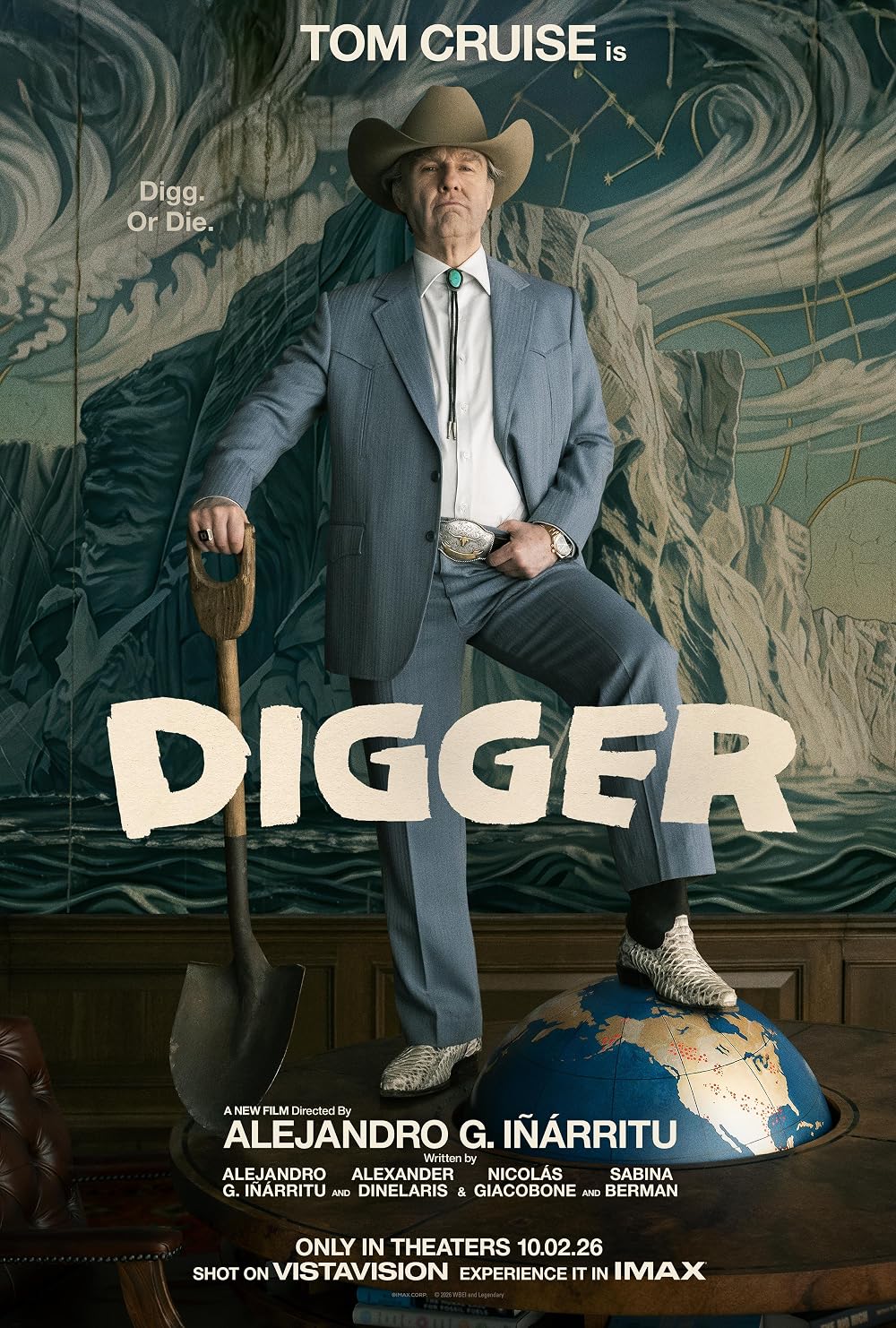
First off, I found the acting choices exhausting. Cruise approaches the role with broad, larger-than-life mannerisms that parody late-capitalist power. That choice could have led to a hilarious performance, but his style felt like watching an actor “acting.” Every single performance is so outrageously flamboyant that nothing feels modulated, especially Cruise’s frantic, cartoonish oil-tycoon routine. The deliberate lack of subtlety turns the satire into an exhausting, screaming spectacle rather than a comedically insightful skewering of the ruling class.
If you are a fan of this star and this director, fear not. Just when you are ready to write off the film, Digger attempts a daring metatextual plot twist. It turns out the movie we’re watching is actually a tech rehearsal and performance of a stage play titled Fossil Fools. Furthermore, the cartoonish characters we spend the first half of the film with are actually actors performing in a play about the same environmental disaster. These multiple layers of metatextuality only distance me from the movie rather than draw me in.
The moment Digger pulls back the curtain to reveal its true metatextual conceit, all the humor dies instantly. The satirical elements, such as John Goodman’s ghoulish U.S. president or Cruise’s eccentric oil tycoon, Digger Rockwell, devolve into paper-thin caricatures.
More specifically, watching these performances within performances is exhausting rather than funny. We have no normality to contrast with the abnormality of what we are seeing. The satire doesn’t seem to have an entry point for viewers beyond the collective unease about our leaders and the planet’s future. That, in itself, is far too broad a target for effective satire.
However, I feel there’s a bigger problem at play in both the film’s conception and the surrounding discourse. Because Tom Cruise has made several mainstream Hollywood sequels, one could praise the movie as a “bold artistic swing.” This brand of thinking is so prevalent that it leads some to compliment any movie Cruise makes that isn’t a sequel or a movie designed for mainstream audiences.
My problem is that there are better movies which actually pull off similarly risky, metatextual swings. Recent stories like I Love Boosters take many bold aesthetic risks while critiquing capitalism, and films like Good Luck, Have Fun, Don’t Die have us stare down the nihilistic barrel of AI in a much more interesting way than Digger. Teenage Sex and Death at Camp Miasma invests us emotionally in the gap between the cinematic world and its constructed horror-movie artifice.
In the end, while I applaud the film for being unconventional, unconventionality alone does not equal artistic success.
★★