

Culture
Body Count’s Ernie C on staying loud, angry, and relevant
By: Nicholas Kobe
Posted on:
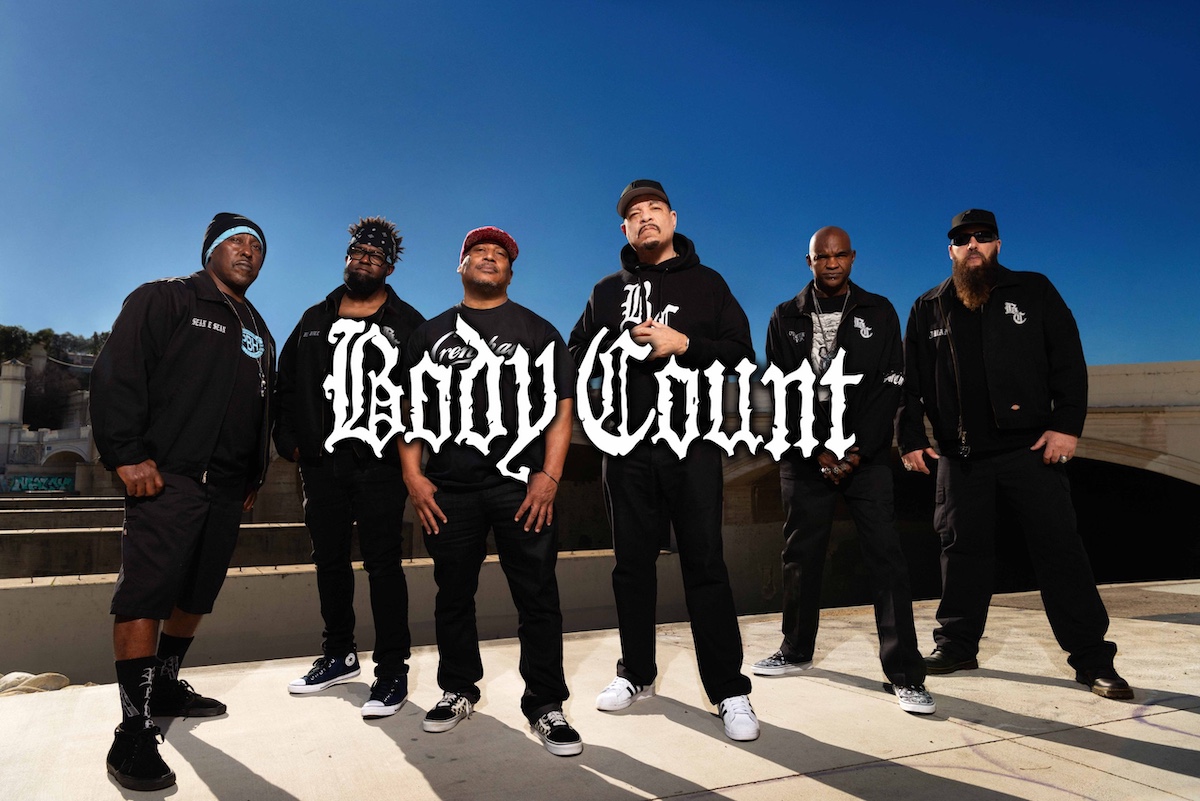
COLUMBUS, Ohio (WOUB) – Rock and hip-hop have shared a close relationship for decades, surging into the mainstream in the ’90s with the rise of nu-metal. In 1990, however, a more literal collision of rap and rock occurred when rapper Ice-T teamed up with his high school friend, guitarist Ernie C, to form Body Count.
Despite Ice-T’s hip-hop prominence, Body Count is not a rap-metal progenitor but a crossover thrash band, blending elements of hardcore and punk with riffs that wouldn’t sound out of place on a Slayer record. Ice-T’s pointed, politically charged lyrics on songs like “Cop Killer” helped the band gain notoriety as one of the most infamous—yet thought-provoking—acts in metal. Body Count continues to challenge the world today, with their most recent record, Merciless, released in 2024.
WOUB’s Nicholas Kobe had the chance to sit down with Ernie C ahead of the band’s performance at the Sonic Temple Art and Music Festival on May 16, alongside bands such as Bring Me the Horizon, Sepultura, Good Charlotte, and more. Find a transcript of their conversation, edited for length and clarity, below.
Ernie C: I would say an aggressive band. You know, we’ve been around for almost 35 years now. And that’s the theme that’s going through every record every time we play. It’s just aggressive, angry, loud.
Considering the band has been around for that long, what inspires you to keep that aggression up and keep it going through all these years?
Ernie C: Just the way things are. Body Count is a band that’s contemporary with what’s going on in the times. So a lot’s going on right now, so there’s a lot of music that needs to be written. The same songs that we wrote 30 years ago are relevant right now, you know?
Last year, at Warped Tour, Ice-T changed the lyrics for “Cop Killer” to “ICE Killer”—I’ve read that it was an on-the-spot decision. What was your reaction in that moment?
Ernie C: You know, I was just like, “let’s roll with it.” I’ve been with Ice for a long while. So he can say whatever he said, but I’m just listening for the cue to get going. I’m like, “Okay, that’s good. I like that.” Let me just roll with it.
That’s definitely an example of you guys still being very, very contemporary.
Ernie C: Yeah, the song is still relevant today. It’s also the same anger that we had 30, 34 years ago that people have now.
It’s been a little over a year since Body Count released Merciless. Now that you’ve taken it on the road, what’s your favorite song from the record to play live?
Ernie C: My favorite song to play is “Comfortably Numb.” You can’t go wrong playing David Gilmour’s riffs. If we get into guitar, that’s a guitar god. That’s him playing on (Body Count’s version of) “Comfortably Numb”. So that’s even more of a reason to love the player. I joke with Ice because we’ve had David Gilmour on our record, and I produced Black Sabbath (the 1995 album Forbidden). I said, “These English guitar players just love us.” I hung out with Brian May. He’s come to my sessions, so I’m like, “Whoa.”
When you were writing “Comfortably Numb” and working on that song with David Gilmour, was there anything about his process that surprised you?
Ernie C: Well, we have to get to how this song came about. I just wanted a song that I could play guitar on. We’d been doing the song for like a year before then, just playing that riff, in rehearsals. My bass player works for Richie Sambora (former guitarist of Bon Jovi). So on the original song, Richie Sambora and I played the guitar on it.
Then we said, when you do a song, there are two ways of doing it. You can just throw it out, or you can ask permission. We asked permission for this one. So we called up Roger (Waters, former bassist of Pink Floyd). Roger said, “I like it. You can do it.” And Gilmour, he said, “I love it. Only one thing, can I play on it?” We’re like, “what? OK, sure.” So that’s how that song came about.
So 2026 marks 35 years since Body Count’s Lollapalooza performance—what memory from that first major festival show stands out most to you?
Ernie C: A lot of Lollapalooza was just like a dream come true. At that point, we had only played about 11 shows in Los Angeles, a few small clubs—no more than 300 people. The next thing you know, you’re playing for 50,000 people. That’s culture shock. The thing we remember most was the camaraderie and the friendship.
I’m still friends today with Dave Navarro and Perry Farrell, and the guys from Butthole Surfers and Living Colour. Those are friendships that lasted a lifetime. No other concert I’ve been on since has had that kind of magic.
Do you have any sense of why that was—anything about the culture at the time that made it so special?
Ernie C: I think it was kind of like a changing of the guard. We went from the big, glamorous metal acts of the ’80s to the ’90s, where people were more down-to-earth. People didn’t really get dressed up to go on stage—we came out in what we had on. That’s what I got from Kurt Cobain. I think Nirvana had a lot of influence on why we were popular. They were just average Joes—not glam—you could live next door to them, hang out with them, go to a club and have a beer. That’s what stuck out to me about the early ’90s—it was a real shift in the music and the culture.
Going back to your writing process—when you’re coming up with riffs for newer Body Count material, what are your main influences, and is it different from when the band first started?
Ernie C: When we first started, we used to write as a band. Now we kind of bring in ideas, and the producer organizes them and puts everything together. Back then, we’d write songs straight through—beginning, middle, and end. Now we build pieces that can move around—you can take something from one place and put it somewhere else. It’s cool for the time, but then you have to learn how to play it. You’ve got to sit there and work it out. Right now, we’re starting rehearsals to get ready for shows, and it’s like being an athlete—if you take time off, you get rusty. The band has to get back up to speed.
How has rehearsal been going so far as you knock the dust off?
Ernie C: It’s easy. Rehearsals are easy. Ice doesn’t come to rehearsal—we don’t need vocals to lock in. The band just plays. The difference now is everything is written into Pro Tools. In the old days, you used to jam—like, “OK, we’re going to stretch this out.” Now everything is more formatted.
So it’s a little tighter, for better and for worse.
Ernie C: Exactly. That has a lot to do with the band. We went from our first records sounding like a punk band to now being more of a metal band—more staccato. We’re playing a punk festival in Pennsylvania this year, and I’m like, “OK, they recognize we really were a punk band.” When we started, we wanted to be the Ramones—that was the whole thing. We were going to do punk records and be done with it. Next thing you know, now we’re a heavy metal band.
Is there any creative reason behind the shift from punk to metal?
Ernie C: No, it just happened because the band got better. When we did our first record, we’d only been together for about a year, and everything was kind of loose. As we got tighter, things changed. Our original drummer learned double bass after we bought him a double bass, and we just kept getting better. Then all of a sudden, we’re like a metal band. Now we’re kind of stuck there, especially after winning the Grammy for Best Metal Performance—so now we’re a metal band.
The only question I have left is: what’s next for Body Count?
Ernie C: We’re just going to do some shows, maybe another record or two, and that’s it—just keep doing what we’ve been doing. There’s no real reason to stop. We’re still having fun, people still want to see us, and it’s still relevant. Hopefully people come out—we always have a good time on stage. That’s what it’s all about: the love of music.