

News
In Guernsey County, local leaders work to address housing challenges
By: Amanda Pirani
Posted on:
CAMBRIDGE, Ohio (WOUB/Report for America) — Chris Gilwreath said finding housing in Cambridge was like winning the lottery.
“It’s big. Like I have a home, I have somewhere to go,” he said. “I don’t have to be on the street. It’s just like a big weight comes off of you.”
After transitioning from incarceration and into sobriety, he said starting over was daunting.
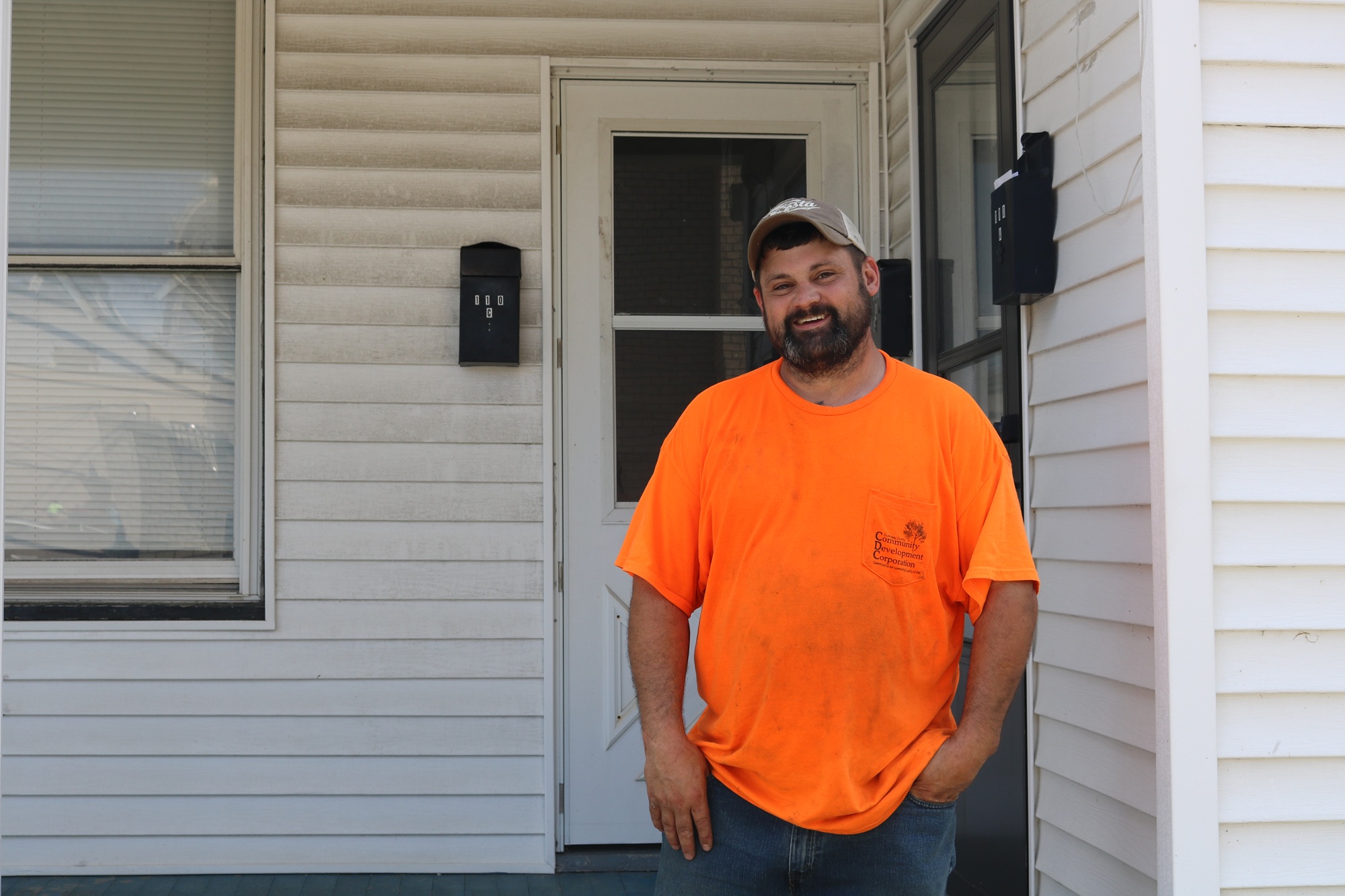
Then his mental health provider connected him to the Guernsey County Community Development Corp. (CDC), which helped him secure an apartment.
Now Gilwreath works for the organization as an equipment operator, or as he calls it, a “jack of all trades.” He works on everything from remodeling properties that might become new affordable housing to vehicle maintenance.
Gilwreath is one of many community members who found stability through the development corporation’s affordable housing program, which purchases dilapidated housing in the area and refurbishes it.
It’s helping chip away at a countywide struggle to meet the demand for housing.
Affordable housing program gives residents more options
The Guernsey CDC now manages 20 rental properties in the county, which it rents at below market rates.
Ron Gombeda, the Guernsey CDC Director, said the program came about when the oil and gas boom in the 2010s drove up rental costs and priced out locals.
Now, a national rise in housing costs and an increase in short-term rentals in the county continue to make housing a challenge for low-income residents.
A 2024 housing needs assessment in the county found the local rental market has an occupancy rate of 97.6%, nearly four points above the state average.
Research suggests it’s not an isolated problem. Ohio has a shortage of housing that meets the needs of residents living below the federal poverty line or 30% of an area’s median income.
For every 100 low-income households, there are 37 affordable rental options available.
The CDC program aims to reach people who might not qualify for help through federal programs like the U.S. Department of Housing and Urban Development (HUD).
Patrick Jordan is a local pastor and case manager. He said that even for people who qualify, there are many barriers that might prevent someone from securing housing covered by a HUD voucher.
“It is hard for a low-income person just to first get the application,” he said. “A lot of them do not have transportation or dependable transportation. A lot of them do not have internet access or required devices to fill out an application online.”
Both professionally and in his role as a pastor, he’s spent a lot of time supporting people through the application process.
He said the county has a long waitlist, and if someone gets a voucher they have 90 days to find housing. But the Cambridge Metropolitan Housing Authority doesn’t have an updated list available of rentals in the property that take vouchers.
And even if someone scrapes together funds for an application fee, they might not have enough for a deposit.
There are resources available through the Tri-County Community Action Agency and the St. Vincent De Paul Society to help with deposits, but Jordan said most people don’t know they exist.
Because of all the barriers to accessing HUD vouchers, he said the development corporation’s affordable housing program is an important resource.
But ultimately, he hopes the community can help more people move from renting to owning their homes.
Jordan and his wife built their home through Guernsey County Habitat for Humanity after struggling to get by in a two-bedroom apartment.
“That was a hand up, was what that was,” he said. “Just the opportunity has afforded us so much in life … the equity that I’ve built in this home could do all kinds of things.”
But right now, demand for single-family homes in Guernsey County also outpaces supply.
Potential homeowners also face challenges
Cookie Connell experienced that firsthand when she put her house on the market last year.
She came prepared with a list of all the improvements made to the property over the nine years she lived there and expected negotiations over appliances or paint colors.
Then she saw two offers days after listing her home for sale.
“I was at an Ohio State football game, my phone kept ringing and I’m going like, ‘You think I’m going to answer the phone when I’m at an Ohio State Football game?’” she said. “Both people were really pushing for an answer.”
In just four days, Connell sold the property for its asking price.
Bill Arnett, who directs the Cambridge-Guernsey County Community Improvement Corp. (CIC), said the 2024 housing study found needs across the board.
On average, less than two homes have sold a year since 2009 in the county’s neighborhoods.
Arnett said the port authority and CIC are working to improve the county’s situation, though there is no catch-all solution.
The organizations are working with a state agency focused on the needs of aging residents, which points to a lack of senior housing as part of the problem.
Without senior housing options, single-family homes are less likely to be available for younger families as residents age in place.
“If you had people living in multistory homes, does that give them a place to land where they can continue to be part of the community? And that opens up a home for maybe a new family,” Arnett said.
Housing problems exacerbated by declining, aging population
The organization is also looking at how to incentivize the growth of housing stock in Cambridge, whether that means changing zoning ordinances or working through the land bank.
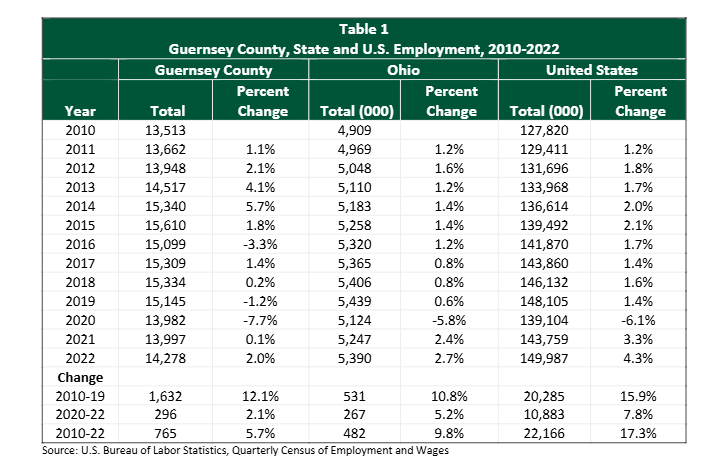
But the county’s declining population is a big challenge when it comes to attracting development.
“It makes it difficult to convince somebody that you need housing when they look at your population declining and the projections are you’re going to decline further,” Arnett said.
So he’s also thinking about how to encourage young people to stay, live and work here.
“But the other piece of the puzzle is it’s hard to tell someone you have to live and work in Guernsey County … if they can’t find some place to live,” he said.
It’s a vicious circle. But a nearby initiative might address one piece of that puzzle.
“Make Muskingum Home” offers local university students a post-graduation scholarship, helping them pay off student loans if they commit to living and working in the county.
In some cases, that incentive proves compelling enough to overcome the challenges of staying in the area. Over three years, 40 young people have participated in the program.
Arnett said it’s something the county will look at replicating.
“If at the end of several years we can attract or retain, you know, 20 young people, I think that’s a huge win,” he said.
Amanda Pirani is WOUB’s Report for America Journalist covering Economic Livelihood. For more information about Report for America, you can click here.