

News
A local broadband expert warns the BEAD program may not bring expected progress
By: Amanda Pirani
Posted on:
ATHENS, Ohio (WOUB/Report for America) — Bill Sigmon keeps his modem on the front porch.
It’s the only way he can watch TV or make a phone call in his home, which sits five miles outside the city of Cambridge. He said the connection has never been consistent.
Then Frontier announced it would provide service in his area, so he waited almost a year for them to set up his home.
Now, he said he’s lost his patience. A few days ago, he went to Walmart to buy Starlink equipment for a satellite internet connection.
“I’ll take my tractor and I’ll set up the pole, and I’ll climb that pole and put that dish on there and move on,” he said. “It’s sad you got to take measures like that. But if you wait on some of these companies … you’ll die waiting.”
He’s not certain how the service will perform but said he believes it’s worth trying.
Thousands in rural Ohio, like Sigmon, don’t have reliable internet access. And many are turning to low earth orbit satellite options like Starlink as they await long promised infrastructure build outs.
The company has pitched itself as a solution to the rural connectivity problem — and now the federal government is buying in.
Last year, it announced changes to the Broadband Equity Access and Deployment (BEAD) program, which shifted focus from funding fiber internet to satellite, in cases where satellite is cheaper.
States were required to rework their BEAD proposals in light of the new rules. Ohio’s plan now gives more awards to satellite than fiber.
Tom Reid, an Ohio-based consultant who advises states and counties on broadband issues, is worried that will affect BEAD’s outcomes.
He said satellite connection often isn’t reliable in geographical regions with hilly terrain and dense forests — like southeast Ohio.
“Only about 30% of the households awarded in the state of Ohio have a clear enough view of the sky to get a good, stable Starlink signal,” he said.
Other state and federally funded projects are making headway in the region, but Reed doesn’t feel as optimistic about what BEAD might be able to achieve.
“They’re celebrating the fact that they’re only spending half of the money,” he said. “The way they’re only spending half the money is by doing pretend broadband for a lot of people.”
BEAD restructured under new administration
BEAD was first announced in 2021 as a way to finally bring the internet to homes that waited years for other state grant programs to reach them.
The federal government committed over $40 billion to fund the delivery of high-speed internet nationwide, promising every household in the nation would see high-speed connection by 2030.
But the program was slow to roll out. By the time the Trump administration took office, few awards had been made, allowing the new government to pause BEAD for reevaluation.
In a press release, U.S. Secretary of Commerce Howard Lutnick said last year his department would be reviewing the program’s “woke mandates, favoritism toward certain technologies and burdensome regulations.”
The new BEAD rules promoted a “technology neutral” policy that required states to select the lowest cost internet option feasible in an area.
The program previously prioritized fiber infrastructure, because it’s typically thought of as the gold standard for internet access.
But it can also be very expensive. It requires burying physical cables underground or installing them on utility poles across large geographic areas.
Emma Yeager, a public information officer with the Buckeye Hills Regional Council, said cost is one of the primary challenges in getting broadband to rural areas.
“Is it economical for an internet service provider to build fiber access out to a house, that’s the only house in a mile? Not particularly so,” she said. “Obviously in our more populated areas, it’s easier to get the broadband infrastructure built out.”
Spending for BEAD cut under changes
Under its “benefit of the bargain” initiative, the Trump administration cut spending on BEAD awards by about half.
Those dollars will likely come back to the states as “non-deployment funds” not used for build outs, but the federal government hasn’t yet released information about how that money could be spent.
Reid, the broadband consultant, said that while he supports cost efficiency, he’s worried the changes will mean a lack of meaningful development in Athens and other counties.
He reported to Athens County Commissioners in March that about 70% of assigned Starlink-awarded locations would not work without major tree removal, according to a foliage analysis.
Some, like Sigmon, may be able to invest in a pole or clear trees in order to receive better signal.
But Reid said that depending on where someone’s home is located, they could be looking at spending tens of thousands of dollars on a tower to improve their signal.
He was also concerned by a speed test analysis suggesting if roughly half of individuals in a given area were to contend for the same satellite, they may face connectivity challenges.
Ookla, a company that specializes in internet speed testing, found in a February analysis that while Starlink speeds are improving, rates are slowest during time periods when more users are on the network.
That could mean locations are marked on broadband maps as receiving internet service, despite not having practical access.
In response to this concern, Broadband Ohio said it will be monitoring provider compliance with federal performance and reporting requirements. The agency did not clarify whether there will be any independent process by the state to track outcomes or verify service.
Starlink announced last summer that it was utilizing a new beam-switching technology that would address issues due to tree obstructions, though it’s not clear if this update has made a difference for recipients on the ground.
Reid said he was also troubled that a significant number of fiber awards were granted to a company called Aristotle, an internet service provider based in Arkansas, which he called inexperienced.
He believes taking on rural broadband service where a company doesn’t have preexisting infrastructure could be a financial risk — one that’s already played out under the Rural Digital Opportunity Fund, another federal program.
“We saw a lot of companies winning a lot of locations in Ohio that they later defaulted on because it just doesn’t make sense … you just can’t afford to connect all these dispersed pockets of people,” he said. “What fiber projects generally do is build out from something they already serve.”
Other broadband projects continue to make headway
Broadband Ohio said in an email the agency has received approval for its BEAD funding allocations, though internet service providers will
Reid said that because of the complexities involved in broadband contracts and permitting, he expects communities may be waiting until next year or later to see any movement on the ground.
In the meantime, other state and federally funded projects are making progress.
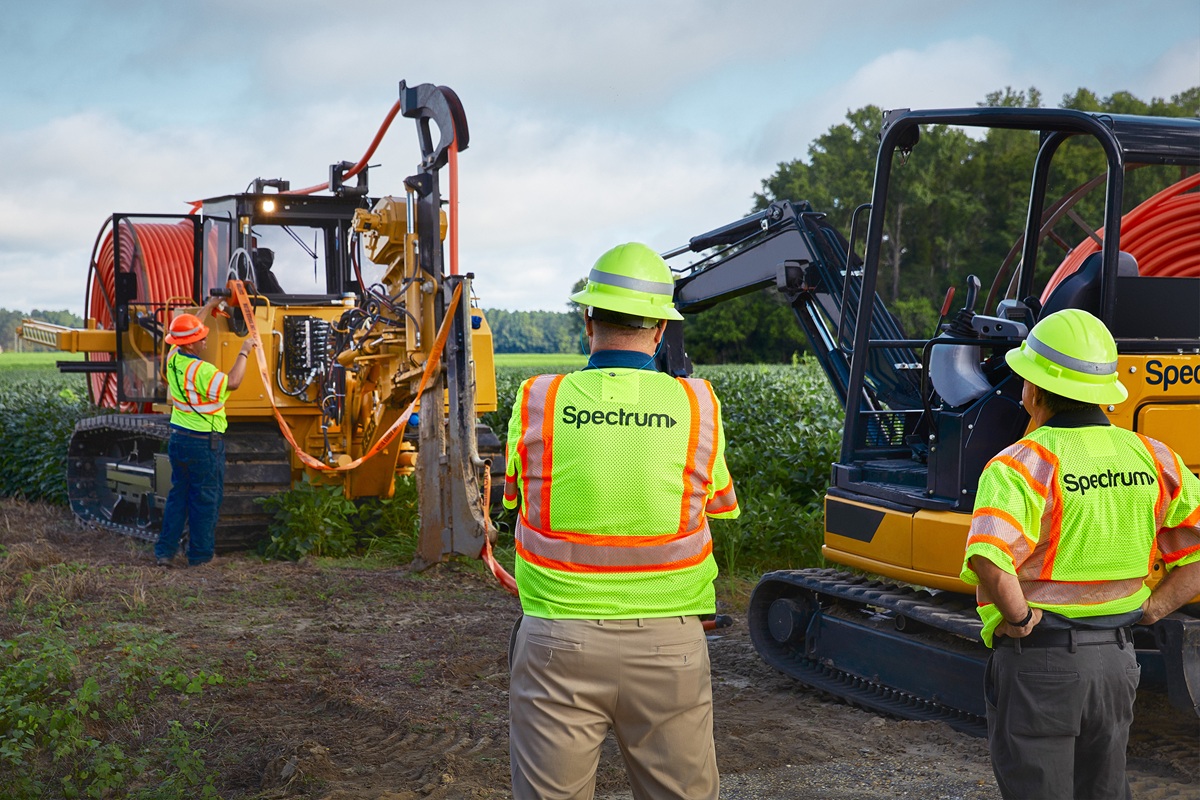
This month, Spectrum announced more than 2,000 new homes and businesses that now have broadband access in Perry County, funded in part by the Rural Digital Opportunity Fund.
Broadband Ohio said Spectrum projects funded by the Ohio Residential Broadband Expansion Grant Program are complete in Coshocton, Morgan, Pike and Washington counties.
Construction is ongoing in Gallia, Lawrence, Muskingum and Perry counties.
On a map of Athens County, Reid referenced a dark green dot in the Glouster area, representing high internet speeds, as a sign of momentum.
“That dark green, that was dark red a number of years ago. So projects have been happening around the county,” he said.
You can check on the status of Spectrum services in your area here.
Amanda Pirani is WOUB’s Report for America Journalist covering Economic Livelihood. For more information about Report for America, you can click here.