

Culture
John Mellencamp collaborator Mike Wanchic talks greatest hits, Farm Aid, Indiana music video shoots
By: Ian Saint
Posted on:
CINCINNATI, Ohio (WOUB) — John Mellencamp has been a Rock Hall inductee since 2008, but he’s vociferously resisted nostalgic shows until this year’s Dancing Words Tour: The Greatest Hits. According to guitarist Mike Wanchic, Mellencamp’s bandmate and frequent co-producer since 1976, Ohio bore early markers of the “heartland rock” icons’ hard-won success.
“When we played Bogart’s in Cincinnati, we thought we’d ‘arrived’ — that’s big for a young band,” Wanchic recalls to WOUB. “Then playing a Columbus bar on High Street, onto Cleveland and staying at Swingo’s — a really groovy rock ‘n’ roll hotel that had lime shag carpet.”
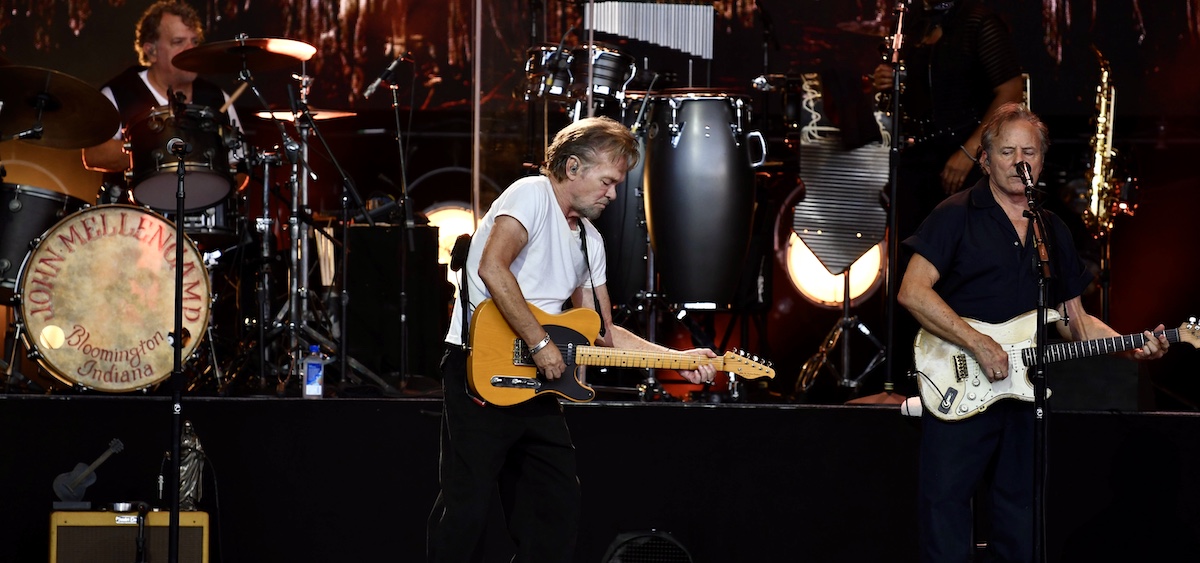
Ian Saint: What does staging this Greatest Hits tour, playing hits you haven’t performed in decades, at this stage of your journey mean to you?
Mike Wanchic: Wow, interesting question. Delivering these songs right now is fun, but also an obligation to our audience. We’ve never done anything like this; John is always looking forward, not backwards — we refuse to become a nostalgia act. We still consider ourselves fully viable artists. Who says Robert Frost didn’t write great poetry when he was older? “Only the stuff in your 20s was good, Robbie” — that’s absurd. John’s become a better writer. (2008’s) “Longest Days” is an incredible ballad John wrote, and Bob Dylan (covered) it. I grew up with Bob’s early acoustic records, and I ended up producing Bob — absolutely mind-boggling. Who’d ever think a kid from Kentucky would end up working with Bob Dylan? So delivering these songs to the people who supported us over four decades, putting my kids through college, is a great gift back. We’re incredibly lucky.
Ian Saint: Speaking of heroes: how did Steve Cropper producing 1980’s Nothin’ Matters and What If It Did shape you?
Mike Wanchic: Cropper fully changed my guitar playing. I grew up with Booker T. & the M.G.’s. My band played “Green Onions” and those groovy tunes, because they were reachable for young artists to figure out. Cropper produced our record in Los Angeles. I’ve got what I thought was the world’s coolest solo on “Hot Night in a Cold Town,” full of speed, trying to chase the current trend of guitar players. Halfway through the solo, Cropper calls me into the control room and goes, “What are you doing? If I can’t do this [claps], it ain’t worth s—.” It was a revelatory moment for me about rhythm, simple melody, relating back to the song. I stopped trying to chase other guitar players and just became a dirt-simple “Mike” guitar player.
Ian Saint: “Jack & Diane” fascinates me. There’s crunching electric guitar stitched with gentle acoustic guitar, synth drums sandwiched by an epic live drums breakdown… It’s like a salad bowl of many ingredients.
Mike Wanchic: Interesting you say that — it really is. At the song’s inception, The Bee Gees were recording next to us at Miami’s Criteria Studios. Our engineer, Don Gehman, said they had something that could keep time. Maurice Gibb had this Linndrum prototype, with a fake floor tom. Keeping that was never our intention — we wanted [drummer] Kenny Aronoff to play the whole thing. But we kept Barry’s drum machine going, played the acoustic guitar against it, and went “that’s cool.” Then we had Mick Ronson, Bowie’s legendary Bowie guitar player and one of my heroes, working on that breakdown with the big vocal we all sang together: “Let it rock, let it roll…” I remember Mick saying, “We’ve got to have baby rattles in the middle,” so there’s shakers and weird stuff. Such an oddball song, John wasn’t sure he wanted to keep it; but we talked him into it.
Ian Saint: How did you feel about filming music videos?
Mike Wanchic: The first was “Small Paradise.” We did it in an LA bar; the opening line was “Two veteran lovers French-kiss in the doorway,” and I had to kiss a woman onscreen. I was terrified. “God, do I really have to do this in front of all these people?” But beyond that, the importance of MTV was everything for us. Founders John Sykes and Tom Freston were good friends of ours. After we made that “Hurts So Good” video, they put it on, and we went from nothing to everything.
Ian Saint: “Hurts So Good” looks like a true blast. You filmed that video back home in Indiana?
Mike Wanchic: In Medora, just down the road — where John’s cousin Tracy lived. He was a motorcycle guy and owned a bar. So we went to his little bar, he got all his motorcycle friends; and that’s how we made it on a shoestring (budget) in Medora, Indiana. Yeah, we had lots of fun. Watching those big motorcycle guys try dancing their way to the front was hysterical.
Ian Saint: Then you decided to keep filming videos in Indiana?
Mike Wanchic: We made virtually every video within 25 miles from Bloomington, Indiana. We’d do three videos in a week — we didn’t mess around. John did site-searching. “Here’s a nice big field of daisies for ‘Pink Houses.’ Here’s the church down the road from our studio on Lower Schooner Road, where we can stick crosses in the ground for ‘Scarecrow.’” Slamming them out, like guerilla videos. That was really counter to all the nonsense that went into videomaking later — girls hanging on your legs, smoke coming up. We tried to make them as raw and simple as the music.
Ian Saint: You were presented the “Spirit of Farm Aid” Award, honoring your heavy involvement from the beginning. Farm Aid’s importance is more paramount than ever.
Mike Wanchic: Certainly. The first Farm Aid drew 80,000 people, and it was the who’s-who of all music forms — next to Live Aid, the most star-studded thing ever. We thought Congress would see this giant show, laws would change, and everything would transform. 41 years later, we’re still hammering away because that didn’t happen. We’ve shifted from political to more personal messaging — showing the public what’s in the corporate food they’re eating, and educating how to move toward healthy (locally-grown options), as opposed to how to bring down corporate farm takeovers. What can I do, to improve my life and the planet? Pay attention to what you’re eating, and how that affects everybody. Certainly, there are still hotlines to help farmers going bankrupt; and Farm Aid funds go there, to help farmers buy the things they need to get into the next season, and keep suicides from happening.
Ian Saint: “Rain On the Scarecrow” resonates even heavier today.
Mike Wanchic: Imagine being a fourth-generation owner of a family farm and losing it. That’d devastate you and your family. Suicide rates from family farmers losing their properties are enormous. Farm Aid is a giant hodgepodge of different things to different people; but at this point, it’s primarily an education tool. For lots of people, just go to your farmer’s market and buy your food there. Support local farmers.