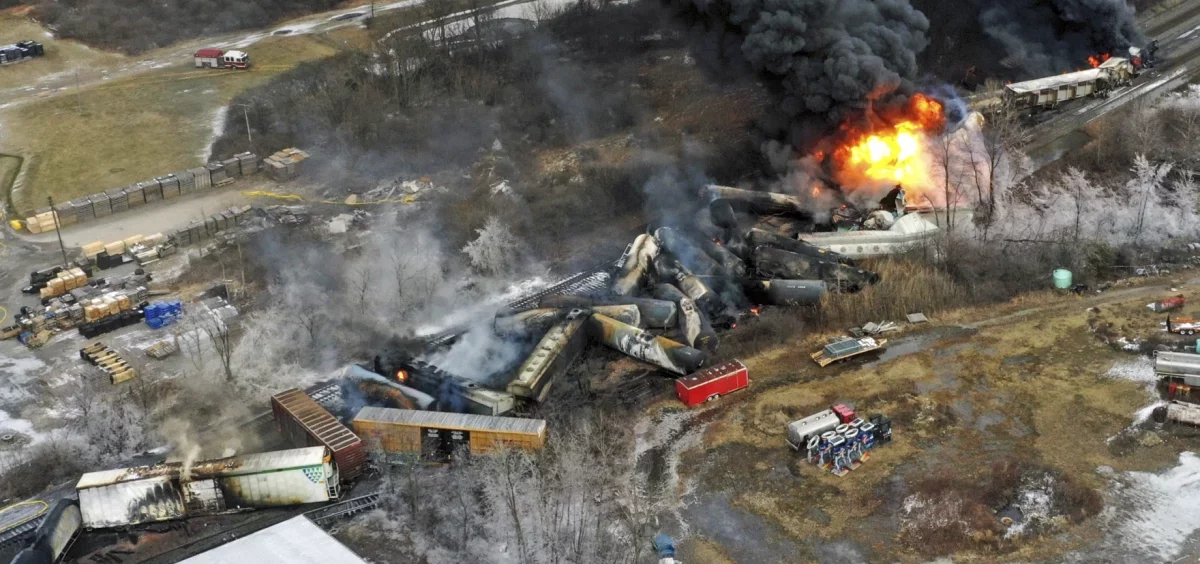

That’s according to a new study published in the Journal of Traumatic Stress.
In a survey of 1,000 adults who lived within 65 miles of the derailment site, more than half reported at least one physical health concern since the disaster. And many reported mental health effects too.
The study found the rate of PTSD among residents to be around 15%, about double the national average.
The rate of major depression was high as well, with 13% of respondents meeting criteria for the disorder.
“[These results] are quite consistent with what we know about exposure to natural disasters and human-caused technological disasters,” said study author Cameron Pugach, with the Medical University of South Carolina.
Researchers found similarly elevated rates of PTSD and depression following the lead water crisis in Flint, Michigan.
Why rates remain high in East Palestine months later
Pugach says the stress and uncertainty of these sorts of disasters often lingers.
In the case of the train derailment in East Palestine, three-quarters of people surveyed were concerned about their exposure to toxic chemicals.
“And I think most strikingly, over 90% of the sample reported concerns for what that exposure meant for their short and long-term health,” Pugach said.
For many, government leaders didn’t appease those concerns. In fact, half of respondents said they had little or no confidence in information from public officials.